

Hello Book Bums families!
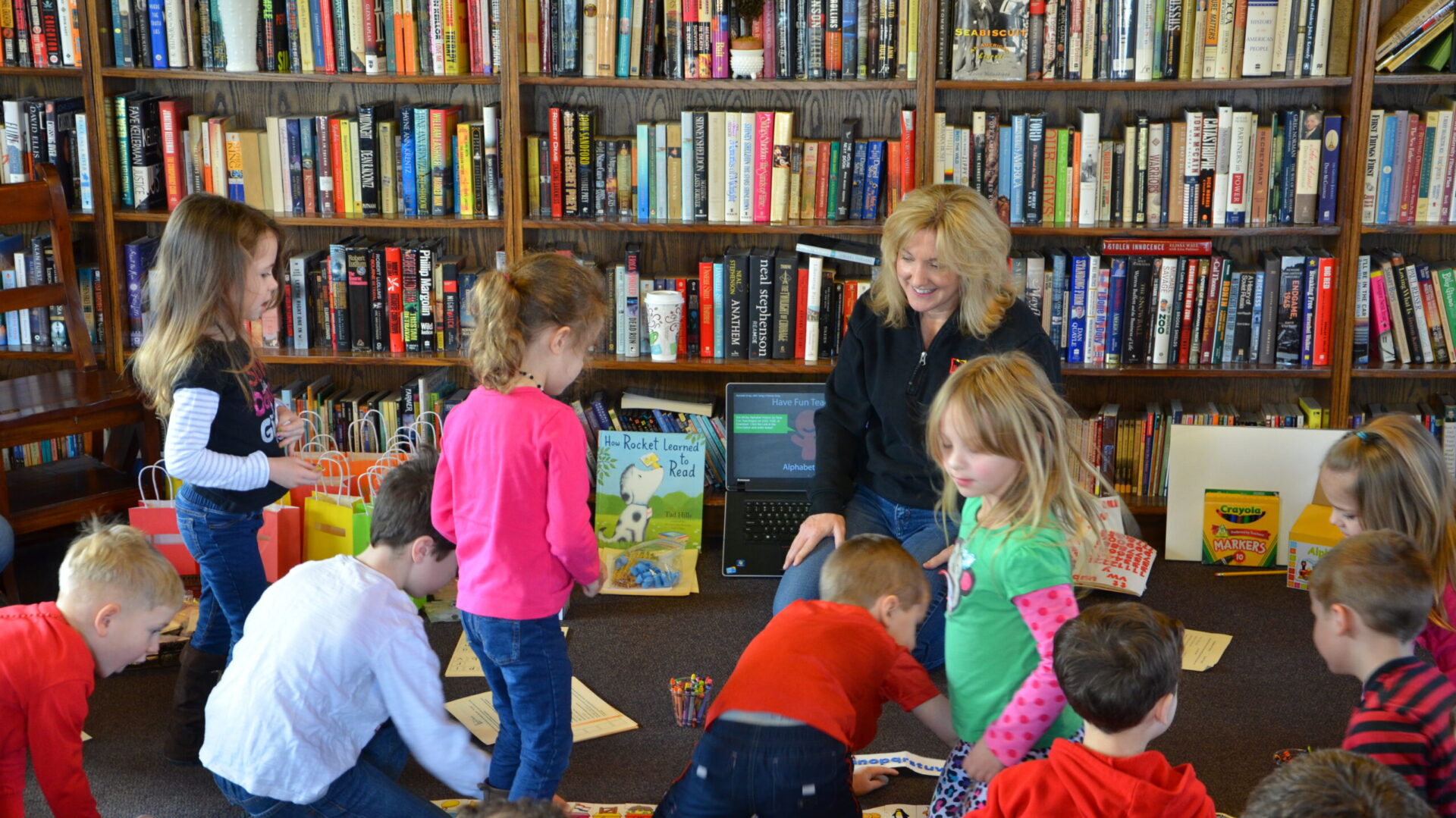
This week Dr. Christy shares the story of a thank you she received from a student. We want to say thank you to all teachers who are working so diligently each day to help students build new skills and gain knowledge and experiences. We see you working hard and we appreciate you!
Bookbums.com is an Amazon Associate; We earn from qualifying purchases. This means that if you click on a link to Amazon.com and make a purchase, We may earn a small commission at no extra cost to you. We do recommend the products. Feel free to find them by other means.
Word of the Week
succinct (suk-sinkt) adjective/describing word - brief and clearly expressed, with no wasted words
The succinct presentation shared everything we needed to know without being overlong.
Literary Calendar
- Poet Edna St. Vincent Millay died on October 19, 1950.
- She was a poet and playwright and 1920s feminist in New York City.
- She won a Pulitzer Prize in 1923 for her poem "The Ballad of the Harp Weaver."
Pause for Poetry
Afternoon on a Hill
by Edna St. Vincent Millay
I will be the gladdest thing
Under the sun!
I will touch a hundred flowers
And not pick one!
I will look at cliffs and clouds
With quiet eyes,
Watch the wind bow down the grass
And the grass rise.
And when the lights begin to show
Up from the town
I will mark which must be mind,
And then start down!
From our Bookshelves

If you love Rod Campbell’s Dear Zoo, you’re going to love this one too. It’s about a boy named Buster who is visiting his grandma, and he’s looking all around the farm to find some eggs. Preschoolers will love lifting the flaps as you say, “No eggs here! Oh dear!” They’ll also enjoy naming the farm animals, and the making the sounds for each one.
Dear Zoo was written in 1982 and Oh Dear! was written in 1983. How am I just now finding it?
If you’re already thinking Christmas, you can also check out Campbell’s Dear Santa (published in 2004) as well.

Tips for Families

If you want to get festive (but not too spooky) for your trick-or-treaters, but you have very little energy to invest, how about wrapping your fall pumpkins with some glow-in-the-dark masking tape and then add some glow-in-the-dark wiggle eyes? It’s a kid friendly activity that’s sure to get a fun response from your neighbors, and it’s SO much less messy than pumpkin carving or painting. After Halloween, you can just take the tape off, and you’re ready for Thanksgiving!
We’re including some links for the glow-in-the-dark tape and glow-in-the-dark wiggle eyes here. Every time you make a purchase using our links, you’re supporting Book Bums, and we’re so grateful!


Tips for Raising Readers and Writers

At Book Bums, we’ve been teaching our students that c-e, c-i, and c-y make the c say /s/. (And, g-e, g-i, and g-y make the g say /j/.) Many call these the soft c and the soft g. With the other vowels, these letters make their expected hard sounds.
We will continue to have our kids say, “C-e, c-i, and c-y make the c say /s/.” That’s not going away. But, here’s a tip that we might add to complement these lessons. (And it has nothing to do with a cat drawing that takes longer to remember than simply recalling that c-e, c-i, and c-y says /s/.)
How do I know when to use a c or a k to say /k/?
One way to remember to use a c saying /k/ with vowels o, a, and u is that c is a /c/urvy line and those vowels are curvy.
And we use a k to say /k/ with vowels e, i, and y because the k has straight line and those vowels have straight lines (besides, the e, i, and y would make the c say /s/.)
Note: I acknowledge that there is a straight line in the letter u, but it could be made without that stick. And there is a curvy line in the e, but it does have a straight stick.
I don’t know. I’m thinkin’ maybe we just stick with, “C-e, c-i, and c-y make the c say /s/.”
What do you think?
Practical Grammar

We're in week 8/10 of our Adults' Top Ten Grammar Errors series.
This week we’re investigating dangling modifiers. These modifiers are words, phrases, or clauses that modify the wrong word. Dangling modifiers can cause confusion (and even giggles) for readers.
8. Dangling Modifiers
• Tip: Make sure the modifier is next to what it's modifying
• Example Error: "Walking to work, the rain soaked my clothes."
• Note: This make sit seem as though the rain walked to work.
• Fix: "While I was walking to work, the rain soaked my clothes."
Consider the following sentences.
Having read lots of books, the teacher gave the students awards.
Who read lots of books? It sounds like the teacher did the reading, so why did the kids get awards?
This is a dangling modifier.
After reading the spooky books, our house felt as if it were haunted.
Who read the spooky books? The house?
This, too, is a dangling modifier.
After finishing up this exercise, my dog jumped into my lap.
Wait. Who finished the exercise? You did. Not your dog.
You’ve got it. It’s another dangling modifier.
News from Book Bums

As you know, we’re adding another Book Bums location in Monroe, Ohio. Well, it’s always tricky finding enough tables that meet our sizing needs and fit my aesthetic. (Some folks call my choices old and rickety, but I like to think of them as quaint.)
For our new location, my husband is making our tables. The best part is that he’s making them from old church pews. I just love that!
If you’ve priced wood these days, you know that it’s expen$ive! Mike purchased a church pew for $20, he made a sample tabletop, we loved it, and then we purchased the all the rest of the pews (30) at a greatly discounted price.
It’s possible that those pews witnessed the singing of hymns, the beginnings of marriages, the dedications of babies, and lives redeemed. Now they’re going to be used for equipping our Book Bums students to read and spell well. (sigh)
And aren’t they gorgeous?!
Five tops down. Five to go.
Tips for Teachers

*MTSYS means the teacher coached the student to Make the Sounds You See—a common refrain at Book Bums.
/well/
we’ll
The letters inside the slashes indicate what the student said.
The word below it indicates what the word in the text said.
Teachers, to ensure your kids are reading well, you must listen to them read out loud—at a minimum, once every single week. This is non-negotiable.
During our Book Bums assessments, I ask children (typically between the ages of 5-10) if their teachers listen to them read. The most common answer—by a long shot—is no. It seems as though no one is hearing our students read aloud from books. So, I’m wondering how educators actually know what is going on with their students’ literacy achievement. How do they know what their kids are doing well and where they need support? How can they observe growth? How can they feel confident that their instruction matches their students’ needs?
As a classroom teacher, I made a promise to myself that every single daggone week I was going to hear my students read aloud to me. I had a grid with each student’s name; and I, come hell or high water, filled in every student’s space noting the date, the title of the book the students were reading, how they were comprehending what they’d already read, any big bad bodacious words they decoded accurately, and phonics errors they made (to guide my instruction for upcoming weeks).
At the week’s end, I noted common student errors, and I used that information to plan my next week’s instruction.
If a parent inquired about a child, I’d pull out the ol’ clipboard and share the books the student was choosing at the beginning of the year and the kinds of errors I’d noted, and then I shared the books the student was reading upon inquiry as well as the focus of my instruction at that time.
I promise you, teachers, when parents know you know what their child is doing well and that you know the best next steps for them, and you’re actually doing what’s needed to move them forward, you’ve got a partner (and a fan) on your team.
At Book Bums, until our students are equipped to accurately decode most every word in the books they long to read, the teacher reads the books that launch each of our sessions, and the students read only the words featured in each phonics lessons on the word cards, the game boards, etc. Even this word reading requires coaching students to decode with accuracy. We must know what the kids are doing well and what we need to review. We must also do frequent comprehension checks. (Decoding words with no understanding of word meanings yields very little academic progress.)
When a student decodes bookshelf, the teacher checks in to ensure the students have the correct image in their minds. It could be a question such as, “Do you see a bookshelf here in Book Bums?” The student points to one, and then they move to the next word. Quick and painless. If the word is snoop and the student is not familiar with the word, the teacher may provide a sentence that succinctly conveys the meaning. For some words, we provide an image to clarify. We relish the idea of expanding our students’ vocabularies. Ensuring student comprehension at the word level is essential for promoting skilled reading with comprehending more complex texts.
Whether you’re a classroom teacher or a tutor, you must be listening to your students read aloud. It’s the most important way to ensure your students’ academic progress.
In my classrooms, I hosted independent reading times for my students. One of my heroes, Timothy Shanahan isn’t convinced that this time set aside for self-selected reading is a good investment of time. When done poorly, he’s probably right. But when it’s done well, the time is not only beneficial, it’s essential.
Just last weekend I was invited to Lakota East’s Football game to be honored on the field because one of my former second-grade students named me as his Teacher of Impact.
It is Tyler’s senior year, and all seniors got to choose a teacher to honor. Most of those standing alongside me as the players dashed out of the tunnel were East HS teachers, but Tyler reached way back (ten YEARS!) and chose me.
He came to see me at Book Bums to present me with a t-shirt and an invitation to the game. He shared that he remembered everything about second grade. He said that I helped him to become a reader and a lover of books. That couldn’t have happened if I had just taught at him. He found books to love when he read books in my classroom, and he had a loving coach to encourage and grow him in the process.
I’ve heard of teachers, themselves, reading during their independent reading times—to model reading. Kids need a skilled, passionate, and inspired coach so much more than they need a model.
Teachers, you make a difference for good. Your students will fondly remember you and what you did for them for a long, long time if what you do grows your readers as they progress in their skills so they can progress into better and better books.
Teachers aren’t always acknowledged formally, as I was at Lakota East High School last Friday night, but that doesn’t mean you won’t be long remembered for all the good you’re doing as you’re serving kids with their literacy learning.

Just for Fun

Message from my son: “Are you sneaking out doin’ some graffiti, Mom?”
If you know someone who would benefit from our newsletter or tutoring at Book Bums, please share this email with them! Thank you.
Copyright © 2024 Book Bums, All rights reserved
Our mailing address is:
7967 Cincinnati-Dayton Road Suite L
West Chester, OH 45069