

Hello Book Bums families!
It's that time again. Dr. Christy shares some tips and practice materials for teaching kids how to read a clock just in time to spring forward this weekend. We also share volunteer opportunities so you can join in Book Bums' good work. Of course you'll find all our regular features, including book recommendations, poetry,and a joke or two. Enjoy!
Bookbums.com is an Amazon Associate; We earn from qualifying purchases. This means that if you click on a link to Amazon.com and make a purchase, We may earn a small commission at no extra cost to you. We do recommend the products. Feel free to find them by other means.
Word of the Week
cajole (ka-jol) verb/action word - to coax or gently urge
The longtime preschool teacher expertly cajoled her tired, young students to gather their backpacks and line up at the end of the day.
Literary Calendar
- On March 11, 1959, A Raisin in the Sun by Lorraine Hansberry opened on Broadway.
- The play tells the story of the Younger family, living in 1950s Chicago, dealing with financial concerns, and focusing on themes of identity, family, and dreams.
- The film version, which came out a few years later, stars Sidney Poitier.
- Hansberry took the title of her play from the poem "Harlem" by Langston Hughes.
Pause for Poetry
Harlem
by Langston Hughes
What happens to a dream deferred?
Does it dry up
like a raisin in the sun?
Or fester like a sore—
And then run?
Does it stink like rotten meat?
Or crust and sugar over—
like a syrupy sweet?
Maybe it just sags
like a heavy load.
Or does it explode?
From our Bookshelves
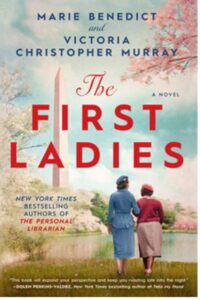
First Ladies, by Marie Benedict and Victoria Christopher Murray (who also wrote The Personal Librarian), is a story told from alternating perspectives. One is that of Eleanor Roosevelt, and the other is Mary McLeod Bethune. The first is probably a name you know, but perhaps like me, the second name is new to you. Eleanor Roosevelt was First Lady of the United States, wife to Franklin Delano Roosevelt. Mary McLeod Bethune was First Lady of the Struggle, founder of a school, business owner, and civil rights activist.
These two women meet at a luncheon and become allies and friends working for the protection and advancement of Black citizens in America. They learn so much from each other, and despite opposition, their partnership yields an impressive number of concrete changes in policy and practice. Take a behind-the-scenes tour of U.S. history through decades of friendship between Eleanor and Mary.
Tips for Families
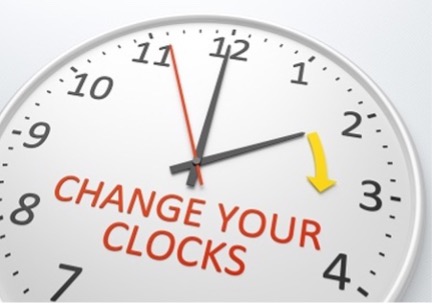
Don’t forget to set your clocks this weekend from sunshine and happiness to misery and despair.
In Southwest Ohio, the time changes at 2:00 a.m. local time on the second Sunday in March. On March 8th, we will adjust our clocks, so they spring forward one hour.
My grandson said, during a private tutoring session at Book Bums, “I know how to read the time on a phone, but I don’t know how to tell time on your clock (at Book Bums), Grandma.” I promised to teach him to tell time on an analog clock, and I thought I’d share some tips for doing so here.
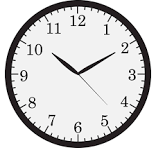
Because I’m a literacy specialist, I always show the words hour and minute. We observe the spellings noticing what’s expected and what’s unexpected (the h in hour and the final e in minute.) We also note that the shorter word is hour while the longer word is minute. That’s perfect, because the hour hand is the shorter one and the minute hand is the longer one.
We always begin our instruction with the hour hand. We note that the hour hand (the short hand) is pointing to the first number we say when telling time. We say that number from the time it’s on the number until the time it’s on the next number. It may be a bit past the number, but so long as it’s not to the next number yet, that’s the number we say. It’s also the first number we read on a digital clock.
Next, we note how those hour numbers are organized on the clock face. The twelve is in the middle of the clock and it signals the middle of the day and/or the middle of the night. We cannot tell which just by looking at the clock.
As we make our way from twelve o’clock (which is a contraction for of the clock—and the apostrophe represents the omitted letters f, t, h, and e), we note that every number is oriented on the clock in five-minute intervals. Having the kids count the slashes between the numbers confirms that each represents a minute. Counting them all reveals that there are sixty minutes in an hour. Teaching them to “skip count” using the numerals one through twelve provides a shortcut to telling time (and reinforces the fives times tables to twelve).
I like to use these hands-on instructional clocks.
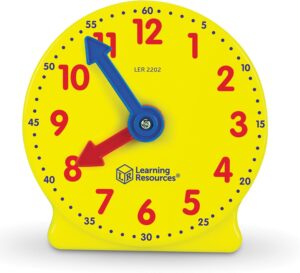
They work well, because the gears cause the hands to move as they do on a real clock, and the hands will always look like they do on an actual clock. (It will never say 8:45, for example, with the hour hand exactly on the eight as is the case with instructional clocks that do not use gears to manage the movement of the hands.)
When telling time, we begin with the short hour hand and say the number the hand is on or just past. We record that number and add a colon to separate the hour from the minute. Next, we observe the longer minute hand to record how many minutes past the hour it is by skip counting/counting by fives (beginning by saying “five” on the number one), and making our way around the clock in number order. We need to add any extra minutes, for the individual slashes beyond the final numeral, if the minute hand is not directly on a number. We then record that number after the colon.
We read and record the time with the hour first, the number of minutes after the hour second, and there’s a colon separating the hour from the minutes.
I’m including a PDF picturing clock faces you can use with any kids you love who’d benefit from some practice using this instruction.
Tips for Raising Readers and Writers
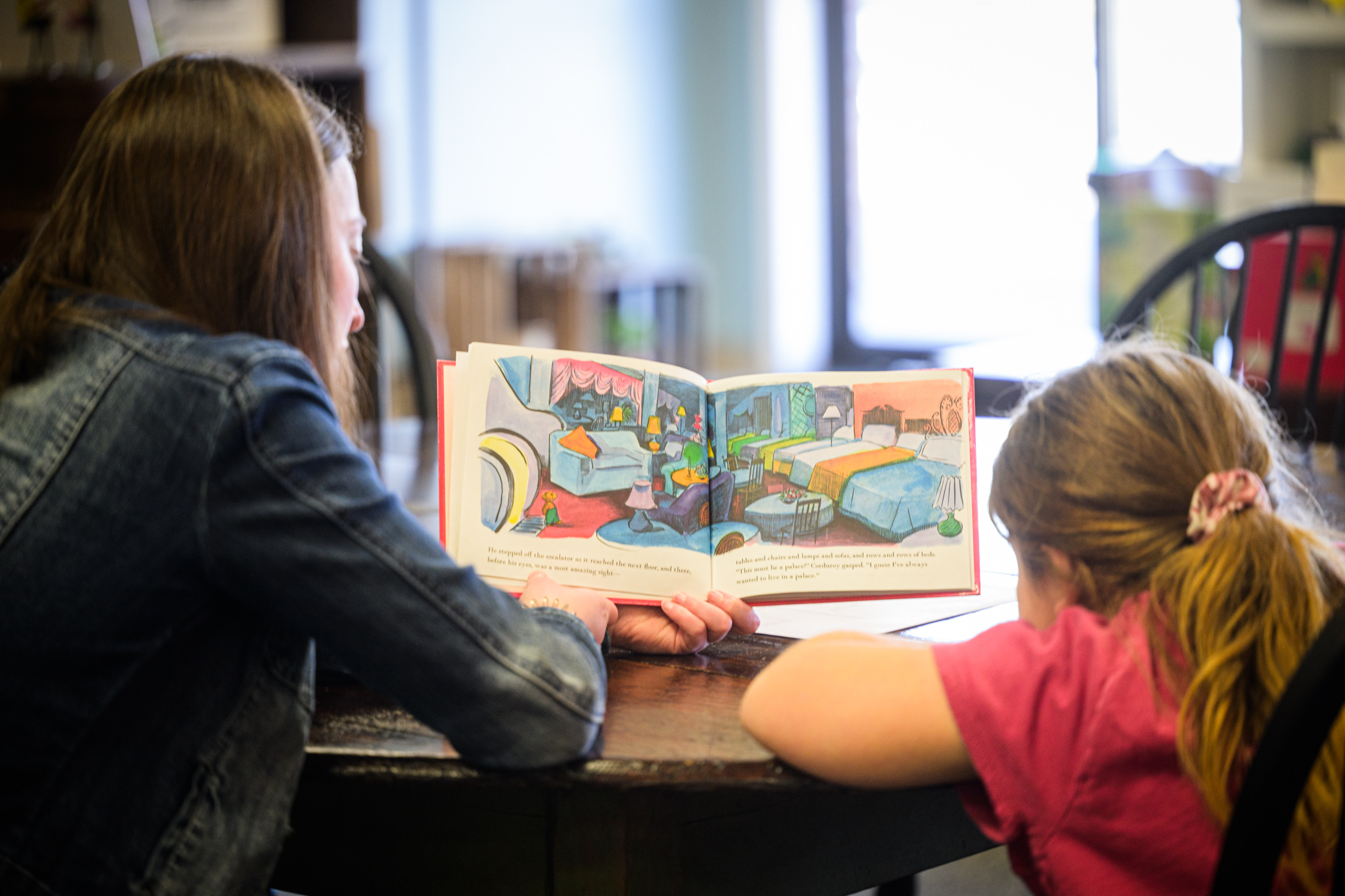
The Snowy Day by Ezra Jack Keats (1962) was the first children’s book where a Black child was featured as a main character in a full-color children’s book. The race of the character is not the central plot; rather, The Snowy Day represents a quiet, joyous day in the life of a young, Black boy. This beautiful book was awarded the Caldecott Medal.
Neither Keats nor Freeman was Black, but they believed that all children deserved to see themselves depicted in beloved children’s books.
When creating a library for children, it’s important that kids see images that reflect themselves. It’s also important that kids see images of kids who look different and/or live different lives.
Early exposure to diverse stories helps to prevent harmful stereotypes, promote inclusivity and respect for others, prepares kids for a diverse world, and supports their own identity development.
We, all the people on this beautiful planet of ours, participate in the human experience. We desire love and connection with others, we have a need for belonging, we engage in the celebration of important moments, we share traditional stories, we value creative expression—including food and hospitality, we share the desire for safety and opportunity, and we all experience all the same basic emotions. We’re so alike, and yet we can tend to linger on the differences.
There is value and beauty in every human being. I pray we all have eyes to see it—and even to reflect it in our home and classroom libraries.
Practical Grammar
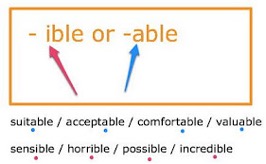
I recently saw a video sharing a tip I’d forgotten. When we add a suffix to morph the meaning of a word or root to mean “able to” we use either -able or -ible. When we say the words (like edible, valuable, visible, salvageable, audible, and lovable), the suffixes sound the same regardless of the spelling, so how do we know which to use? Is it -able or is it -ible?
Generally, we use -able when the root is a word that can be used independent of the suffix. In the examples I shared, above, value and salvage and love are words on their own, and the -able suffix is used.
In the words with the suffix -ible, the parts preceding the suffixes (edi-, visi-, and audi-) cannot be used on their own. They’re Latin roots that hold meaning, but they are bound roots, and they cannot stand alone as words.
That’s a good tip to guide your spelling, but here are some exceptions to keep in mind: flexible, sensible, and responsible.
Wordology Workshop
- The Latin root edi, mentioned above, means eat, and you find it in all forms of the word edible such as inedible and edibility.
- Sometimes it appears as es instead. You can find this spelling in words like comestible.
- The other two bound roots mentioned above have appeared in prior editions of our newsletter.
- Vis/vid means to see and aud means to hear.
News from Book Bums
As you may recall, Book Bums works with The Faith Alliance of West Chester and Liberty Township to serve families who might never be able to afford the instruction we provide at Book Bums.
I knew long ago that I could not feel proud of the work we do at Book Bums if I didn’t also provide our outstanding instruction to families who could never afford one-on-one tutoring or who would never find their way into one of our sweet spaces.
With the Faith Alliance, Book Bums can serve lots of kids through after-school programming and summer workshops.
The Faith Alliance is dedicated to serving the underserved in our community, and they generously provide the Book Bums experience (Foundations for Literacy, Little Letter Learners, & our Handwriting Workshop) and MORE (Think: lots of free, top-quality books and snacks, too) to kids the Lakota Schools and/or the Butler County Success Liaisons identify as needing extra literacy-focused support. I’m so proud to work with them to help move ALL kids in our community forward.
If you’d like to volunteer to work with us as we serve children in our community, please contact Cathy at info@thefaithalliance.com She’ll be sure you’re in the loop regarding volunteer opportunities.
Tips for Teachers
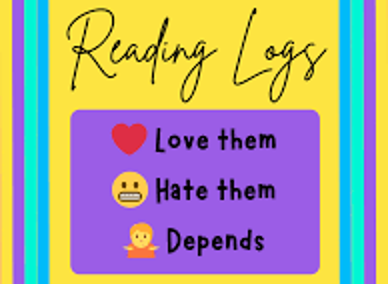
At Book Bums, if a student wants to keep a reading journal, we love that!
We, however, discourage teachers from requiring kids to keep a Reading Log they must turn in to prove they’re reading at home. Research evidence reveals that Reading Logs decrease motivation, position reading books as a chore, and focus more on compliance than building a genuine love for reading.
At Book Bums, we ask that our parents refrain from making kids read until they have completed the 4.5/Flip Flop lesson because, until kids are equipped to decode most every word on the page, the only thing left for a child to do is to rely on pictures and context clues (from the words they do know) to guess what the words probably say.
We do not want our students to guess. We want them to lean into our code-based language and to “Make the sounds you see.” We want them to remember that it’s a “No Guess Zone.”
We need to change kids’ ideas about what reading feels like. It’s not a task that induces anxiety (What the heck could that word possibly say?) It’s a relaxed, quiet confidence that says, “If I make the sounds I know, I can decode most any word. I don’t guess. I move my finger under the letters and make the sounds out loud. My brain is so good, it can hear the sounds and determine what the words say—even if I am off by a sound or two.” This approach complements comprehension too. Working memory that was once used to guess what words say can be put to use determining what the words mean (comprehension).
When we’ve finished both Flip Flop lessons (e-a x 5 and i-e & e-i), we begin reading a beginning chapter book that has very few images so we can watch as our kids navigate text and we coach them to use what they now know about how words work. Should they guess what words say, we’ll say, “Wait, wait, wait. There’s no way that words says ___. If you make the sounds, you’ll absolutely know what that word says. Remember, reading slowly and accurately beats guessing the words quickly and incorrectly every time. We make the sounds we see. It’s a No Guess Zone. Use your finger to slide under each letter, moving from left to right, and make the sounds out loud. You’ve got this.”
If your school requires a reading log, we ask that you use the Foundations for Literacy materials we send home after each tutoring session to fulfill the “required reading minutes.” If they’ve had the lesson, they can read the words we’re sending home. In the meantime, read aloud to your kids from great books beyond their reading skills but within their listening comprehension skills. In this way, you’ll build their background knowledge and their vocabulary knowledge. Talk about the books you read like you’d talk to a friend.
They can record what they’ve read—or not. The choice should be your child’s.
Just for Fun

If you know someone who would benefit from our newsletter or tutoring at Book Bums, please share this email with them! Thank you.
Copyright © 2024 Book Bums, All rights reserved
Our mailing address is:
7967 Cincinnati-Dayton Road Suite L
West Chester, OH 45069
One thought on “Newsletter – Spring Forward – March 6, 2026”
Hello. We moved to West Chester approximately two years ago. I am looking for a volunteer position working with children. I was a Title One Aide for Cincinnati Public Schools several years ago. I worked at Corryville Catholic with students who needed remedial help with reading. I covered grades 1- 4. I am interested in meeting with someone to see if I would be a good fit as a tutor at an area school.
Comments are closed.