Hello Book Bums families!
This week in the newsletter Dr. Christy shares a report from the Book Bums Summer Fun program as well as spelling tips and a great book recommendation as you start to think about back to school season.
We love our Book Bums community. Thanks for all you do to raise great kids and good readers!
Bookbums.com is an Amazon Associate; We earn from qualifying purchases. This means that if you click on a link to Amazon.com and make a purchase, We may earn a small commission at no extra cost to you. We do recommend the products. Feel free to find them by other means.
Word of the Week
prompt (prahmpt) adjective/describing word - done right away, immediate
I was delighted to get a prompt response when I called customer service instead of waiting on hold for hours.
Wordology Workshop
- Many word roots we've featured in past newsletters relate to the Harry Potter books. If you have a fan at home, try making these connections.
- The Latin root sect means to cut. It is part of a dangerous spell Harry uses on Draco.
The Latin root ver means truth. It is in the name of a potion that comes up repeatedly in the books. - The Latin root pater/patr means father. Can you see a connection between the concept of a patronus in the novels and the meaning father?
- Voldemort's name uses two roots: vol meaning fly and mort meaning death. What are some of the ways this character tries to fly from death?
Literary Calendar
- On July 21, the final Harry Potter book was released in 2007.
- Harry's birthday, a notable occasion in all the books, is coming soon on July 31.
From our Bookshelves
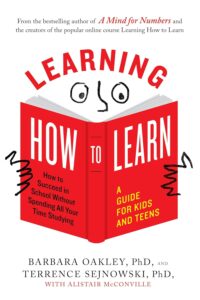
I have a student I adore who is a reluctant reader. He can read now, but he’s not really a reader yet. I’m always looking for books I think he might like. Sometimes I nail it, and sometimes it’s a swing and a miss. With him in mind, I purchased Learning How to Learn by Barbara Oakley, PhD and Terrence Sejnowski, PhD. The thing is, I enjoyed it myself. This is a practical guide for kids and teens, but if you’re an adult and you want to learn what science says about the most effective and efficient ways to learn something new, this could be a good book for you too.
Learning How to Learn teaches kids things like taking handwritten notes are best. Highlighting parts of books is not an effective way to learn anything. Music can enhance studying, but not usually. Sleeping well, eating healthy foods, and getting sufficient exercise enhances learning. Quizzing yourself is an effective way to remember material. Repetition is important. Where you study impacts how well you recall information, but mixing it up is helpful—and so much more. The authors also share about a time management method that breaks work into focused 25-minute intervals separated by short breaks that I’m definitely going to try.
I loved that the authors practiced what they preached as they shared their content. Professors of education are often the worst when it comes to conveying their messages about how to be outstanding educators in a manner that reflects best teaching practices. In the book itself, the authors help readers to recall the information by providing summaries, encouraging note taking, offering quick quizzes, using repetition, and encouraging talking with others about the learning material.
If you know anyone with cognitive decline, you probably want to deliberately work on keeping your brain active. Learning How to Learn might be just what you’re looking for, but it could also be the book to encourage your middle school or high school student to read with you before school starts.
This book is available on Audible, so if you have a vacation involving a drive, this might be a good choice.
Tips for Families
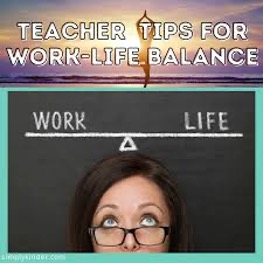
I talk with lots of teacher who are also parents, and they want to hear my take about work/life balance. My advice for them is . . . Be the best teacher you can possibly be. Work really hard and ensure that you truly see and know your students, but your most important job is to be the best parent you can be. I advise teachers to be the kinds of parents they wish their students’ parents would be.
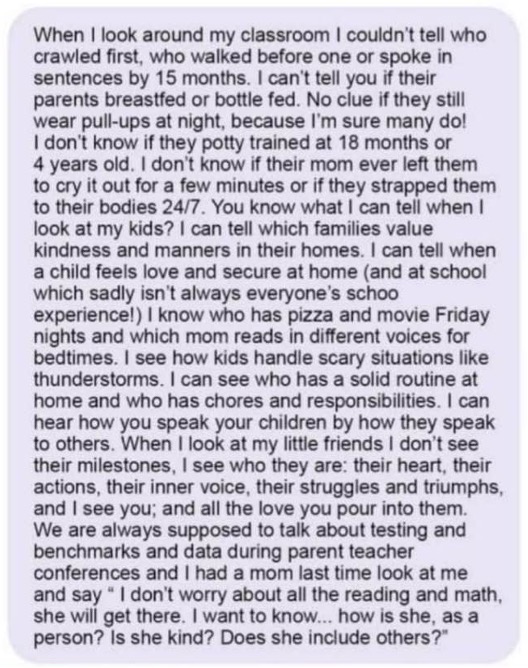
The following message was said to have been written by a first-grade teacher. A fellow retiree shared it on social media, and I thought it’d be good to share here as we begin to gently nudge ourselves toward back-to-school mode.
You likely know me by now. You know that I greatly value nationally normed assessments, and I think you should too. But I acknowledge that there’s so much more we want for our kids. It’s not just about scores.
As you begin dipping your toes into back-to-school happenings, remember this:
Tips for Raising Readers and Writers
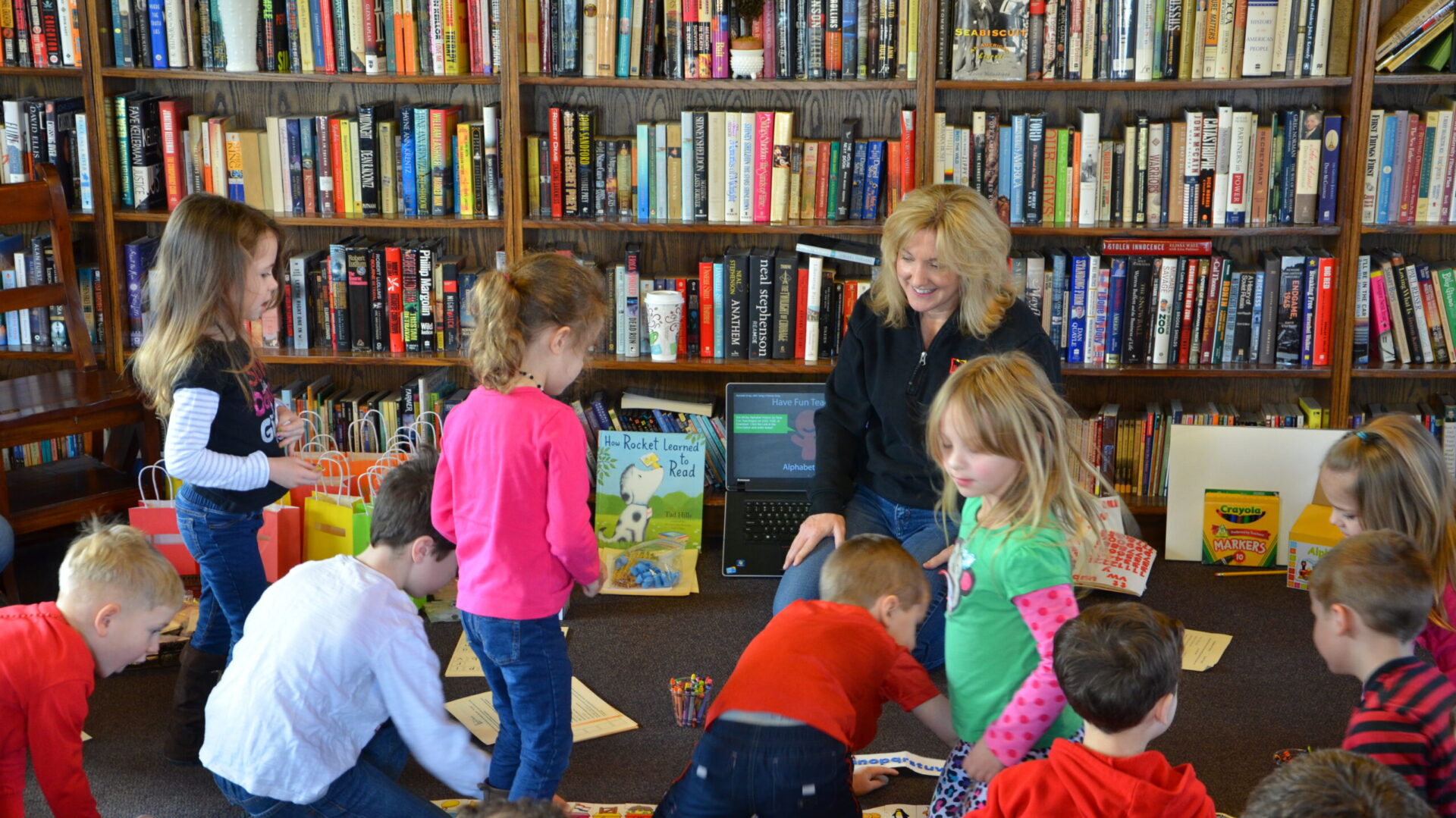
As we work with the students enrolled in the Book Bums Summer Fun program (paid for by the Lakota Local School District), I’m observing that most of the students have an entirely wrong idea about how words work. They don’t get that we have a code-based language.
Here’s some of what we’re seeing:
When reading the word hum, one student said human. The student looked at a couple of letters and guessed what the word said without looking at all the letters and without making the sound each letter (or letter combination) represents.
When kids read less-familiar words such as wok and rim they often say a word they know that kind of looks like it. For example, students read wok as woke and rim as rhyme. (We’re expanding the phonics knowledge and the vocabularies of the students we’re serving.)
Many kids often resist slowing down, placing a finger under the letters, and making the sounds aloud. They want to say the words quickly—thinking that fast guessing is better than accurate reading.
Many of our students read the words silently, in their heads, and then said the word aloud. I’m trying to convince them that making the sounds aloud means we only have to say the word one time, not twice.
Many kids are turning their eyes upward, looking at their teachers’ faces to get feedback about how they’re doing, rather than keeping their eyes on the words they’re reading. They are searching for hints about whether they’re on the right track or not. They don’t, yet, trust in the code.
The biggest challenge is teaching our students to be coachable. It would be so much easier if these young soon-to-be readers didn’t feel like they had to protect their egos. So many of the students act like they have no need for the likes of us, but day by day we’re making progress.
We’re equipping our students to read and spell well, and (of course) we’re making it FUN!
Practical Grammar

Did you do a double take on that too?
It’s true. Every c does represent a different sound in Pacific Ocean. Do you know why?
The primary sound for c is /k/ as in coat and cabinet (and as seen at the end of the word Pacific). This is a “voiced” sound so if you press your fingers on your throat, you’ll feel some movement there as you make the sound /k/.
The final sound for c is found in the word ocean. The sound is more like that of the s-h digraph, /sh/. We see a c-e in ocean, and if you make the /s/ sound (following the rule shared above), it’s pretty darn close to the way we pronounce the word. Most folks blame this slightly different pronunciation on the French. At Book Bums, we simply state that sometimes letters make slightly different sounds, but if you make the sounds you know, you’ll likely recognize the word.
When reading the word special if you make that c say /s/ rather than /sh/, you’ll likely recognize what the word says. We recognize that we need to be flexible with the sounds we know within the confines of what we know about how words work.
Here’s is a practice page you may use with a student you love to share some words that feature a few unexpected spellings for the sound /sh/. All you need is a mover, a die, and a crayon. Your student will place the mover on START, roll the die, move the given number of spaces, and decode the word upon which s/he lands—remembering that c-i, s-i, and t-i, can all represent the sound /sh/.
News from Book Bums
It’s my goal to effect change in my community by equipping kids to become skilled readers and spellers, and I consider the greater Cincinnati area my mission field. My heart’s desire also includes equipping teachers to improve their teaching effectiveness in literacy instruction by sharing my Foundations for Literacy phonics curriculum. In this way, I can multiply my impact.
Remember the video from the 80s where Heather Locklear shared that she loved her shampoo brand with two friends, and they told two friends and so on and so on?
That’s how I feel about sharing what we do at Book Bums. It’s not about making money—though that’s essential if we want to continue to be in business—it’s about doing something so things don’t stay the way they were.
Tips for Teachers
Have you ever emailed people who are “above you” in status and/or within your own organization and they never responded to you? I’ve emailed people in my local school district, in Ohio’s department of education, and professors at a local university and have received absolutely no response whatsoever. I’m not naming them here because you wouldn’t recognize their names anyway.
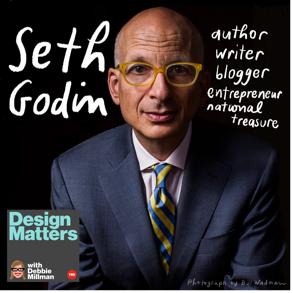
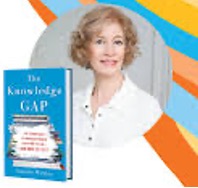
I’ve emailed nationally recognized changemakers like Seth Godin, Emily Hanford of APM Reports, and Natalie Wexler (author of The Knowledge Gap) and they’ve all emailed me back promptly with kind and thoughtful responses. And they even invited me into an ongoing conversation. Do you know what I’ve learned? The people who make time for responding to the people they are choosing to serve go far. I want to be like that, don’t you?
I’ve not always been great at responding to emails in a timely manner, but I’m making it a priority.
Just for Fun
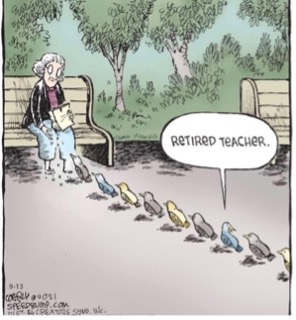
I’m getting to the age where I know fewer and fewer teachers in our local school districts because most of my friends have retired. When I’m doing assessments and try to determine whether I know kids’ classroom teachers or not, their parents often say things like, “Well, she’s really young, so . . .” In other words, “No, Williams, you’re way too old to know her. Ha!
If you know someone who would benefit from our newsletter or tutoring at Book Bums, please share this email with them! Thank you.
Copyright © 2024 Book Bums, All rights reserved
Our mailing address is:
7967 Cincinnati-Dayton Road Suite L
West Chester, OH 45069