
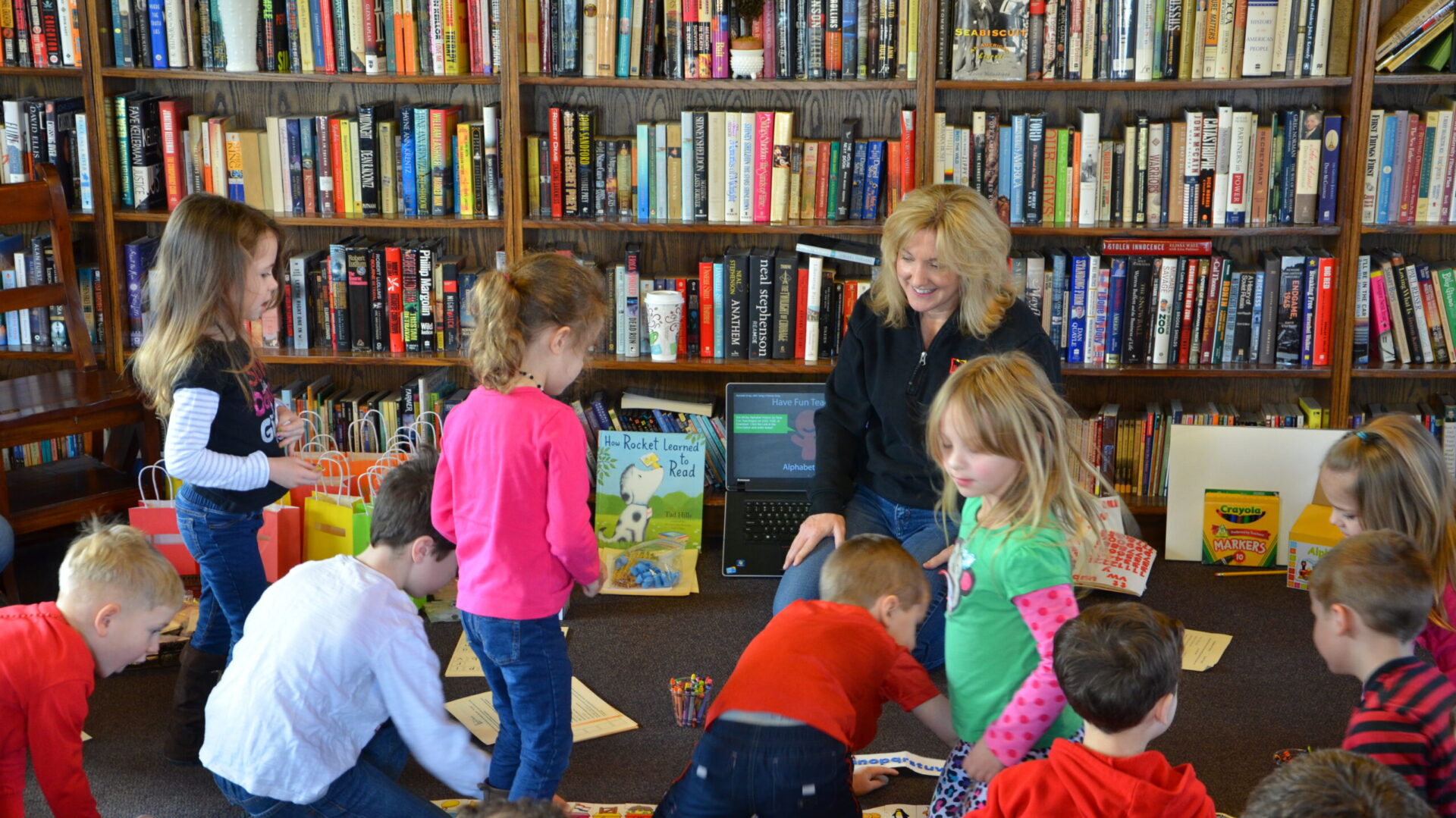

Hello Book Bums families!
Have you been enjoying the Olympics? In this week's newsletter we have some practical grammar and word roots in the Olympic spirit. We also share book recommendations, the history of M&Ms, and an idea sure to get your kids imagining and inventing. Enjoy!
Bookbums.com is an Amazon Associate; We earn from qualifying purchases. This means that if you click on a link to Amazon.com and make a purchase, We may earn a small commission at no extra cost to you. We do recommend the products. Feel free to find them by other means.
Word of the Week
concoction (con-cock-shun) noun/person, place, or thing - something created from different ingredients or elements
My concoction of veggie-drawer leftovers, seasoning, and broth turned into a tasty soup dinner.
Literary Calendar
- Victor Hugo was born on February 26, 1802.
- You may know his work in the form of a Broadway show or movie, but works like Les Miserables and The Hunchback of Notre Dame began life as books by Hugo.
- Hugo's writing was often part of his activism for human rights.
"He who opens a school door, closes a prison."
-Victor Hugo from Les Miserables
From our Bookshelves
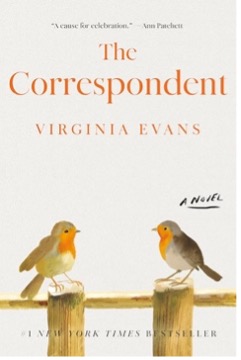
The Correspondent, by Virginia Evans, is a quick read that will make you chuckle and just may encourage you to consider anew the benefits of letter writing.
I wrote that sentence before finishing The Correspondent. Now that I have finished, I’ve moved from simply chuckling to better embracing grace when it comes the prickly people in my life.
When I’d first begun reading The Correspondent, I found it a delight. The main character is the quintessential sassy senior, and she reminds me of the women in my life who didn’t mind in the least telling me how things really are. You know the sort. They might tug the bottom of your skirt and say, “Your skirt’s a little short, don’t you think?” I hear myself saying things like, “Now that I’m older, I’m bolder,” but I pray that I am never so bold that I tug on someone’s skirt like someone once did mine.
Evans crafted a beautiful story about Sybil Van Antwerp. Her very name sounds saucy, doesn’t it? Through letters and emails to and from Sybil, we observe a woman as she tries to make sense of her world and her place in it.
Truly, The Correspondent is an inspiration.
Tips for Families
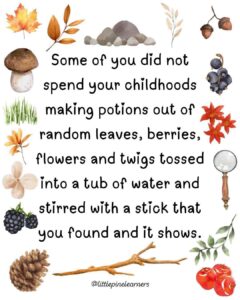
I don’t know how it shows when one did not have the utter joy of creating concoctions using found items in the woods or around the house, but I know I savored my roles as a chemist, formulator, and perfumer. Does it show?
I did some digging and found a few ways you can inspire your kids to make potions in their very own at-home “magic labs” using indoor ingredients like baking soda, vinegar, food coloring, glitter, and other safe, sensory-rich materials you might have around the house that might even include school glue, shaving cream, and dishwashing liquid.
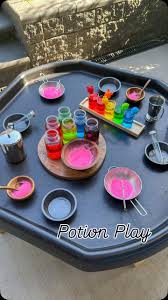
Letting kids engage in creative, open-ended play where they mix, pour, and create using cool tools like jars, pipettes, funnels, and whisks enhances their fine motor skills and is just plain fun.
I’ve shared about the mud kitchen we enjoy with our grandchildren during the warmer months, but a plastic tub or two along with any tools you have around the house that your kids might find intriguing can spark hours of fun indoors.
Surely you have a floor somewhere where you can spread out a plastic tablecloth and set up some interesting supplies. Just watch as your budding chemists do their things!
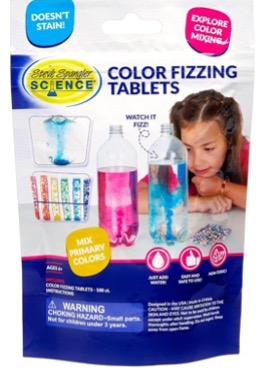
You’ll want to emphasize that these materials are for play and not for eating or drinking. The primary focus is on creating potions while making use of interesting ingredients and gadgets.
Tips for Raising Readers and Writers
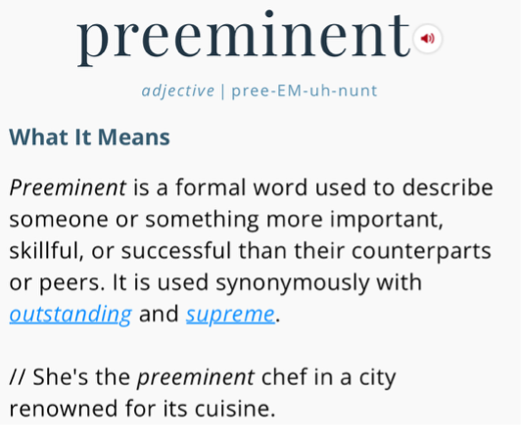
To equip your kids to read and remember the meaning of the word preeminent you may want to grab some M&Ms. I’d begin by sharing an M&M with each of your kids and have them say the name of the candy. The name sounds like this: /em-in-em/. Now have your child switch that final sound /em/ to /en/ (M&N). Finally, add at /t/ to the end and you have eminent which means famous and respected.
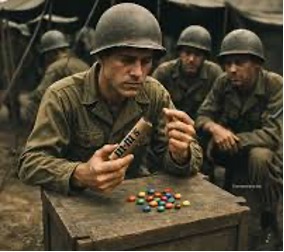
Eminent means it stands out.
Preeminent /PRE-eminent/ means it’s the very best of the best.
Example:
William Hershey is commonly considered a preeminent figure in the chocolate industry.
NOTE:
The word imminent sounds quite like our word eminent, but imminent means something’s about to happen.
Practical Grammar
- When writing about the Olympics, it’s important to remember that the Olympics is short for the Olympic Games, and that means that we’d say, “The Olympics are nearly over,” and not “The Olympics is nearly over.”
- Did you notice that we are always to write the word Olympic using a capital letter? When we say Olympic Games the g is also capitalized.
- When using the word each, we must remember that each means each one, so we’d say, “Each of the athletes is . . . “ and “Each of the athletes has . . .”
Wordology Workshop
- The Greek root athl mean prize.
- The original Olympic athletes were people who competed for a prize.
- Athl shows up in all sorts of Olympic language such as biathlon, decathlon, pentathlete, and all the forms of athletic.
News from Book Bums

Well, it looks like it might finally be happening. I hadn’t thought we’d be at our West Chester location long enough to purchase an official sign, but I haven’t found a better spot we can afford, so I’m finally choosing to upgrade to a legitimate sign. That faded, cheap ol’ banner will finally be removed. Though I’m not crazy about the aesthetics of our parking lot, our space inside is pretty great, so we’re just going to settle in for a while.
We’re hoping to get a great deal since we’ll be purchasing two signs—one for Monroe and one for West Chester. Fingers crossed!
Tips for Teachers
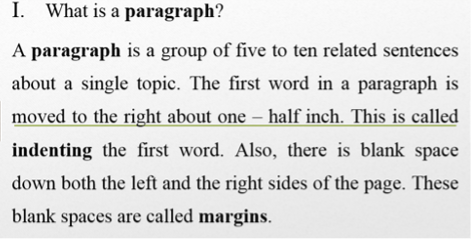
Last week we looked at the three basic components of a sentence using donut holes to make the learning a bit more fun. Today, we’re looking at paragraphs.
A paragraph is a group of sentences that work together to convey an idea. Paragraphs are the building blocks of written text; and they generally consist of a topic sentence that introduces the main idea, supporting details that explain or prove that idea, and a concluding sentence that wraps up the idea and can help transition into the next paragraph. It’s important that the sentences in a paragraph flow in a logical order to convey a complete idea.
Paragraphs can be descriptive (describing a thing or event), narrative (telling a story), persuasive (providing convincing reasons) or informative (explaining or giving directions).
Let’s look at the following paragraph from Fellowship of the Ring by JRR Tolkien.
They picked a way among the trees, and their ponies plodded along, carefully avoiding the many writhing and interlacing roots. There was no undergrowth. The ground was rising steadily, and as they went forward it seemed that the trees became taller, darker, and thicker. There was no sound, except an occasional drip of moisture falling through the still leaves. For the moment there was no whispering or movement among the branches; but they all got an uncomfortable feeling that they were being watched with disapproval, deepening to dislike and even enmity. The feeling steadily grew, until they found themselves looking up quickly, or glancing back over their shoulders, as if they expected a sudden blow.
Can you locate the topic sentence there at the beginning? Do you see that the next sentences provide details that are supporting that topic sentence? The concluding sentence is at the end and it ushers the reader into the next paragraph.
Would you say that paragraph is 1) descriptive, 2) narrative, 3) persuasive, or 4) informative?
Tasks like these remind readers that meaningful texts are more than words on pages. Each word, sentence, and paragraph is carefully considered as authors prepare descriptions, stories, persuasive texts, and information for their readers.
To help your kids learn to write a basic paragraph (and to actually want to write a paragraph), try introducing the topic using the Melissa & Doug train set.
Share that a paragraph is kind of like a train. The engine is at the beginning of the train (like a topic sentence is generally at the beginning of a paragraph), and the cars following the engine help the engine to get its job done (like the detail sentences support the topic sentence). There may be only a few sentences after the topic sentence, but that number can vary just as the number of cars on a train can vary. Finally, share that the caboose comes at the end of the train (like the concluding sentence is found at the end of a paragraph).
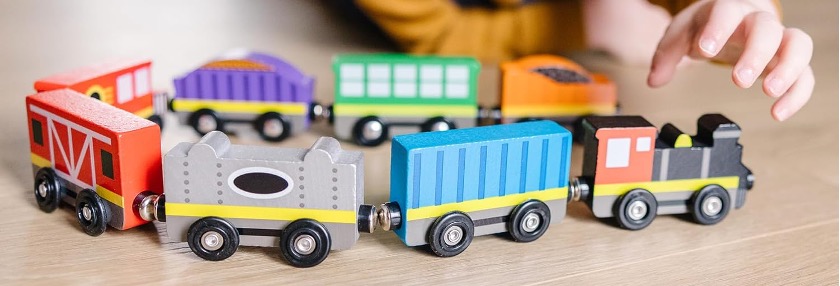
You can read a paragraph and use a corresponding part of the train to represent each sentence you read.
We want our kids to know that to write a basic paragraph we begin with a clear topic sentence (engine). We add some supporting sentences (other train cars), and we wrap it up with a concluding sentence (caboose). We can embellish each of those sentences by adding clarifying details, incorporating sensory language, varying the sentence lengths, and by using transitional words. In other words, some trains are small and basic while others are long and colorful—but they are always connected.
Just for Fun

If you know someone who would benefit from our newsletter or tutoring at Book Bums, please share this email with them! Thank you.
Copyright © 2024 Book Bums, All rights reserved
Our mailing address is:
7967 Cincinnati-Dayton Road Suite L
West Chester, OH 45069