Hello Book Bums families!
The snow is melting, and we are beginning to think spring. This week in the newsletter we ponder words for spring and share some spring break tutoring updates. Dr. Christy also shares a game-changing tip for reading and spelling well. Read on and enjoy!
Bookbums.com is an Amazon Associate; We earn from qualifying purchases. This means that if you click on a link to Amazon.com and make a purchase, We may earn a small commission at no extra cost to you. We do recommend the products. Feel free to find them by other means.
Word of the Week
accolade (ack-eh-layd) noun/person, place, or thing - an award or praise to acknowledge merit or achievement
Book jackets often show the accolades a book has won, such as a Newbery or Caldecott Medal.
Literary Calendar
"Librarians have always been among the most thoughtful and helpful people. They are teachers without a classroom. No libraries, no progress."
-Willard Scott
From our Bookshelves
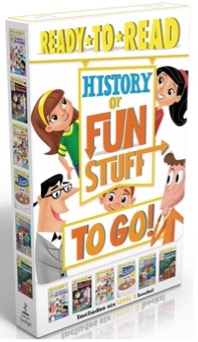
I enjoy the way the authors speak directly to the readers in a conversational style and that each book has supplementary content that incorporates science, social studies, and math into their featured content.
Your bright scholars will be able to share fun facts like . . .
- What percentage of the milk production in the United States goes to the making of ice cream? (10%)
- How many pieces of candy corn are eaten each year? (9 billion)
- How did World War II impact the growth of pizzerias in the U.S.? (During wartime, American soldiers enjoyed pizza when stationed in Italy and happily frequented pizzerias when they found them in the states.)
- Which plant is credited with sparking the invention of fireworks? (bamboo)
- Which came first, coffee houses or chocolate houses that sold hot chocolate? (coffee houses, but only by five years)
- When was the first video game patented? (1948)
Tips for Families
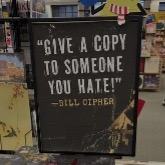
I saw this book display a while back at my local Barnes & Noble, and I thought it would be a fantastic way to discuss books, on a deeper level, with your younger readers.
What book would you give to someone you hate? Would it be the worst book you ever read so they’d have to suffer through it the way you once did? (Mine would be The House of Sand and Fog.) Would it be a book that equips and inspires them to be better? (Mine would be Ego is the Enemy.) Would it be a book where the bad guy is finally put in his or her place? (I’m thinking The Help.)
One day this week, try this as a conversation starter in the car, at the dinner table, or at bedtime. The more we make books a relevant part of familial conversation, the more our kids will consider their reading beyond just a task or even just a routine. Let’s help inspire our kids to think deeply about the books they’re reading and to consider their impact beyond just passing time.
Tips for Raising Readers and Writers
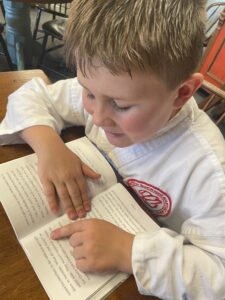
This is BIG!
When I share with you that we want our students to be vocal as they’re reading—you may not be surprised, but when I tell you that we want your kids to be vocal as they’re spelling—you may not understand what I mean.
Here’s the deal: When reading, we want our kids to verbalize the sounds that each letter or letter combination represents out loud. I say to my students, “Your brain recognizes the words you’re decoding better when it hears you make the sounds aloud. When it hears the sounds, even if you’re making them barely above a whisper, it can more easily recognize the words you’re decoding.” Moving a finger from left to right across the whole word and making the sounds you see, in order and out loud, yields accurate decoding and promotes improved comprehension.
When writing, we want our kids to say what they’re writing out loud, but they’re going to make the sounds in s-l-o-w m-o-t-i-o-n. They’ll write the corresponding letters or letter combinations, in order, as they make their way through every sound in each word. This promotes accurate spelling and better promotes orthographic mapping. When kids name letters as they spell, they often forget what they’re saying, and spelling accuracy falters.
Encourage your kids to engage in sound-by-sound reading and sound-by-sound spelling. When they guess what words say or name the letters instead of making the sounds as they spell, please encourage them to, “Make the sounds you see,” and to, “Write the sounds you say.”
It’s a game changer.
Practical Grammar
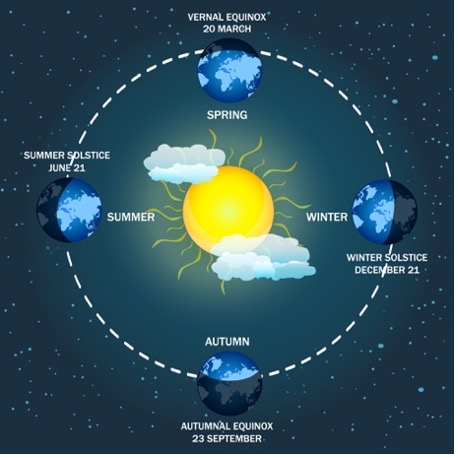
As I was considering the onset of spring, I wondered if there is a word, like autumnal that has to do with spring. According to my thesaurus, there is not. The best offering was springlike, but that doesn’t have the same ring, does it? Then I saw the image above. Opposite the autumnal equinox is the vernal equinox. There it is! Vernal.
Many have said that on the equinox everyone gets an equal length of day and night. Equinox is derived from the Latin words aequus meaning equal and nox meaning night, however the refraction of sunlight can cause the daylight to last a bit longer, so it’s not entirely accurate.
We are eagerly awaiting the vernal weather that is heading our way!
Pause for Poetry
News from Book Bums
It’s almost time for spring break, and we wanted you to know that because our local neighborhood schools are closing for different weeks, we’ll be open for your spring break.
If you are going to be out of town, please inform your tutor right away so she can plan her calendar accordingly.
We want to get in every lesson we can before the end of the school year, so your child has the very best chance to perform well on his/her year-end testing.
Our tutors will be informing you of any upcoming vacations they’ll be enjoying as well.
Tips for Teachers
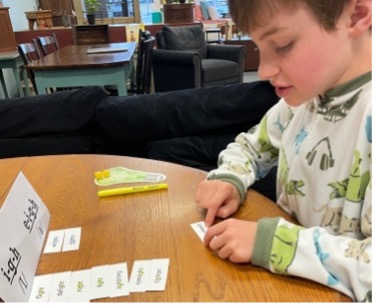
In the “Tips for Raising Readers and Writers” section above, I shared with our families that we want our students to, “Make the sounds you see,” aloud and to, “Write the sounds you say,” aloud as well.
It is our job to ensure these good habits are in place.
If your kids have an aversion to touching the paper (as some children do), we have tools to help them point to the words.
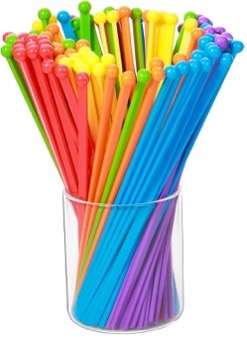
Simple stir sticks like these may be used in two ways. Kids can hold them like a pencil and use the top to point to the words. Kids can also lay them horizontally under the sentences they’re on and point their fingers along the plastic line.
We want to refrain from using thicker tools like rulers or index cards because we don’t want to block our students’ eyes from seeing so much of the upcoming text.
Just for Fun
If you know someone who would benefit from our newsletter or tutoring at Book Bums, please share this email with them! Thank you.
Copyright © 2024 Book Bums, All rights reserved
Our mailing address is:
7967 Cincinnati-Dayton Road Suite L
West Chester, OH 45069