Hello Book Bums families!
As the school year begins, we hope our newsletter continues to be a companion and resource for you in raising great readers and writers. This week Dr. Christy shares an encouraging message for parents as well as more ideas for bringing language learning to the classroom and out in the world.
We love to hear from you! Respond to this email and let us know how the first days of school are going for your family.
Bookbums.com is an Amazon Associate; We earn from qualifying purchases. This means that if you click on a link to Amazon.com and make a purchase, We may earn a small commission at no extra cost to you. We do recommend the products. Feel free to find them by other means.
Word of the Week
captivate (cap-ti-vayt) verb/action word - to hold the interest of, to charm
I was captivated by the dazzling display of fireworks and watched each burst of color.
Literary Calendar
- August 21 is the birthday of Christopher Robin Milne.
- He received a stuffed bear, which he named Winnie the Pooh, on his first birthday in 1921.
- Teddy bears became popular in 1902 after President Teddy Roosevelt spared a bear cub in the wild and the story spread. Read the story here.
- An original Teddy Bear was given to the Smithsonian in 1964.
From our Bookshelves
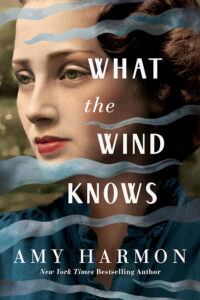
I have no idea how this book came into my hands. I flipped through a dozen books, and though I’m reading a couple of non-fiction books—I couldn’t find a “take me away” book in any of my TBR (to be read) stacks that sounded good.
The description for this one didn’t sweep me away, but it didn’t take long until I was lost in another world—even if it is a bit melodramatic.
I’m a sucker for historical fiction, and after reading Frank McCourt’s Angela’s Ashes I was here for the Irish setting. (My maiden name is McGurty, after all.) I would normally balk at time travel, but I admit to thoroughly enjoying Outlander. And I can go for a bit of romance—as long as it’s not too much gush.
What the Wind Knows was just enough, but not too much, for this fickle reader.
I was sufficiently captivated and looked forward to every moment I could sneak away with this story.
Critics will dig at the time travel. Me, too. It’s not usually my thing, but I liked this story anyway. Also, the romance is not considered to be a “clean romance,” but I did not mind the “handsy” bits. (Ha!)
I will pass this one on to my mom. She’ll like it too, I believe. We’ll keep passing it from one friend to the next, as one does. Who knows? Maybe my copy will make its way into your hands, and you’ll, too, be swept away to early twentieth century Ireland and an impossible love story.
NOTE: If you love Irish accents, listen to this one on Audible. I listened to a bit while doing some busy work at Book Bums, and it made the time pass quickly and enjoyably.
Wordology Workshop
• The Latin root capt means to hold or take.
• You can find it in our Word of the Week, captivate, as well as words such as recapture, captor, caption, and captious.
Tips for Families
| Dear Parents,
You are doing great. Don’t sweat the small stuff. And remember, it’s almost all small stuff. If your kids feel loved and valued, you’re getting so much right. Teach your kids to be kind by being kind. The other things will sort themselves out. Will you make some mistakes? Sure. But everyone learns from mistakes. Apologize and move on. You’ve got this. We’re cheering for you! |
Tips for Raising Readers and Writers
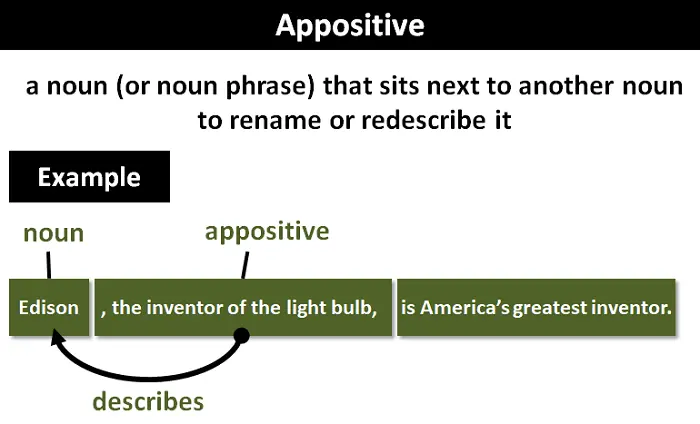
Another of Natalie Wexler’s topics of choice is teaching kids to write using appositives. Her argument is that when kids learn to write using appositives, they’re equipped to comprehend texts using appositives. That makes sense.
Appositives . . .
If the word sounds familiar, but you could use some refreshing on the topic, I’m here to do just that.
Appositives are nouns or noun phrases that rename or explain a nearby noun.
They can be found at the beginnings of sentences.
A talented gardener, my neighbor cultivates the most beautiful roses.
They can be found at the ends of sentences.
I visited my friend’s home, a lovely rustic cabin filled with primitive antiques.
Some appositives are nonrestrictive (and require commas).
The Thai place, a new restaurant I read about in the paper, has had great reviews.
Some appositives are restrictive (and don’t require commas).
My son Claudio is a natural leader.
We see appositives a lot in written works, so we might wrongly assume kids know how to navigate them. That’s a mistake.
To teach your kids about appositives, try deliberately incorporating them into your speech when talking to someone within earshot of your student.
My daughter, that beautiful and kind fifth grader over there, has a wonderful teacher this year. I’m expecting great things!
Independence, our newest favorite school, has an outstanding building principal.
Our favorite summertime spot, the Mason Community Pool, will soon be closing for the season.
A gregarious hair stylist, Ernie, used to pretend he’d cut our kids’ ears off when he gave his back-to-school haircuts.
Practical Grammar
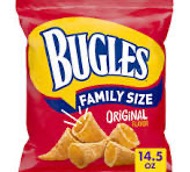
I was pumping gas one afternoon when I spotted a snack bag image just like this one in an outdoor display.
As I often do, I began deciding just how I equip my students to navigate this weird word. Many children who have not yet had the pleasure of placing a Bugle on each fingertip and crunching them off, one by one, might say /bug-les/.
Students who finish all the Foundations for Literacy phonics lessons learn how to decode this one, but many students leave before finishing all our explicit, systematic phonics-focused lessons, and that leaves them ill-equipped to navigate many words they’ll find in texts they long to read—and on tasty (Are they?) snacks like Bugles.
There are a couple of things kids need to know. First, because every syllable must have a vowel, words ending with the unaccented syllable /l/ must be spelled with either an -el or -le. There is a tip for this, but it’s a weird one.
Words with a two-space letter before the /l/ sound are usually spelled with -le (pickle, ruffle, mumble).
Words with a single-space letter before the /l/ sound are usually spelled with -el (tunnel, camel, tassel).
There are “rule breakers” but we can often see why they needed to break the rule. For example:
vehicle- We wouldn’t want the c to say /s/, so put the l first.
angle- We wouldn’t want the g to say /j/, so put the l first.
navel- We need that e to tell the a to say its name.
Some words are just plain difficult: table, fizzle, nickel, snorkel, etc.
If you want to take a step back into yesteryear, purchase a bag of Bugles and drop some knowledge with someone you love!
Note:
400+ words end with e-l.
3,000+ words end with l-e.
When in doubt, go with l-e.
News from Book Bums
This time of year is a little slow for us here at Book Bums. So, we’re earnestly preparing for the families who’ll be reaching out across the next couple of months when their kids begin showing signs of struggle. We’re not hoping for that, but we know it happens. Lots of smart kids need to learn to read and spell with a systematic approach that makes sense to them.
We’re so grateful for the Book Bums families who recommend us to their friends, neighbors, and family members! Thank you! We truly appreciate that you spread the word about what we do here. Please continue to share your experiences so we can help more and more children who are having difficulty with learning to read and write. As you well know, we can help. It’s our very heart to help.
You should know that we have not raised our prices in a long time, but we’re feeling the pinch (as we all are) with rising costs. I am promising to maintain current pricing until the new year; however, we feel certain that we’ll need to adjust our pricing for 2026.
If you know someone who’s on the fence about tutoring with us, please share that the sooner they begin the better the pricing will be! Every little bit helps.
Tips for Teachers
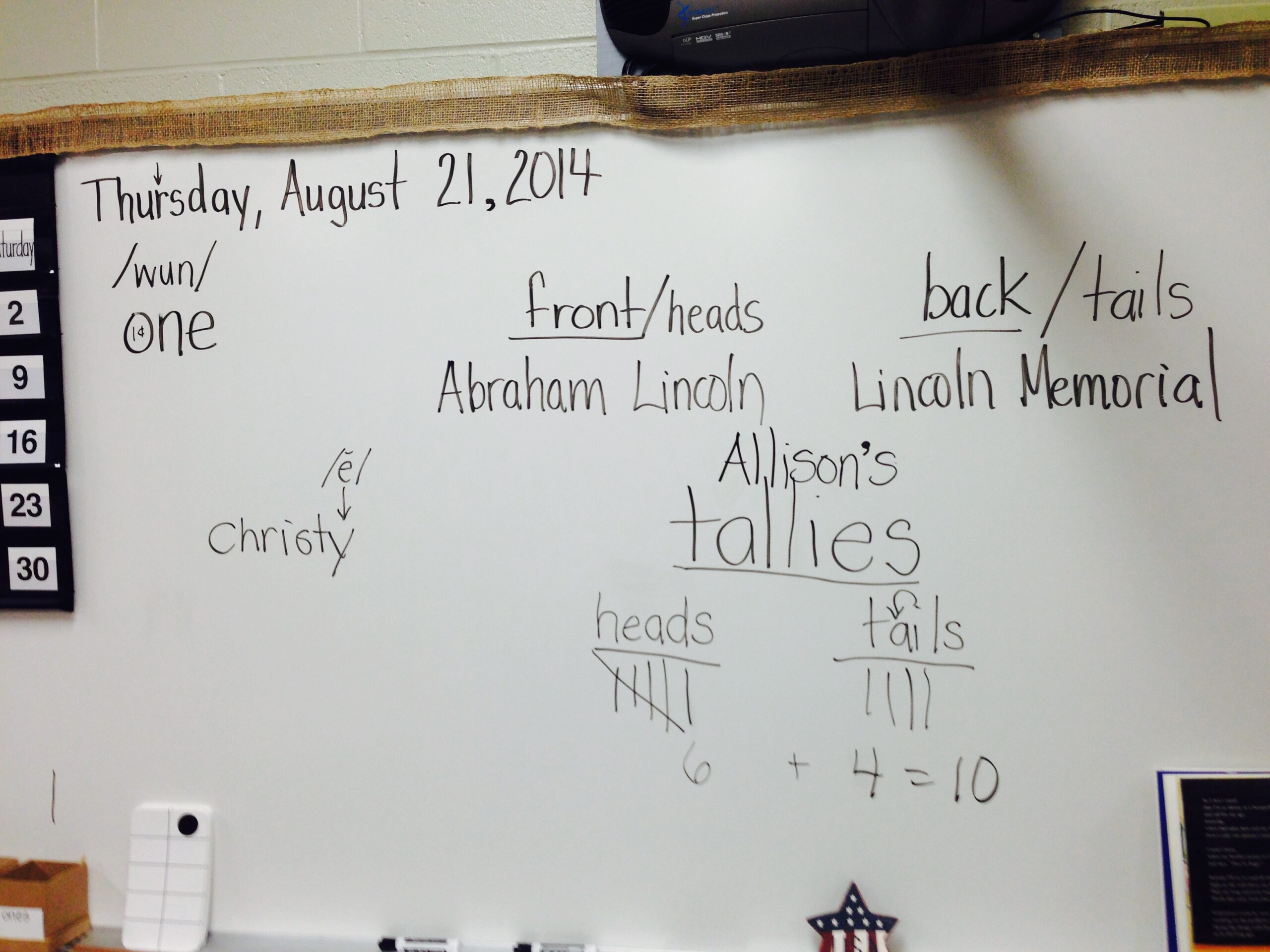
Last week, I shared a screen shot of my white board on the first day of school. I shared that across all content areas, I made a deliberate effort to also share language arts content with my students—specifically with phonics instruction.
Today I want to share a screen shot from one of my math lessons. I was teaching about coins. I gave kids magnifying glasses and asked them to closely examine pennies. We noted, together, what we saw, and I shared information both verbally and in writing regarding who’s on the front of the penny and what’s on back. We did this with other coins too. (Day 5, nickels; Day 10, dimes; Day 25, quarters)
The next penny activity was multipurposed.
It was the first day of school, and I wanted kids to learn to work well with a partner. One student was instructed to flip the penny onto his/her money counting mat (a simple green piece of felt) while the other student was to tally, using tally marks, how many heads and tails were rolled out of a total of ten flips.
I gave the students a plain piece of paper, and they were to make a “So-and-so’s Tallies” heading on their papers indicating their partners’ names. I recall teaching that the students’ names were to be followed by an apostrophe and an s to show possession (unlike the plurals of heads and tails).
This is an example of teaching language arts across the content areas. It’s also an example of how the teacher does less work (preparing pre-printed pages) so the kids do more learning.
Most folks I know would type up something like this:
____________________’s Tallies
heads tails
Can you see how having kids do the work might complement their learning and equip them to do more of this kind of work (that’s actually fun) at home?
Just for Fun
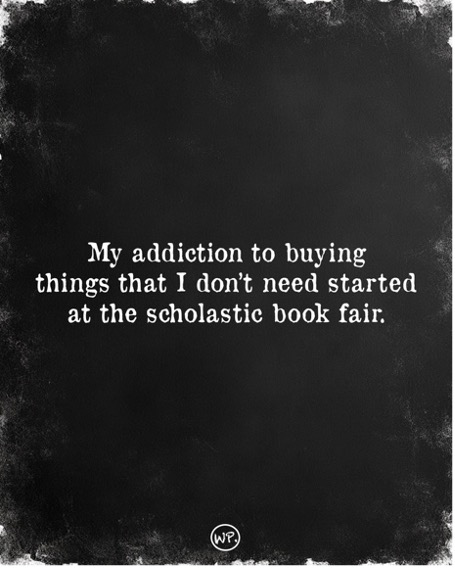
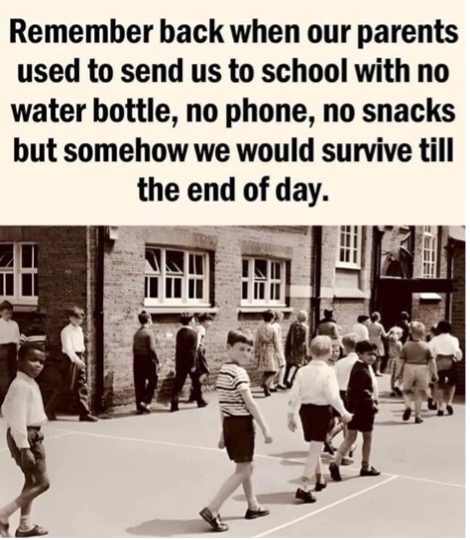
Isn’t this the truth?
If you know someone who would benefit from our newsletter or tutoring at Book Bums, please share this email with them! Thank you.
Copyright © 2024 Book Bums, All rights reserved
Our mailing address is:
7967 Cincinnati-Dayton Road Suite L
West Chester, OH 45069