
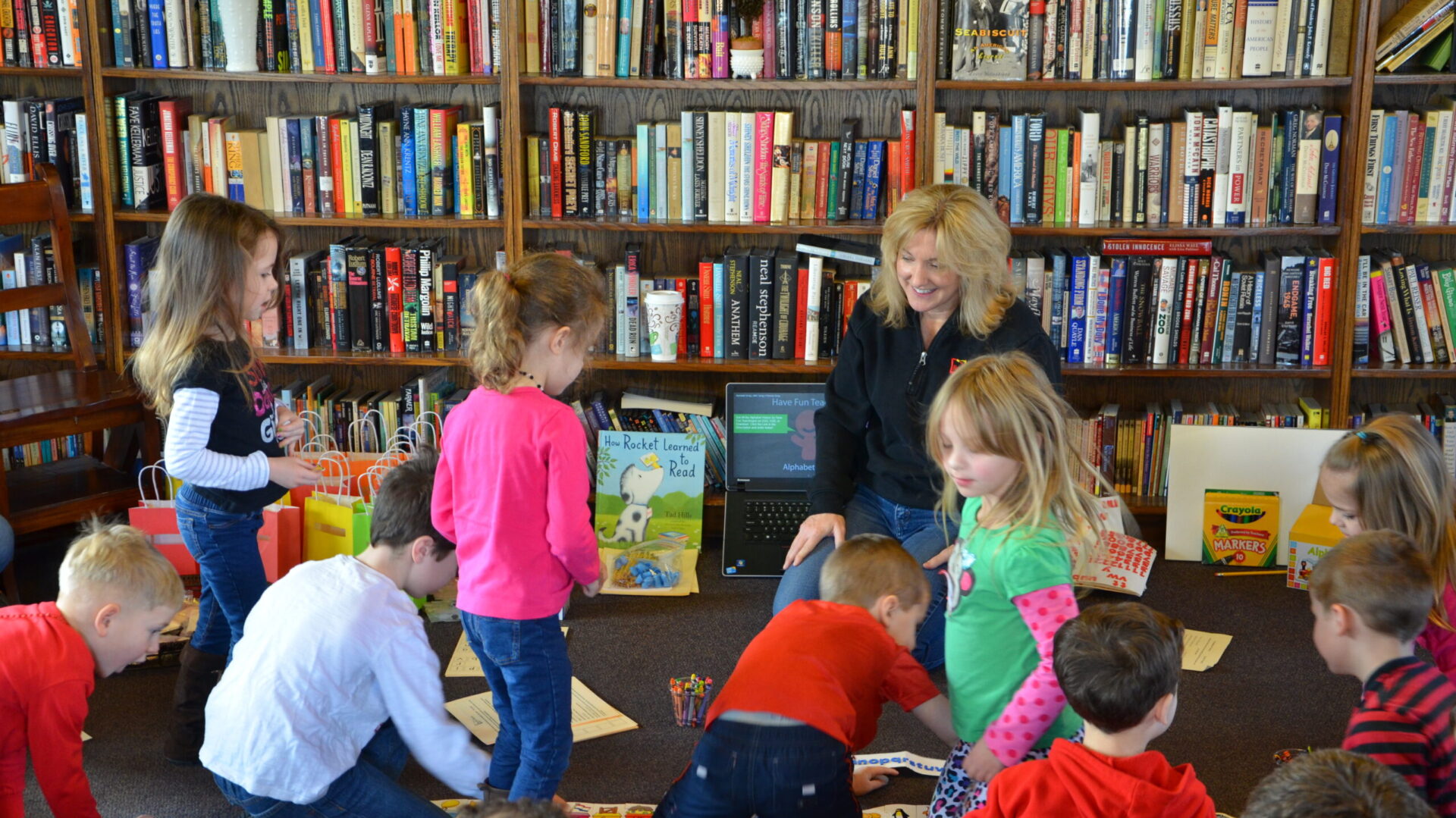

Hello Book Bums families!
The fall colors are just starting to make their appearance, and we are ready! Dr. Christy shares a fun, meaningful activity to get you outside in the leaves as well as a host of books to spark discussion.
Did you know that anyone can purchase all the fun-filled, phonics lessons we use at Book Bums? Scroll down to learn how.
Bookbums.com is an Amazon Associate; We earn from qualifying purchases. This means that if you click on a link to Amazon.com and make a purchase, We may earn a small commission at no extra cost to you. We do recommend the products. Feel free to find them by other means.
Word of the Week
zephyr (ze-fer) noun/person, place, or thing - a gentle breeze
It was a gorgeous day at the park with the sun shining and zephyrs blowing through the fall leaves.
Literacy Calendar
- October 9 is the birthday of beloved author Katherine Applegate.
- You may know her middle grade novel, The One and Only Ivan, which won a Newbery Medal.
- Check out her website to learn about all her books and find teacher/parent resources to accompany them.
The important thing is to remember:
Books change the world. And so can you.
-Katherine Applegate
From our Bookshelves

Early in Caste: The origins of our discontents, Pulitzer Prize winning author Isabel Wilkerson compares America to an old house stating that even if we did not build the house in which we live, we inherit the problems when there’s a faulty foundation.
Though I would have said this book is about racism, Wilkerson states that caste— “any action or structure that seeks to limit, hold back, or put someone in a defined ranking, seeks to keep someone in their place by elevating or denigrating that person on the basis of their perceived category,” is a more suitable term to describe how we tend to engage with one another in our nation.
Wilkerson declares that “individuals must shed the false belief that they are inherently superior or entitled to special privileges and power” and engage in “open-hearted attempts to connect to people of other castes.”
Wilkerson states that this system of castes can be broken with radical empathy and that everyone benefits when society meets the needs of the disadvantaged.
This was a really tough book to read, but I pray Wilkerson has equipped and inspired me to step into radical empathy for my fellow humans.
Tips for Raising Readers and Writers
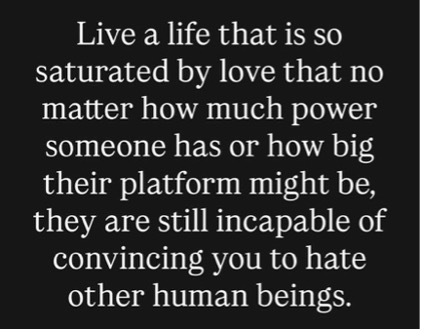
If you’d like to deliberately promote radical empathy with your kids, you might:
- Show curiosity about strangers.
- Admit your own biases. Talk openly about your own blind spots and model how you’re working to correct them.
- Help your kids practice emotional regulation because stress and anger diminish our capacity to care for others.
- Ask your kids to imagine how one might feel when in troubling situations.
- Point out ways we’re all the same.
- Praise your kids’ kindnesses.
- Read diverse stories featuring characters from various cultures, backgrounds, and life situations.
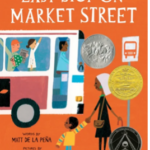
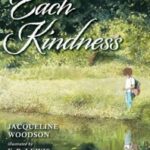
Some wonderful books to share with kids include the ones shared below. The picture is a link if you'd like to order them for your own.

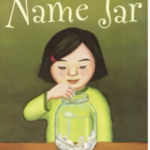
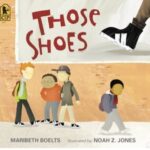
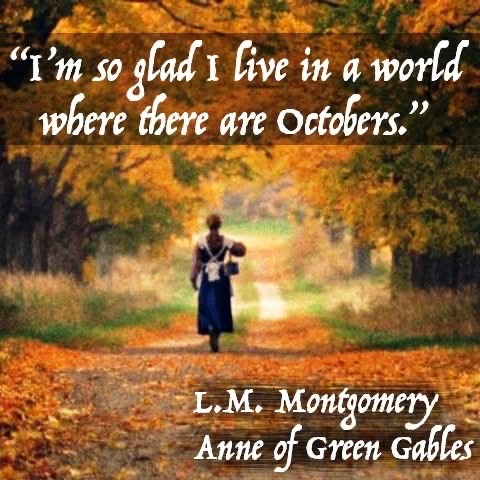
Like Ohio trees in October—with those gorgeous leaves of various shapes, sizes, and colors—the world’s people are truly beautiful!
Tips for Families
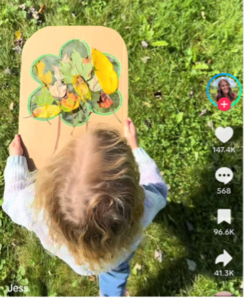
Enjoy a powerful object lesson while hosting this fun, leaf-collecting activity/craft with some kids you adore. All you need is a bit of cardboard, a marker, some packing tape, and access to leaves. Cut a “cloud” shape (9” x 13” +/-) out of your cardboard and add a couple of brown lines beneath it to make a trunk for your tree. Attach strips of overlapping packing tape to the opening so the kids can attach leaves to the sticky side to create their trees.
Marvel at the variety of shapes and colors and the stunning beauty of the tree leaves when viewed all together and make a connection with the beauty of the diverse people who share this planet. What a boring world it would be if we were all the same.
Wordology Workshop
- The Latin root vari means different or diverse.
- You find it in adjectives such as various, variable, and variegated; verbs such as vary, and nouns such as variant.
Practical Grammar

Speaking of leaves, let’s think about using the words leave and let.
Leave means to 1) depart or 2) to allow something to remain in a certain state, while let means to allow or give permission.
leave – to indicate a departure.
It’s time to leave the party.
leave – to indicate we want something to stay in its condition or place
Leave the light on, please.
We use let when we allow the natural process to happen without interfering.
Let the dog stay outside.
Here’s the tricky part:
Leave me alone means to stay away so I have physical solitude while let me alone means to stop annoying or bother me.
Today, leave me alone is now becoming the more popular way to say, “stop bothering me,” but let me alone is a proper statement, and I wouldn’t have thought so. How about you?
News from Book Bums
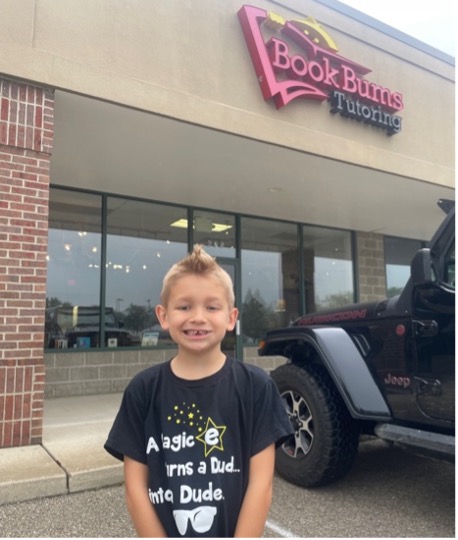
This young man began formally working with Dr. Christy (his grandma) when he was four years old. He absolutely loved working though the Little Letter Learners curriculum (which is a good thing, because he did most every lesson twice).
He was adopted at birth, and his poor little body was wracked with severe withdrawal symptoms resulting from his birth mother’s use of drugs during her pregnancy. His adoptive momma held him while alone in a hospital room (because he was born during the COVID-19 pandemic), while we all prayed fiercely for them both. Physicians warned that it would be very likely that our precious boy would have learning difficulties.
Though he has not been formally diagnosed, I suspect that he has dyslexia, a language-based challenge that affects reading, spelling, speaking, and writing.
So many times, folks worry that letter reversals are indicators of dyslexia, but explicit handwriting instruction typically resolves letter reversals. What I’ve come to learn is that speech/language is a more reliable indicator that dyslexia is at play.
When he called me to excitedly say, “Grandma! I just bought my skrool skupplies!” (school supplies) I made note. When he scrunched up his nose, tapped his chin, and said, “I’m countulating,” (calculating) I smiled and thought how darned bright this beautiful boy is.
Dyslexia isn’t scary. Typically, the only lingering difficulty—when kids receive proper instruction—is the need for additional time to process what they’re reading, writing, and saying.
Recently, his parents proudly forwarded some of his first-grade assessments, and I’m sharing them below.
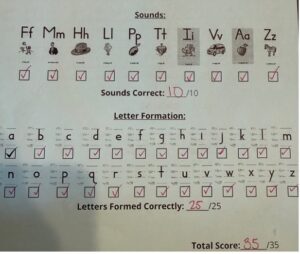
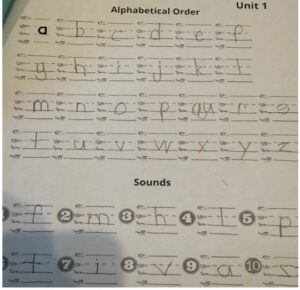
Our sweet guy is now a first grader. We’ve completed half of Book Bums’ Foundations for Literacy phonics curriculum, and he’s discovered he can read (with some coaching) Are You My Mother by P. D. Eastman. Here’s a video of him reading a bit of the text: https://www.youtube.com/shorts/vJaK7uu5S1I
We’re on our way!
Remember that fluent reading comes after labored reading. The kindest things we can do for beginning readers is to patiently encourage and coach them as they’re learning to navigate this complicated code-based language of ours.
Tips for Teachers
One thing that makes the Foundations for Literacy curriculum superior to other curricula is that we make a deliberate effort to provide children with plentiful, fun-focused decoding practice so our students not only learn, for example, that a-w is an alternate spelling of the short o sound, they come to know words “on sight.” And if they’re spelling the word fawn but write is as fon, they’ll recognize that the word they recorded doesn’t “look right.” This is because the words have become orthographically mapped into their long-term memories. Our students come to “flip it” to try another way to spell the sounds until the word does “look right.”
At Book Bums, we use word cards, game boards, sorts, spelling tasks, and slide shows (in automated emails to our families) to ensure our students have plentiful practice decoding lots and lots of words so those words become known on sight.
So many students who are new to Book Bums may say, “Oh! I know that! My teacher taught me that a-w says /aw/,” but they cannot decode words containing a-w saying /aw/--and they continue to spell fawn with an f-o-n. Memorizing words by saying things like “. . . f-a-w-n, fawn, f-a-w-n, fawn” does not work. Also, if a child does not know the meaning of a word, the word will not be stored in memory.
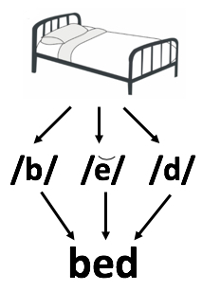
When students imagine a bed, stretching out the sounds in the word bed (/b/-/e/-/d/), and recording the letters to represent the sounds in the order we say them (b-e-d), we are promoting orthographic mapping.
When students arrive at the word bed, making the sounds (/b/-/e/-/d/), represented by those letters (b-e-d), and arriving with a mental image of a bed, we are promoting orthographic mapping.
All three steps are required.
Research reveals that it typically takes from 1-4 experiences with a word for to be stored in kids’ long term memories—more for kids with dyslexia.
Whether you’re working with kids in a classroom, tutoring, or simply supporting the kids you adore, remember that you can purchase tools to support your students (tools that promote orthographic mapping) by visiting www.bookbums.com/shop/. For $12 you can download all the materials we use at Book Bums for the a-w & a-u (g-h) lesson (Scroll down until you find FFL 3.1). At this web address, you can find all the materials you need to support the beginning and struggling readers in your sphere of influence with any phonics lesson you’ll need!
Just for Fun

If you know someone who would benefit from our newsletter or tutoring at Book Bums, please share this email with them! Thank you.
Copyright © 2024 Book Bums, All rights reserved
Our mailing address is:
7967 Cincinnati-Dayton Road Suite L
West Chester, OH 45069