

Hello Book Bums families!
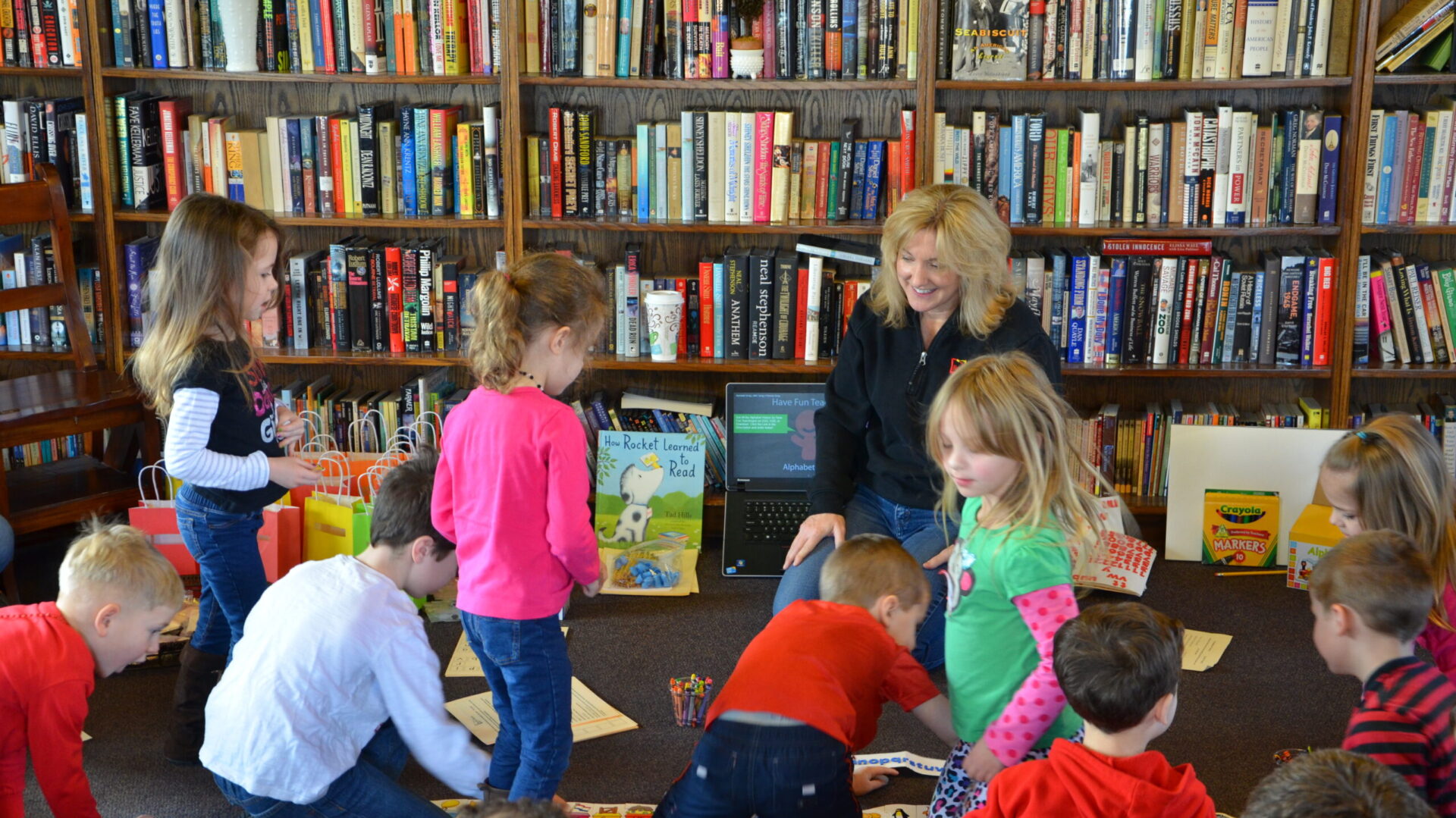
Thanks to everyone who came to our Open House in Monroe last weekend! We loved seeing you and sharing fun literacy activities with families.
This week in the newsletter we are ready for Halloween with a costume hike, a Halloween survey, and some candy collection data analysis. You'll also find all our regular features. Read on and enjoy!
Bookbums.com is an Amazon Associate; We earn from qualifying purchases. This means that if you click on a link to Amazon.com and make a purchase, We may earn a small commission at no extra cost to you. We do recommend the products. Feel free to find them by other means.
Word of the Week
vilify (vih-leh-fy) verb/action word - to defame or make someone appear villainous
Many modern political ads seek to vilify their opponent, making them appear evil.
Literacy Calendar
- On October 30, 1938, Orson Welles performed a a live radio show based on War of the Worlds.
- Listeners mistook fiction for reality and there was a nationwide panic.
- Learn more about the this piece of literary history in this article from the Smithsonian.
From our Bookshelves
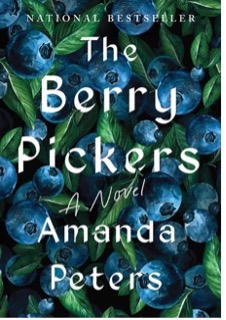
The Berry Pickers, by Amanda Peters is a novel told through two characters, Norma and Joe. Joe reflects upon his life as a child—from the time his younger sister, Ruthie, went missing from the berry fields of Maine where his family worked across many summers. Norma is sharing the odd circumstances of her childhood where things never quite added up and she ends up uncovering her true identity. The novel also explores the experiences of Indigenous farm workers, the berry pickers of the title, and could be a great read for Native American Heritage Month in November.
I chose this book from atop a book display for no other reason than it caught my eye and I love berries, but I thoroughly enjoyed the read. It earned 4.4 stars on Amazon and 4.07 on Goodreads. Somewhere in that range feels about right to me.
Tips for Families
If you’re looking for something fun to do this weekend, check out the Halloween Family Hike being held at Sharon Woods in Sharonville, Ohio on October 24th from 5-6 p.m. It’s free for kids ages 6-9. Your kids will enjoy finding trinkets and treasures along the park’s pathways—and the kids will sleep really well afterward. That’s always a big win for moms and dads!
For safety, hiking-appropriate costumes are encouraged.
Practical Grammar
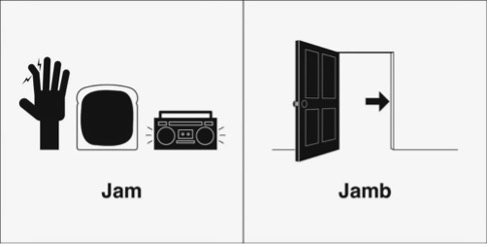
The word jam, for example, can mean 1) a sweet fruit spread; 2) a dense group of people or vehicles; 3) being in a difficult position; 4) to casually play music with a group.
That’s tricky.
The homophone word jamb is used for the vertical surfaces that form the sides of a door, window, or fireplace.
While reading The Berry Pickers, I noticed the words jam and jamb used in proximity of one another, and I thought, I didn’t realize that jamb as in door jamb was spelled with a final, silent b.
(Hm. The word plum is a fruit, and the word plumb (with a dumb b) is another word used in building things and means perfectly vertical. So, the jamb should be plumb, right?)
At Book Bums, in our Foundations for Literacy phonics curriculum, we explicitly teach kids about the “dumb b.” We share that the word dumb means unable to speak (as in dumbfounded), and we share lots of words featuring b’s that are “unable to speak.”
We have the kids read and spell lots of words (There are more than you might think!) including: comb, thumb, dumb, bomb, tomb, lamb, climb, crumb, limb, numb, plumbing, womb, succumb, subtle, doubt, and debt.
Long ago, those b’s were pronounced. They weren’t silent as they are today. It was in about 1300 that folks began dropping the sound for those b’s.
The words thumb and crumb came to our language later, and that “dumb” b was used to “match” the spelling pattern of the others.
News from Book Bums
For our open house at our Monroe location, we hosted a “Would you Rather” survey. We asked the following questions, and the results to the survey are in parentheses.
- Would you rather read with a cat (3) or a dog (11)?
- Would you rather read in a blanket fort (3) or a treehouse (11)?
- Would you rather eat a caramel apple (10) or caramel corn (4)?
- Would you rather warm fall weather (6) or chilly fall weather (8)?
- Would you rather apple cider (5) or hot chocolate (9)?
- Would you rather spooky books (3) or funny books (11)?
- Would you rather a hayride (5) or a corn maze (9)?
- Would you rather an apple orchard (8) or a pumpkin patch (6)?
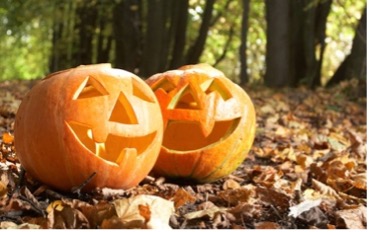
- Would you rather a smiling jack-o-lantern (10) or a scary jack-o-lantern (4)?
This was a fun way to get to know the folks who stopped in and to invite them into the different spaces at Book Bums.
Tips for Raising Readers and Writers
This could make an interesting topic at dinnertime. Ask everyone at the table to pinpoint their own pronunciations of the word and note how many say it one way and how many say it the other way. Chances are, your kids will say it the same way you do—but maybe not.
This kind of talk could launch kids into some fun with data collection. The cool thing is, they’ll be reading and writing while also learning how to organize information. One of my favorite parts of trick-or-treating was spreading all the candy on the floor and organizing it to see just what I had.
Families can make the most of this excitement by encouraging that organization and noting the ease with which kids can observe what they have (and maybe even make trades).
If you have a child who loves learning, you may even encourage him or her to record the names of the candies and make tally marks to indicate how much of each candy type they received. You could do the writing and ask your kids to answer questions based on the data the two of you have collected, organized, and are analyzing. What do you have most of? Least? Which candies have equal quantities?
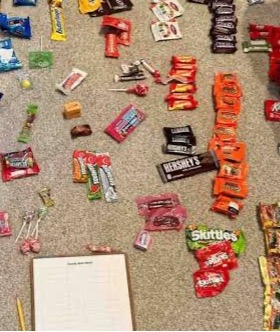
Of course, if you do this and then try to sneak a couple treats after the kids go to bed, you’ll be busted for sure!
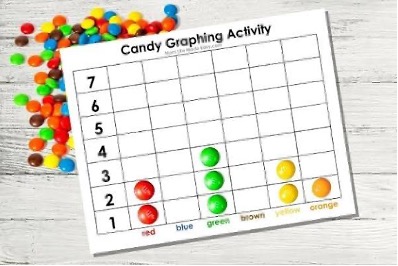
To keep things simple, you can do the same kind of thing with a single bag of M&Ms. You don’t need a form. Just take a piece of copy paper and fold it to make columns and rows and start organizing those colorful candies. It’s less reading and writing, but it’s a start!
Pause for Poetry
Theme in Yellow
by Carl Sandburg
I spot the hills
With yellow balls in autumn.
I light the prairie cornfields
Orange and tawny gold clusters
And I am called pumpkins.
On the last of October
When dusk is fallen
Children join hands
And circle round me
Singing ghost songs
And love to the harvest moon;
I am a jack-o'-lantern
With terrible teeth
And the children know
I am fooling.
Tips for Teachers
As a classroom teacher who had a deep desire to see every single student reading at grade level expectations by the end of each school year, I searched for ways to equip my students to decode every single word they’d find in grade level texts.
As I read, I’d occasionally think to myself, “Uh oh. I have not yet equipped my students to accurately decode this word.” Then, I’d get to work creating an explanation and crafting a lesson to equip them to do so.
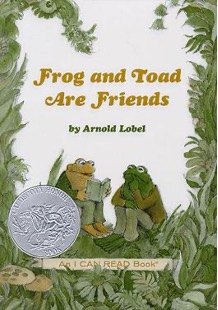
I have literally gone through books and recorded with which lesson my students were equipped to accurately read the words. Here’s an image of an old book where I recorded the Foundations for Literacy lessons where I’d addressed the phonics skills needed to decode every single word on the page. If I hadn’t done so, I got to work again. Here’s a page from Frog and Toad Are Friends where you can see that every word was made decodable for our students at Book Bums. This is a basic beginning readers’ book, so there is only one lesson from 5.1-5.5. For more advanced books, we’d see lessons farther along in our Foundations for Literacy curriculum.
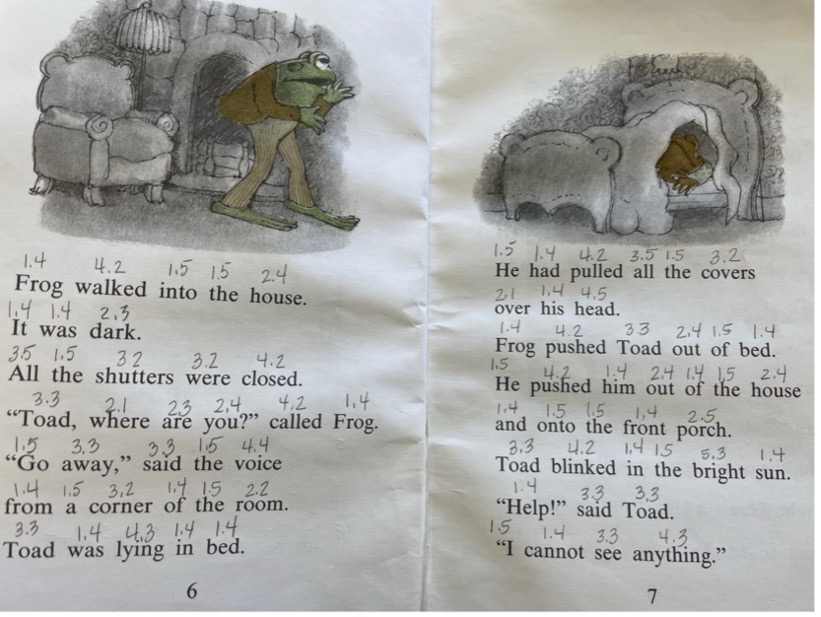
Teachers, if you come to a word and you know you’ve not yet equipped your students to decode it, seek the information you need to teach your students how it works. Watch for your students’ errors and assume that it’s not a student problem but an instructional problem and begin firming up the misunderstandings of your students.
As always, if you need support, I’m here to help. Just email me at christy@bookbums.com.
Just for Fun
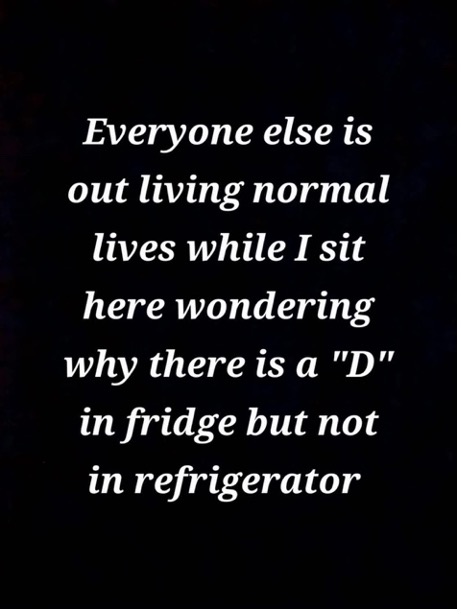
The word refrigerator comes from Latin roots in refrigerare.
re- usually means back or again but it can also mean completely
(as in resplendent, reticent, resolve, and repertoire)
frig- means cold or coolness
(as in frigid, frigidity, refrigerate, refrigerant, frigorific)
Together, the roots in refrigerare mean to make thoroughly cold.
The word refrigerator entered the English language in the 1600s.
In the Foundations for Literacy lessons, we teach kids that -ck, -dge, and -tch are “short vowel blockers.” All of these spellings are use following short vowels and they’re built in blockers so when we add endings, the vowel cannot change the sound of the vowel in the base word.
If you know someone who would benefit from our newsletter or tutoring at Book Bums, please share this email with them! Thank you.
Copyright © 2024 Book Bums, All rights reserved
Our mailing address is:
7967 Cincinnati-Dayton Road Suite L
West Chester, OH 45069