Hello Book Bums families!
This week's newsletter is brought to you by the letter w! We're sharing a novel, a picture book, a poem, and a spelling lesson all featuring the twenty-second letter of the alphabet.
Dr. Christy also shares news about upcoming workshops at the new Book Bums location. Read on and enjoy!
Bookbums.com is an Amazon Associate; We earn from qualifying purchases. This means that if you click on a link to Amazon.com and make a purchase, We may earn a small commission at no extra cost to you. We do recommend the products. Feel free to find them by other means.
Word of the Week
whimsical (wim-sih-cull) adjective/describing word - fanciful, playful
She decorated her daughter's room in a whimsical style with butterflies and stars hanging from the ceiling and pillows in the shape of rainbows and dragonflies.
Literacy Calendar
- June 21 is the birthday of American author and Nobel Prize winner Ernest Hemingway.
- Each year, the Florida Keys (where Hemingway lived and wrote for eight years) celebrates his birthday with Hemingway Days.
- This celebration includes a look-alike contest, marlin fishing, and a short story contest.
- If you're interested in reading some of his work, consider starting with a short story or his famous novella, The Old Man and the Sea.
From our Bookshelves
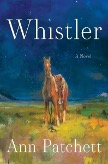
I was reading Whistler by Ann Patchett when I saw, on social media, a few people saying something like, “I’m sorry Ann Patchett, but I’m done reading any book you write. I was hoping Whistler would be good, but it didn’t work for me and now I’m done.”
As I finished the book, I couldn’t disagree more strongly. I adored Whistler.
It’s not a thriller but instead reads as an intimate character study revealing the undeniable value of being truly known and loved by someone. In this case, it’s a child and a loving stepparent.
Perhaps it won’t be for everyone, but I can’t help but believe that anyone could make a valued connection and appreciate the positive light that’s shone upon a child and her stepfather.
It’s a beautiful story that is beautifully told.
Tips for Families
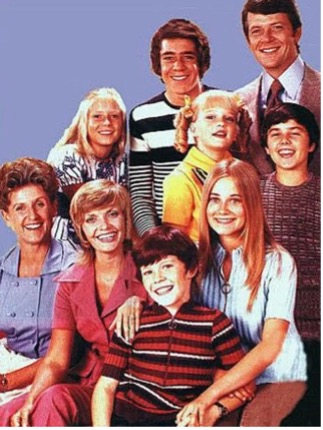
The iconic Brady Bunch family is an example of a complex family structure.
Stepfamilies are families where at least one child is not the biological child of one of the parents. Sometimes we refer to them as blended families.
I didn’t know it, but stepfamilies can be categorized as simple or complex—which I feel are unfortunate categorization names. Surely there’s a more positive way to convey the same meaning, right?
Simple family structures include one partner who has children from a previous relationship, while a complex structure is when both partners have at least one child from previous relationships.
I know from experience that raising children who are not your biological children is challenging.
I’m not a stepparent, but I had several stepparents. I was lucky. My primary stepparent, as a child, was wonderful. I truly love him and his family.
As an adult, I can appreciate the challenge it is for both the adults and the children in blended families.
In an article I read on the topic, Dr. Sheryl Ziegler gave the following advice that I thought was particularly meaningful.
Blended families need to schedule, at a minimum, space for these 4 things:
- Time to all be together
- Time to be with just your kids
- Time to be with just their kids
- Time to be alone as a couple
I do believe this would be a great way to promote the well-being of everyone in the family. How we spend our time speaks volumes about the things we truly care about.
There are lots of benefits of having stepparents. Having multiple adults pouring into your life is an incredible blessing. I was blessed beyond measure by some of my stepparents and their families. They helped to make me who I am today, and I couldn’t be more grateful.
Advice I’d give would be . . . be a stepparent who truly sees and values your partner’s kids—even when they have bad days.
Pause for Poetry
Tips for Raising Readers and Writers
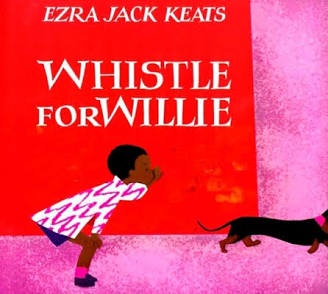
If you check out the book, A Whistle for Willie, you can note with your kids that both w and w-h can represent the sound /w/. There are times when a w-h represents the /h/ sound (as in who and whole), but w-h usually represents the /w/ sound.
Look for this page in the book . . .
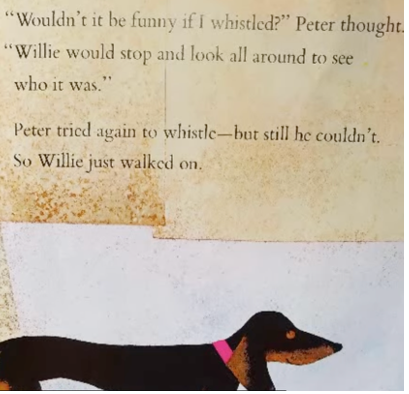
Invite a child you adore to help you find words beginning with w and w-h. You read the words to them to see if they can hear any differences in the pronunciation. (There are none.) So, how are we supposed to know when to use only a w and when a w-h is required?
There’s only one way.
We must pay attention to the sounds and the spellings and engage with them. The plentiful research suggests that 1-4 experiences with words (when we’re looking at the letters, making the sounds, and gaining the word meanings) promotes orthographic mapping. That’s what helps us to recognize when word spellings are or are not correct.
In this book, Peter uses sidewalk chalk. You can use sidewalk chalk to write words beginning with the /w/ sound with both spellings.
Here are some words with the /w/ (sound) spelled with only a w and words with the /w/ (sound) with a w-h. Your kids can begin learning about how these words work before they head back to school! Believe it or not, a few simple experiences like these may be all it takes to help your kids learn whether it’s a w or a w-h saying /w/.
wind, whistle, won, when, will, what, was, which, where, well, why, wow, whisk, wig, web, whine
Note: W’s can have a wacky impact on vowel sounds. That’s why words like won, was, warn, wand, and water have vowels that don’t make the expected sounds.
Practical Grammar
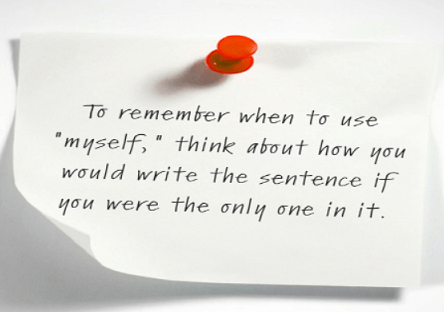
Myself cannot be substituted for the word me.
It is not grammatically correct to say, “Please contact Jim or myself if you have any questions.”
Instead, use the word me. It should sound correct when we eliminate the second name.
We wouldn’t say, “Please contact myself if you have any question.”
When using myself correctly, we’re referring back to the word I like in the sentence, “I was proud of myself.”
News from Book Bums
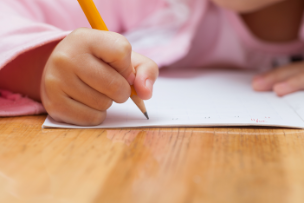
Book Bums will be hosting Handwriting Workshops, Monday through Friday, at our Monroe location during the first week of August. We’ll host one session from 1:00-2:00. If that one fills up, we’ll host a second one from 3:00-4:00.
More information coming soon!
Tips for Teachers
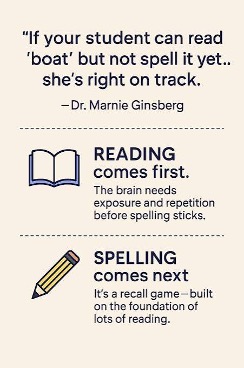
When a child recognizes words and can read them with accuracy but is not spelling them correctly, we shouldn’t be overly concerned. Recalling spellings is a more demanding task and it makes sense that those skills lag a bit. But we must strive to equip kids to spell well.
At Book Bums, we provide the instruction that promotes accurate reading and accurate spelling, but the spelling piece takes a bit longer.
We equip kids to consider, knowing what we’ve taught them about how words work, which phonics lessons could they choose between to try to represent the sounds they hear in words.
For example, when they’re trying to spell boat, our students would likely begin with the first phonics lesson in our progression that could make the o say its name. They might try this: bote.
Because they’ve seen the word several times, they’d likely say, “That doesn’t look right.”
We’d then ask, “What else could you try?”
The child might say, “It could be two vowels together.” Then they would try boet and boat.
Most kids would point to boat and say, “I think that’s the right one. It looks right to me.”
Our job, as an instructor, is to encourage our kids to “flip” between what they know about how to represent the sounds in the word until they arrive at the correct spelling.
Just for Fun
If you know someone who would benefit from our newsletter or tutoring at Book Bums, please share this email with them! Thank you.
Copyright © 2024 Book Bums, All rights reserved
Our mailing address is:
7967 Cincinnati-Dayton Road Suite L
West Chester, OH 45069