

Hello Book Bums families!
This week in the newsletter we share a book we love and one we really don't, but we keep thinking about both of them. We also have a video of Dr. Christy herself coaching a student through a lesson as well as advice for inspiring your young learner. We hope you get inspired too!
Read on and enjoy.
Bookbums.com is an Amazon Associate; We earn from qualifying purchases. This means that if you click on a link to Amazon.com and make a purchase, We may earn a small commission at no extra cost to you. We do recommend the products. Feel free to find them by other means.
Word of the Week
mercurial (mer-cyur-ee-uhl) adjective/describing word - characterized by quick, unpredictable change
The weather in Ohio can be mercurial, changing from chilly to hot to raining in a short time.
Literacy Calendar
- June 22 is the birthday of American author Octavia Butler.
- She was a pioneer of Afrofuturism, which imagines and expresses Black identity in different cultures and times. Butler's stories and novels were science-fiction, placing Black characters in imagined future or past worlds.
- Her most well-known works are Kindred and Parable of the Sower.
- You can learn more about her life and work in this article from the National Women's History Museum.
"Every story I create, creates me. I write to create myself."
-Octavia Butler
From our Bookshelves
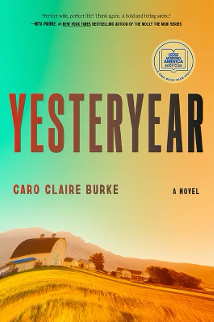
I just read Yesteryear by Caro Claire Burke. Truthfully, I hated this book. But it feels like that’s exactly what the author was going for. And I continue to think about the book and its message, which is also what the author was going for. So, I think she hit a home run?
Have you heard the term tradwife in any of your circles? Tradwife is a portmanteau. It’s two words combined to make a new word. In this case, the words traditional and wife are combined and used to describe a hyper-traditional, mid 20th-century woman who’s married and raising children sans many of the conveniences afforded today.
The main character of Yesteryear is a tradwife, Natalie, who’s an influencer on social media. If her life is supposed to make the reader cringe, it worked.
This book, a Good Morning America Book Club pick, is described as a satirical thriller that critiques influencer culture. It earned 4.2 stars on Amazon. Do I recommend it? No. But if you do read it, I can’t wait to talk with you about it!
Tips for Families
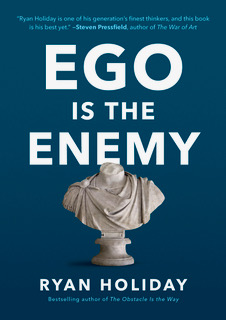
It’s true, isn’t it?
When we think we know all there is to know about a thing, there’s no motivation to try something new, for it couldn’t be better than what we’re currently doing.
Every now and then, at Book Bums, we engage with children who believe they already know everything they need to know; and they cannot understand why on Earth their parents are making them come to us for tutoring. They are not interested in receiving academic support.
That’s a difficult battle, but it’s a battle worth fighting.
But how do we inspire children to want to learn? How do we inspire curiosity? How do we inspire a desire for excellence?
Here’s what I’m thinking:
- We need to model lifelong learning and prioritize wonder and exploration.
- It’s also beneficial to focus on kids’ growth rather than their results.
- Rather than saying things like “You’re so smart,” try saying things like, “You figured it out!” or “Whoa. Your hard work really paid off, didn’t it?”
- Give your energy to the things you value, and remember to value effort and grit above things like grades.
- Provide an environment and materials that inspire learning. You can take something your kids are already interested in and connect new learnings to it.
Tips for Raising Readers and Writers
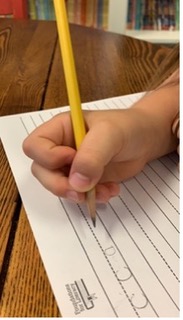
We’ve begun working with kids, during our summer school tutoring sessions, on handwriting. We are explicitly teaching kids to transform their letter formations, so they are now tidy and efficient. It sounds a bit ho hum, I know; but skilled educators can accomplish so much with this work.
Sometimes kids are a bit resistant to practicing handwriting. Sounds boring. But it doesn’t take long for kids to see their own improvement, and that’s the secret sauce to inspiring kids to work at handwriting—or most anything.
News from Book Bums
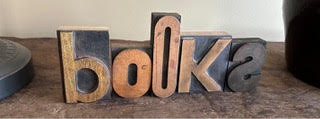
We found an antique printers’ block with the letter b! Many thanks to those who’ve been keeping an eye out!
Wordology Workshop
- The Latin root ante/anti means before or prior to.
- This can be a tricky one because, in English, we also use the Greek root ant/anti which means against or opposed to.
- You'll find the Latin root in words like antechamber (a small room that comes before a larger, more important space), anticipate (to expect and prepare before something happens), and antique (an object that comes from a time prior to our own).
Tips for Teachers
If you’re a teacher at Book Bums or you’re working with your own kids at home, I’d like for you to watch this clip of me coaching one of my students.
I’d like you to see how this lesson looks during the second half of the Flip Flop lesson where we’re teaching the students that i-e usually says /eye/, but it can also “flip” and say /ee/. We also share that e-i usually says /ee/, but it can also “flip” and say—wait for it—/ay/.
It sounds really tricky but, as you’ll see in the clip, I was working with a second grader and she absolutely got it!
This is the kind of work that helps kids to skillfully navigate this code-based language of ours.
Note: E-i can say, /eye/ but it’s an exception that we see rarely in words like height and sleight (as in sleight of hand).
Practical Grammar
Speaking of Flip Flopping sounds . . .
As I was reading the other day, I saw these words:
causes the problems. It meets failure and adversity with rule breaking—
betting everything on some crazy scheme; doubling down on behind-the-
scenes machinations or unlikely Hail Marys—even though that's what got you to this pain point in the first place."
My first thought was, That looks so strange. We don’t often see words ending with a y-s. We’re used to changing the y to an i and adding e-s.
When it’s a plural proper noun, the spelling of the base word isn’t adjusted.
We simply add an s.
Typically, though, we change the y to an i and add the endings.
When we change the y to an i and add e-s (or another ending), have you ever noticed that the i makes the sound the y did?
In the word puppy the y says /ee/, so when it changes to puppies that i in the i-e says /ee/ too.
In the word cry the y says /eye/, so when it changes to cries that i in the i-e says /eye/ too.
Just for Fun
If you know someone who would benefit from our newsletter or tutoring at Book Bums, please share this email with them! Thank you.
Copyright © 2024 Book Bums, All rights reserved
Our mailing address is:
7967 Cincinnati-Dayton Road Suite L
West Chester, OH 45069