Hello Book Bums families!
Here at Book Bums we love when everything comes together. In this week's newsletter learn how ladybugs, number basics, scientific research, and writing skills all work together for summer fun. We also share some great book recommendations for you and your kiddos. Read on and enjoy!
Bookbums.com is an Amazon Associate; We earn from qualifying purchases. This means that if you click on a link to Amazon.com and make a purchase, We may earn a small commission at no extra cost to you. We do recommend the products. Feel free to find them by other means.
Word of the Week
garrulous (gar-uh-less) adjective/describing word - talkative and wordy, loquacious
Ireland is famous for its garrulous storytellers who can tell tales for hours.
Literacy Calendar
- On April 26, 1864, William Shakespeare was baptized.
- From this church record, historians work backwards. Knowing that babies were traditionally baptized three days after their birth, we mark April 23 as Shakespeare's birthday.
- April 23 is also the date of Shakespeare's death in 1616.
- Our local Shakespeare company puts on free productions in parks all across the Cincinnati area through the summer. This summer's show is Much Ado About Nothing. Learn more here and plan to take in some Shakespeare the way it was meant to be experienced - live on stage.
“I can see he's not in your good books,' said the messenger.
'No, and if he were I would burn my library.”
Much Ado About Nothing Act I scene i
From our Bookshelves
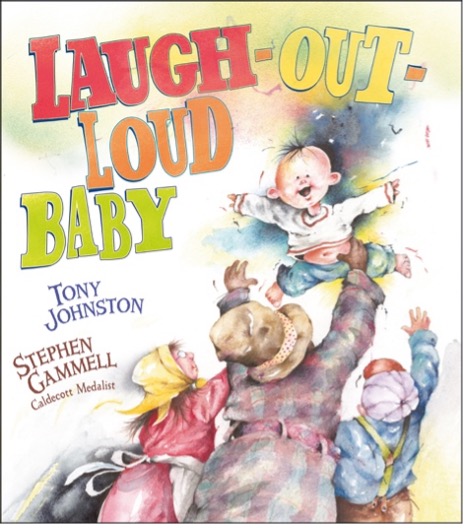
Laugh Out Loud Baby by Tony Johnston is a beautiful book that checks all the boxes when justifying a picture book purchase.
The price for this hardback picture book is about $18. If you’re not a teacher, it can be difficult to spend that much on a book, since many picture books are read only a time or two and then they’re left collecting dust on a shelf.
Laugh Out Loud, however, is my new, go-to, baby shower book gift. Many shower invitations I’ve received over the past couple of years request that attendees purchase a book for the baby in lieu of a card (that would likely be tossed in the trash). You write your loving sentiments inside the book cover, and the baby not only has the beginnings of a library, but also a reminder of so many who lovingly selected a book for them.
Laugh Out Loud Baby celebrates babies’ laughter and all the loved ones who so enjoy that laughter, so it’s sure to be a hit with recipients.
At Book Bums, we use Laugh Out Loud Baby to note that the word laugh is an irregularly spelled word. Typically, a-u and a-w say /Aw/, but in the word laugh it’s as though there isn’t even a u there. A-u in laugh represents the “short a” sound. That’s certainly an unexpected spelling.
BUT there’s more! This book is a fantastic way to discuss synonyms, for Tony Johnstion utilizes a number of titillating words surrounding laughter. In this “kids’ book” you’ll find words like guffaw, snicker, and mirth. I love that! Johnston also uses similes like “Each one of us kissed him, soft as a butterfly,” and “They looked into his shining new face and smiled like pumpkins.”
If you want to be remembered with a smile, this is the book to purchase for all the new babies in your life.
And this one too (though I’ve shared about it before).
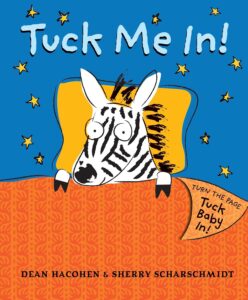
If you haven’t seen Tuck Me In, by Dean Hacohen & Sherry Scharschmidt, consider this one too. It’s one of the best bedtime books for toddlers for it has half pages that look like blankets and the kids can tuck each adorable animal into its bed. The repeating line, “Who else needs to be tucked in?” encourages kids to offer up an “I do.”.
Tips for Families
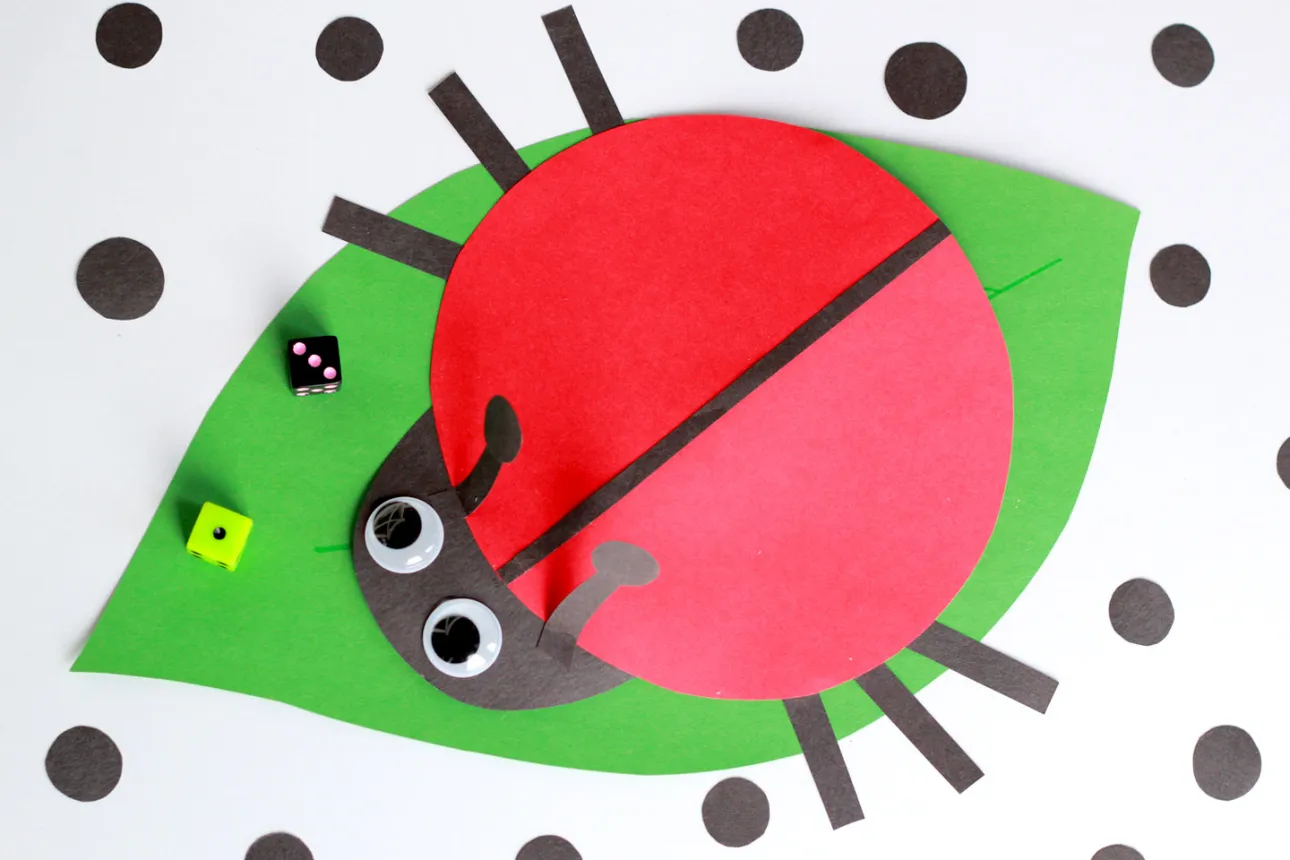
If you have a piece of red paper you can cut into a circle (about the size of a saucer), a black piece of paper you can cut into a smaller circle as well as some legs, antennae, and spots—and you could even add a couple of wiggly eyes if you have them—you can help your kids learn about odd and even numbers.
The only other thing you’d need is a die. If you don’t have one, you can download a “dice roller” app.
First, create a ladybug as shown in the image. If you have red plastic plates, you could use a black Sharpie to make the head and legs on the lip of the plate as well as a dividing line down the center and then you can use a black dry erase marker to make the spots.
Here’s how you teach about odd and even numbers.
The kids will roll the die, determine the number rolled, and then—alternating from one side of the center black line on the ladybug to the other—place dots on the wings of the ladybug until the total number of dots is drawn. If both wings have the same number of dots, the number is even. If one wing has more dots than the other, the number is odd.
Remove the dots and roll again.
For an extra challenge, older kids can use multiple dice. They’ll find the total number represented on the dice and begin adding dots, one on one side and one on the other, alternating until they reach the total number.
As they observe real ladybugs, ask them if both wings have matching numbers of spots.
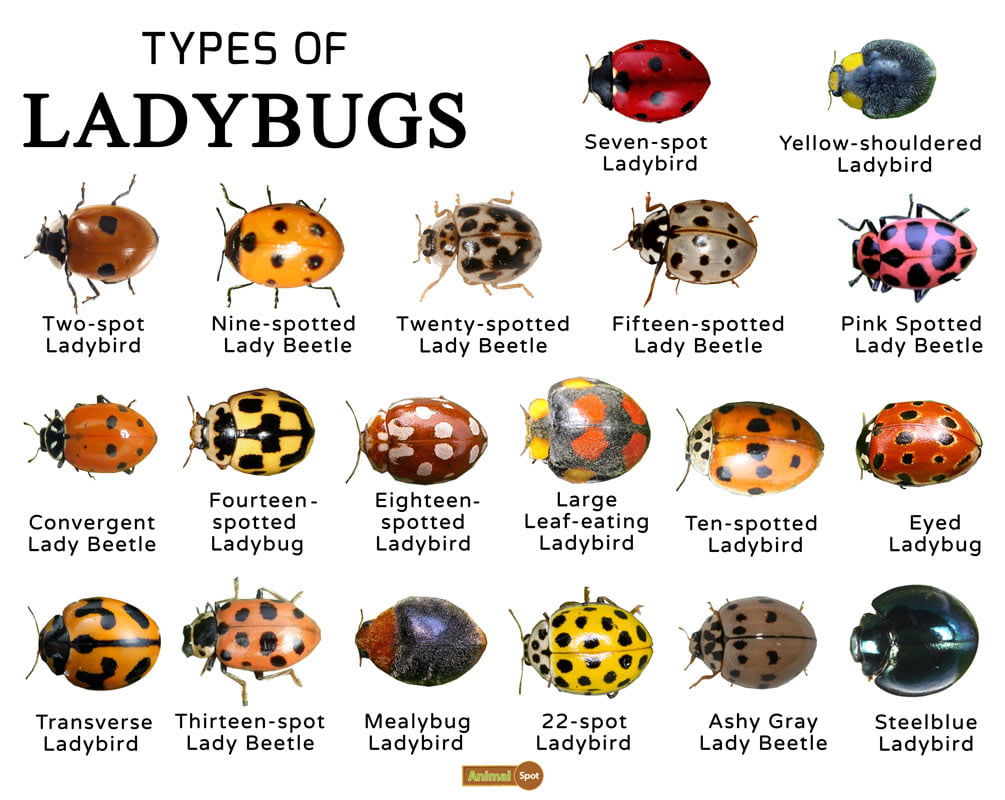
Not all ladybugs have the same number of spots. The number can vary from zero to twenty-four, but the dots are symmetrically arranged on the wings.
Tips for Raising Readers and Writers
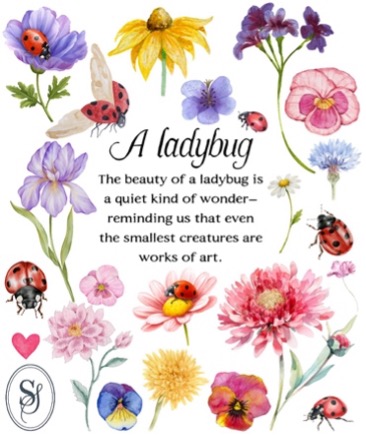
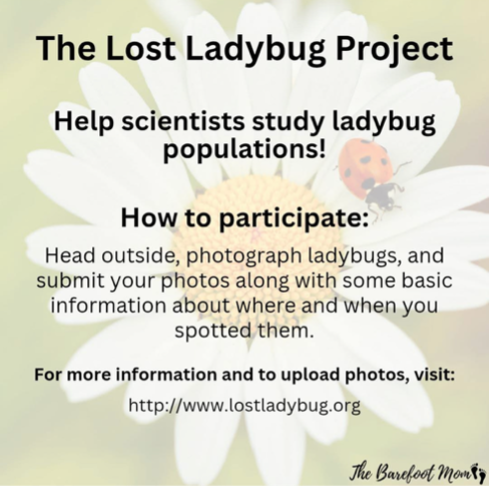
Did you know that, in America, the ladybug species has been changing? Many of our native species have been being replaced by non-native species. That’s what I learned from the Barefoot Mom Facebook page. Scientists are requesting our help. It simply requires going outside, taking some pictures of ladybugs, adding some basic information about when and where you found them, and then sending it to www.lostladybug.org.
What a great way to get your kids outdoors and writing for an authentic purpose!
Practical Grammar
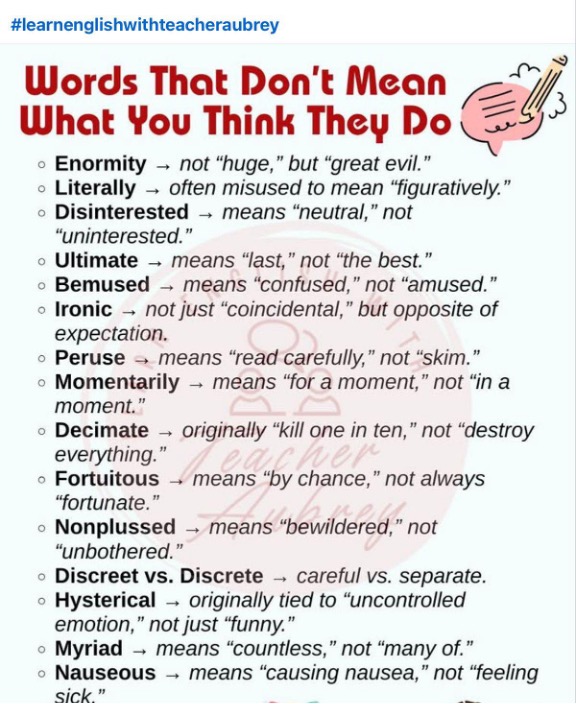
How many of these words are you using incorrectly?
Wordology Workshop
- The Greek root dec or deca means ten.
- You can find it in ten-related words such as decade, decathlon, and decahedron (a ten-sided solid).
- Deci comes from Latin and means one-tenth.
- You find deci in words like decimal and decimate.
- One way to help tell the difference between the two roots is the c sound. In words that come from the Greek root, you'll hear a hard c; and in words that come from the Latin root, you'll hear a soft c.
News from Book Bums
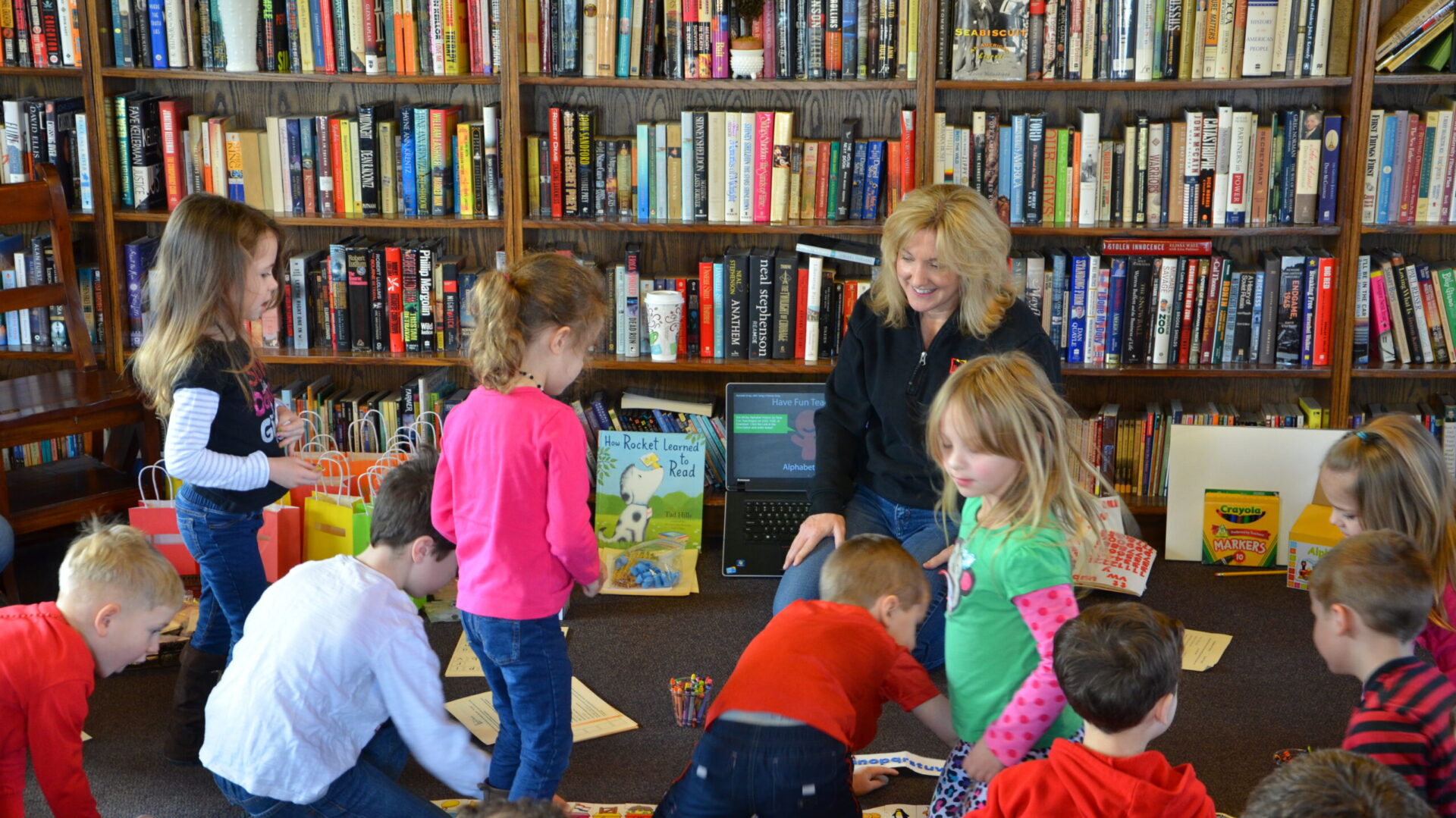
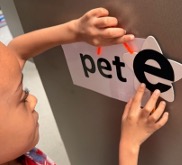
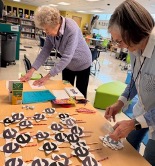
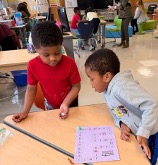
One of our wonderful Book Bums/Faith Alliance volunteers, Kathy, also volunteers at Williams H. Taft Elementary School. Across a few years, I have provided some materials for the volunteers to use with the students they serve there. Kathy shared these pictures with me.
If you are working with a non-profit organization, I will happily provide materials for your group to promote literacy in your community too.
Thanks to you, what we do at Book Bums extends beyond our tutoring centers, and I couldn’t be happier about that!
Tips for Teachers
I was working with my grandson this week, and he was learning about the two sounds (/Ow! & /Oh!/) that o-w can represent. He was doing really well.
He remembered that most of the time o-w says /Ow!/. When he tried that sound and it didn’t make a word, he’d “flip it” to the /Oh!/ sound. Wonderful.
He read words like now, down, crown, and crowd. Then we mixed in some words like tow, show, and thrown. We even addressed words like bow and sow that have two pronunciations, and we’d need some context to determine which pronunciation to use.
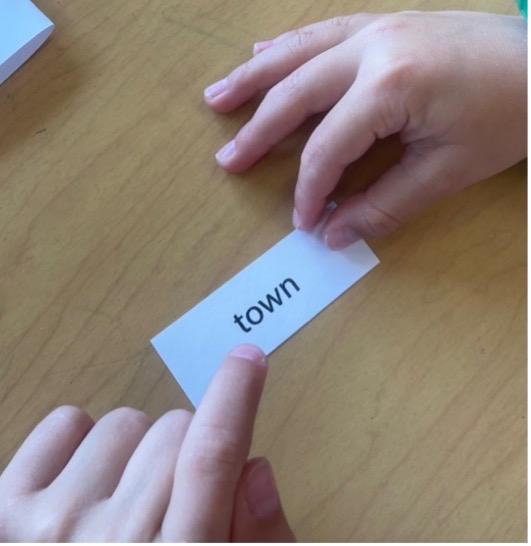
And then we came to this word: town.
He said, “Well, I see the ‘trick’ word to, so it starts with to, right?
Dang.
He was distracted by the little word he saw within the bigger word. I reminded him that when we’re decoding words, we’re looking for phonics rules we know—not words we know.
If your kids (or grandkids) do this, simply say, “We don’t look for little words within big words. We make the sounds we see, moving from left to right across the words, and remember all we know about how words work.”
Note: When we get to Latin and Greek roots, we’ll focus on word parts that represent meaning (semantics) and not necessarily sounds (phonetics). Until then, our primary focus is on sounds.
Just for Fun
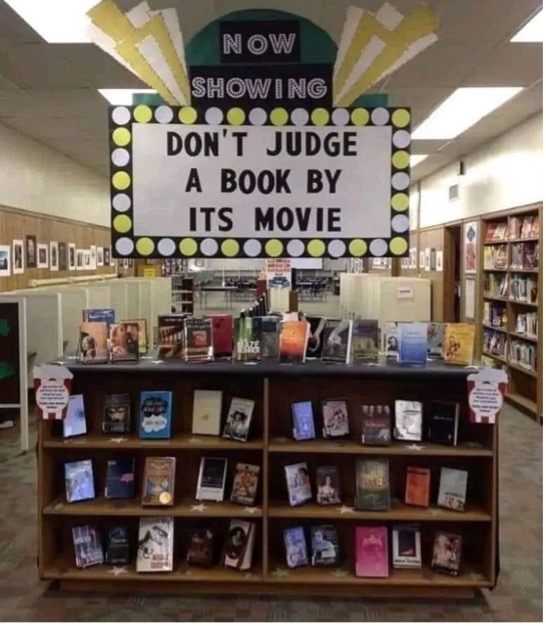
Don’t judge a book by its movie.
Side Note: I loved reading Remarkably Bright Creatures by Shelby Van Pelt, and I’m really looking forward to watching the movie—hopefully on Mother’s Day. Here’s the trailer: https://youtube.com/watch?v=b14IFe4an5k I hope it’s at least nearly as good as the book!
If you know someone who would benefit from our newsletter or tutoring at Book Bums, please share this email with them! Thank you.
Copyright © 2024 Book Bums, All rights reserved
Our mailing address is:
7967 Cincinnati-Dayton Road Suite L
West Chester, OH 45069