Hello Book Bums families!
This week in the newsletter, Dr. Christy reflects on one of her best moments in the classroom and reminds us that we all learn from mistakes. We also share some cool word pairs, inspiring book recommendations, and a special request from Book Bums.
Read on and enjoy!
Bookbums.com is an Amazon Associate; We earn from qualifying purchases. This means that if you click on a link to Amazon.com and make a purchase, We may earn a small commission at no extra cost to you. We do recommend the products. Feel free to find them by other means.
Word of the Week
abscond (ab-skond) verb/action word - to leave secretly and suddenly, generally to avoid being caught
The thieves absconded in the night with treasures from the museum.
Literacy Calendar
- On November 1, 1604, Shakespeare's Othello was performed for the King of England.
- The group of actors known as The King's Men performed the play at Whitehall for James I.
From our Bookshelves
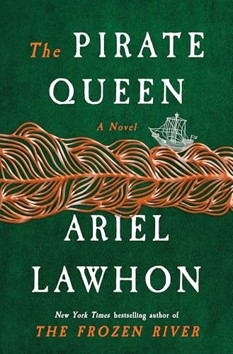
I thoroughly enjoyed reading The Pirate Queen by Ariel Lawhon. A friend recommended it, and I always enjoy reading what she shares, so I ordered it on Audible right away. You see, since opening our Monroe location, I’ve been busy with mindless organizing; and great books like this one have helped to make that time much more enjoyable.
Incredibly, The Pirate Queen is the story of an actual 16th century Irish woman, Grace O’Malley, who was a clan leader and a pirate! Here’s a statue of her that’s located in Ireland. I so enjoyed learning about this fierce woman and imagining the life she could have lived.
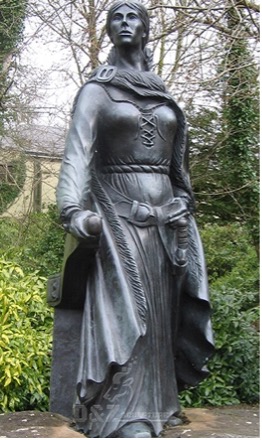
I feel I should note that this book uses a non-linear, braided timeline that alternates between three phases of O’Malley’s life: maiden, mother, and matriarch. In truth, this was difficult for some readers to navigate. I fear listening to it made it even trickier. If you’re going to read it, keep that in mind.
Also, in some sections, Grace is referred to as Grainne (/grawn-yuh/) and, If I’m honest, it took me a little while to figure that out. Evidently, I zoned out for a bit here and there. Also, there are two Richards. I suppose since the book is based on historical information, they couldn’t do much about that.
Author Ariel Lawhon also wrote Frozen River. Here’s the link to our newsletter featuring this Lawhon book. I may have loved Frozen River more, but that’s likely because I had a copy of the actual book.
Tips for Families
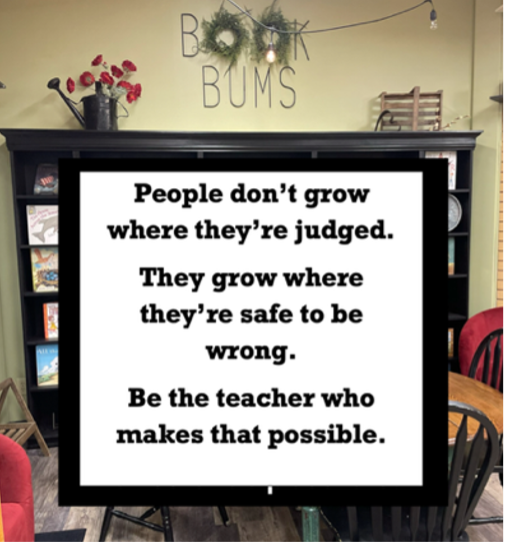
I was working with my grandson this week. Like most kids (and adults too), he doesn't like to be wrong.
He's not belligerent. Far from it. He just gets teary-eyed when he makes a mistake.
And I think that's part of why it takes so much effort to get him to read.
Reading means risking being wrong. And for a child who wants so badly to get things right, that can feel pretty overwhelming.
Bright kids can be especially hard on themselves. They're often painfully aware of what they perceive as their shortcomings.
Does this sound like a child you adore?
Is there a child in your life who resists reading or writing with you? Who hesitates, shuts down, or gets upset when something doesn't come easily?
Even if they seem to be doing okay in school, pay attention to that resistance. It may be telling you something important about their confidence, and what they need most might be a safe place to be wrong.
When I was a classroom teacher, I loved creating that kind of environment.
One year, we welcomed a new student who became embarrassed after saying or doing something that didn't meet his own expectations.
Before I could say a word, one of my students spoke up.
"Oh, don't worry. We celebrate mistakes in Room 205. That's how we learn."
The other kids chimed in with yeahs, and nods, and smiles.
I swear I could hear heaven's angels rejoicing!
It was one of the greatest affirmations of my teaching career. In that moment, I knew I'd done something right.
I'd helped create a space where being wrong didn't mean being less. It meant being a learner.
Now, here's the thing.
Parents have a much harder job than tutors do.
Tutors are paid to be attentive, patient, kind, and encouraging. We get to give children our undivided attention, often for just an hour at a time.
But parents?
Parents are often hanging on by a thread!
They work all day, run errands, prepare meals, shuttle kids to practices, tackle homework, organize all the stuff, get everyone bathed and into bed, and then wake up to do it all over again.
And somewhere in the middle of all that, they're supposed to muster up the patience to listen to a child struggle through a sentence they've already practiced three times.
I get it.
But here's what I hope we'll remember:
Our children need room to be wrong.
They need to know that mistakes won't cost them our approval. That struggling doesn't mean they're not smart. That learning something new is supposed to involve getting things wrong along the way.
Sometimes, all it takes is a gentle response:
"It's okay. I made mistakes like that when I was your age, too."
"You're still learning. I don't expect you to be perfect."
"Goodness, I'm not even close to perfect, and I've been at this a whole lot longer than you have!"
Or simply, "Let's figure it out together."
Those little moments matter.
So when your child stumbles over a word, misspells something, or gets frustrated because the answer doesn't come easily, resist the urge to rush, correct impatiently, or show disappointment.
Give them a little room to struggle. A little grace to get it wrong. And a whole lot of reassurance that they're loved just as they are.
Because here's what I know:
Children don't grow best where they're afraid of being wrong. They grow best where they feel safe enough to keep trying.
And sometimes, the most important thing we can teach a child isn't how to get the right answer.
It's how to be okay when they don't.
Tips for Raising Readers and Writers
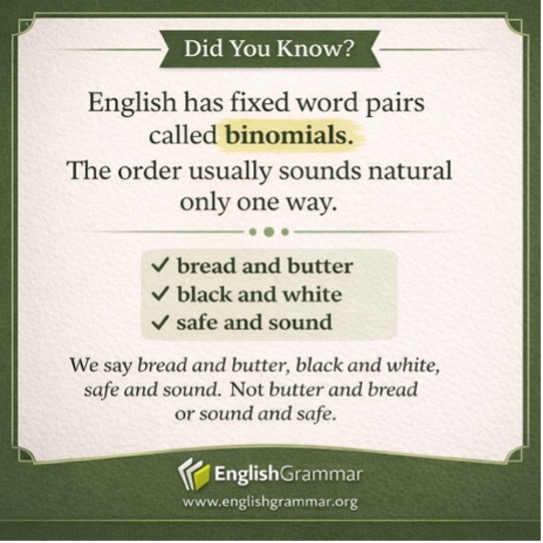
One way to promote a love for words is to simply notice them. Often, when we talk about words, we unknowingly* position words as though they’re simple and that “everyone knows” how they work. But I bet there are things that you haven’t even considered, and I’d love for you to examine some interesting aspects of words as a family.
One day this week, while eating dinner, would you please bring up binomials? You could start by sharing that binomials are two-words that are linked by and or or and the order in which they’re said is fixed.
Here are some examples:
- safe and sound
- black and white
- bread and butter
- peace and quiet
- rain or shine
- odds and ends
It would sound strange to say, “I just need some quiet and peace,” or “I’m going to take care of some ends and odds.”
See what I mean?
I wonder how many you can come up with . . .
*As I was writing this section, I was trying to decide if I wanted to write unknowingly or unwittingly. I knew there was a difference, but I wanted to confirm that my inkling was correct . . . so I turned to Google. Here’s what I learned: Unwittingly means acting without knowing the full context, meaning, or bigger picture (often playing a part in something larger without realizing it). Unknowingly simply means doing something without possessing a specific piece of knowledge or information at that moment. The difference lies in how a person lacks awareness.
Practical Grammar
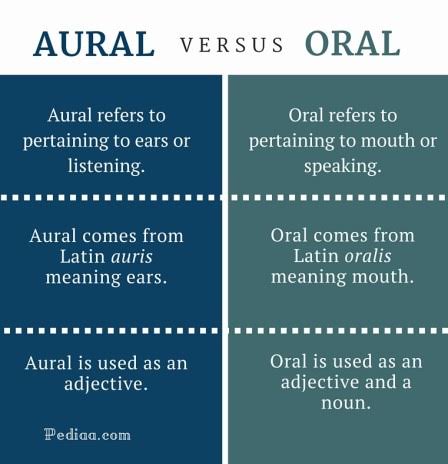
Aural and oral sound so similar, but they have different (though related) meanings. Aural pertains to ears or listening while oral refers to the mouth or speaking.
Remember that aural begins with an a-u the way audible and audiologist and audience. All of these have to do with listening.
Wordology Workshop
- The Latin root audi means to hear.
- We shared several words that contain that listening root in the Practical Grammar section above.
- The Latin root or, also mentioned above, means mouth.
- You can find it in words like oral, orator, oracle, and orifice.
- The or root is also present in the word adore.
News from Book Bums

I’ve recently updated Book Bums on Google, and I realized that we need reviews. Would you please do me a favor and write a review for us? I’d so appreciate it. Whether we’ve served your family long ago or you’re just getting started, your kind words just may be what someone needs to hear to make the decision to use our services.
Even if you’ve never been to Book Bums, you could share how this newsletter is a blessing or anything else that might be on your heart.
I will say that there is a really bad rating that I received just over a week ago. It says that I lie and cheat and stole the person’s money and that I did not teach them how to read. Mind you, the person wrote a review and can clearly read. And there’s no way for me to steal money from our customers. People pay for the tutoring after they’ve received the week’s instruction. And we don’t use contracts because I want our customers to want to come to Book Bums—not come because they’re tied to some darn contract they regret signing.
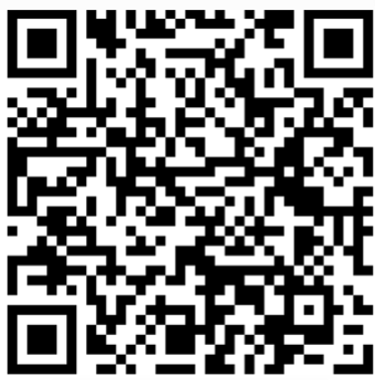
Anyway, I’m trying to shake it off. And now I’m trying to get that nonsense buried under real reviews. Would you please take a few minutes to provide a review. You can copy the link into your browser or use the QR code. Thank you so much!
https://g.page/r/CRkzx0165h5gEBM/review
Tips for Teachers
We’ve had all the tricks and treats this past week, and now we’re marching toward the BIG holidays. No matter what you teach, in the coming weeks I’d love for you to read Thank You, Sarah; The Woman Who Saved Thanksgiving, by Laurie Halse Anderson to your students.
I wrote the following piece in 2022, and I’m bringing it back (with some edits) because it is such a wonderful way to promote writing with the kids you teach.
Thank You, Sarah is a book about Sarah Hale. Sarah lived during the 1800s. She was an American writer and activist. Sarah wrote the nursery rhyme “Mary Had a Little Lamb,” and she campaigned to make Thanksgiving a national holiday. She was a wife and mother, and she wrote in an effort to abolish slavery. She worked for historic preservation, and she advocated for the education of women and their rights to be property owners.
Am I the only one feeling like I need to up my game a bit?
Sarah’s parents were advocates for the education of all children, so Sarah attended school beyond the age typical of girls in those times. Once she was equipped with the ability to read and write, Sarah never stopped learning. She has been identified as an autodidact—a self-taught learner.
Hm. What have I been actively working to learn, lately?
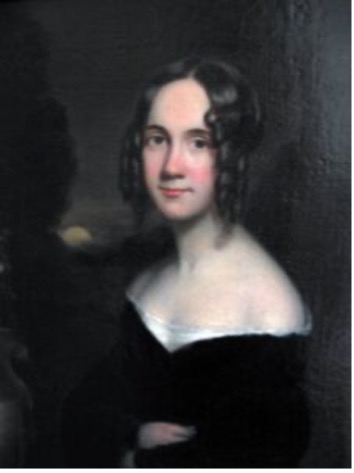
This children’s book about Sarah’s life shares how she was bold and brave and stubborn and smart. She knew how to get things done, and she often did so through the power of her pen. It’s an inspiring story, and Thanksgiving is the perfect time to read it. It just might inspire your kids to get writing! Sarah wrote poems, books, articles, and letters.
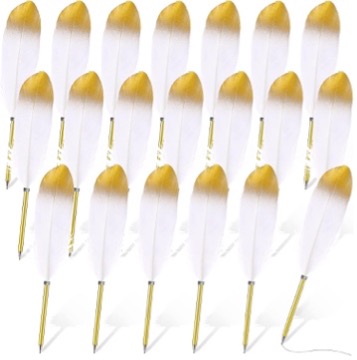
To inspire your kids to get writing to advocate for causes they believe in—or just to write the next famous nursery rhyme, you may even want to purchase some of these quill pens. They might be what inspires your kids to put the pen to the page.
Just for Fun
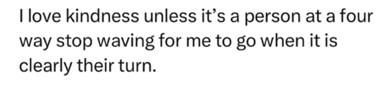
Right?!
If you know someone who would benefit from our newsletter or tutoring at Book Bums, please share this email with them! Thank you.
Copyright © 2024 Book Bums, All rights reserved
Our mailing address is:
7967 Cincinnati-Dayton Road Suite L
West Chester, OH 45069