
Hello Book Bums families!
Grass is greening and spring is springing here in the Cincinnati area. This week we are getting in the spirit with books and activities all about robins. These songbirds are harbingers of the new season, and we are sharing both fiction and non-fiction book recommendations, poetry, and a full morning of activities to share with a budding birder in your life. Read on and enjoy!
Bookbums.com is an Amazon Associate; We earn from qualifying purchases. This means that if you click on a link to Amazon.com and make a purchase, We may earn a small commission at no extra cost to you. We do recommend the products. Feel free to find them by other means.
Word of the Week
capacious (ka-pay-shus) adjective/describing word - capable of containing a great deal, spacious
Author Kate DiCamillo talks about characters and people with capacious hearts and lots of room to love.
*If you are interested in hearing more, check out this podcast episode of DiCamillo talking about her life and the power of stories.
Literacy Calendar
- March 16 is Freedom of Information Day.
- This holiday is celebrated each year on the birthday of Founding Father James Madison who was a proponent of government openness.
- Freedom of Information Day celebrates the public's right to know and have access to information.
- The Freedom of Information Act was passed in 1966 and its website proclaims that "the basic function of the Freedom of Information Act is to ensure informed citizens, vital to the functioning of a democratic society."
From our Bookshelves
f you’ve been able to get outdoors recently, chances are good you’ve seen quite a few robins out and about.
Just as the daffodils begin flaunting their sunshiny, yellow blooms, raucous robins are preparing for building their families—and it’s the perfect time to enjoy some family-focused fact finding— all about robins.
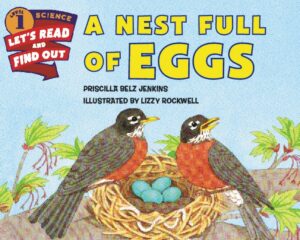
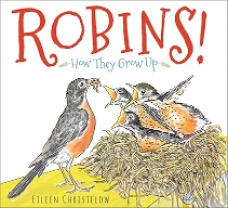
A Nest Full of Eggs by Priscilla Belz Jenkins is one I’ve shared in most every classroom I’ve had the pleasure of leading. It’s filled with facts about our red-breasted, feathered friends. Robins, How They Grow Up, by Eileen Christelow is new to me, but it’s the perfect complement to A Nest Full of Eggs. Pair these two books, and your kids will surely become bona fide birders.
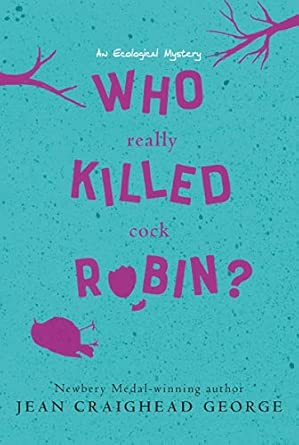
If you have older kids, I’d recommend adding Who Really Killed Cock Robin? By Jean Craighead George as well. Admittedly, it’s an older book, but it’s a great example of eco-fiction. That’s short for ecological fiction, a literary genre that focuses on the relationship between humans and the natural world and often highlights environmental issues. In this case, the issue is the death of a robin who happened to be a town mascot. It’s a mystery that needs to be solved, and your kids will learn about the interconnectedness of the living things in our communities.
Tips for Families
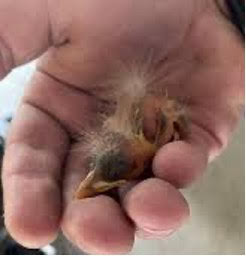
If you should find a fallen baby bird, you may place a nestling (featherless or only has a few feathers) back into its nest if it is uninjured. It is not true that parents will reject their chicks due to human scent. If the bird has feathers, hops, and can flutter, it’s a fledgling and it belongs on the ground so you should leave it alone.
Pause for Poetry
If I Can Stop One Heart from Breaking
by Emily Dickinson
If I can stop one Heart from breaking
I shall not live in vain
If I can ease one Life the Aching
Or cool one Pain
Or help one fainting Robin
Unto his Nest again
I shall not live in Vain.
Tips for Raising Readers and Writers
I always love preparing activities to do with my grandkids, and I thought I’d share what I’ve got cookin’ for a spring day at Grandma and Grandpa’s house.
Of course, I’m going to be reading (on a blanket, under a tree somewhere in the yard) the two picture books I shared above.
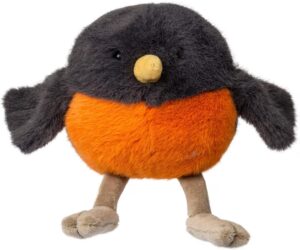
I have a robin stuffed animal like the one below.
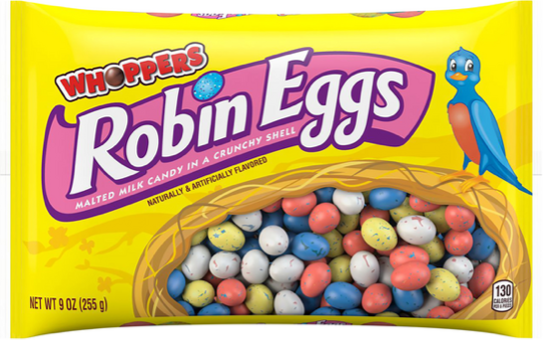
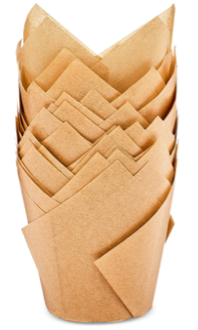
I’m going to have some of these Robin Eggs candies with four blue eggs placed in each brown cupcake liner (that will act as a nest) that the kids can enjoy for a sweet treat.
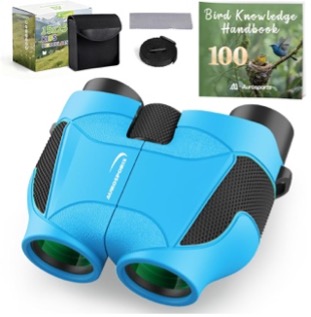
After reading the books, I’ll invite the kids to look for robins in our yard using a pair of binoculars.
When we’re ready to get up and get active, I’ll play Rockin’ Robin by Bobby Day (1957), and we’ll have a dance party!
TIP: Robins don’t eat seeds, so using birdseed won’t attract them. Robins eat worms, insects, fruits, and berries.
Practical Grammar

When you withdraw money from the bank, you’re making a withdrawal.
Because the sound for a-w, /aw/, sounds a whole lot like the sound for a-l, /all/, we don’t always catch the final sounds (/all/) at the end of the word withdrawal.
We don’t make a withdraw. We make a withdrawal.
Withdraw is a verb/action word. It’s something we do.
Withdrawal is a noun/a person, place or thing. It’s something we make.
News from Book Bums
Book Bums will be hosting Lakota’s summer school again, and we’ll need lots of tutors/teachers. If you know any teachers who might be interested in working a few hours a week for ten weeks this summer, please send them our way!
Tips for Teachers
Please do not teach kids to “just remember” words by chanting the letters.
At Book Bums, there are very few words we teach kids that they “just have to remember.” When we acknowledge words that have irregular spellings, we must point out the parts with expected spellings.
Saying, “T-h-e spells the,” is not helpful for the long term. When kids come to believe they have to “just remember” words, they’re approaching the task of reading and spelling with flawed mindset. We don’t have to “just remember” words. That doesn’t work. We have a code-based language, and we must teach the kids the code. We must also show that the code is quite reliable. (If you don’t think so, it’s probable that you were not sufficiently equipped as a young learner, but your kids don’t have to struggle the way many of us have.)
When teaching kids to spell the, remind them that the two sounds for t-h are the puff sound /th/ (as in thin and path) and the buzz sound /th/ (as in this and bathe). Then ask, “What sound do we hear at the beginning of the?” The kids will say, /th/ (the buzz sound), and you’ll say, “That’s right. We spell /th/ with a t-h. Let’s write that. Then ask, “What sound do we hear next in the word the?” The kids will make the short u sound /u/, and you’ll say, “That’s right. I’d have imagined there’d be a u after the t-h, but it’s actually an e. That’s weird! Sometimes, I do hear myself say the with a long e sound at the end—like when I say, ‘The end.’ In that case, it’s easy to remember that it’s an open vowel (like in the words me, he, we, and she), and I know to use an e there, but when I say, ‘I rode the bus,’ I definitely say the like there’s a short u at the end. This can be tricky, so we must remember that the is spelled with an e at the end—not a u. That’s so tricky!”
Just for Fun
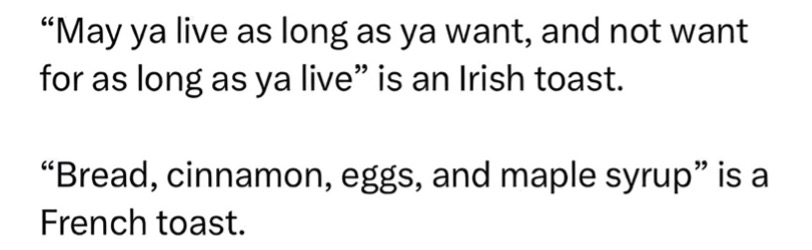
If you know someone who would benefit from our newsletter or tutoring at Book Bums, please share this email with them! Thank you.
Copyright © 2024 Book Bums, All rights reserved
Our mailing address is:
7967 Cincinnati-Dayton Road Suite L
West Chester, OH 45069