

Hello Book Bums families!
Welcome to September. We hope your school year is off to a good start. This week in the newsletter we share some ideas for gentle beginnings to those busy mornings as well as ways to spark conversation when your family is together again in the evening. Of course you'll also find book recommendations, spelling tips, and more. Read on and enjoy!
Bookbums.com is an Amazon Associate; We earn from qualifying purchases. This means that if you click on a link to Amazon.com and make a purchase, We may earn a small commission at no extra cost to you. We do recommend the products. Feel free to find them by other means.
Word of the Week
alacrity (uh-la-kri-tee) noun/person, place, or thing - cheerful readiness, prompt willingness to do something
Barrett responded with alacrity when asked to empty the dishwasher, getting up right away to start the task.
Literacy Calendar
- September 9, 1828 is the birthday of Russian novelist Leo Tolstoy.
- His two most celebrated works are the novels War and Peace and Anna Karenina.
- War and Peace is famously lengthy, coming in at about 1300 pages. Anna Karenina is shorter at about 850 pages, depending on the edition.
From our Bookshelves

I cannot recall where I first heard about The Heart’s Invisible Furies by John Boyne. Boyne? I’d recognized the name but couldn’t place it. Oh, yes. Boyne wrote The Boy in the Striped Pajamas in 2006 and sold more than 11 million copies.
In this 2017 historical fiction novel, we meet Cyril Avery and observe his life, every seven years, which spans from 1945 to 2015. The setting is rural Ireland when a young girl who becomes pregnant is cast out from her family and her church, and being gay is against the law. This is a coming-of-age tale with themes including identity, prejudice, intolerance, and family (including found family.)
If you loved Angela’s Ashes (as I did), I believe you’ll really enjoy The Heart’s Invisible Furies.
It comes in with the average rating of 4.4 stars.
Tips for Families
When my kids were young, we did all kinds of things to get one another talking during dinnertime. We did the high/low game where everyone talked about the highest and lowest points in their days. We had talking point cards I’d purchased that asked questions to which everyone would respond.
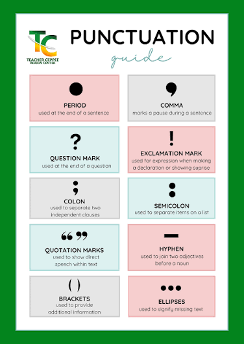
As I was reading a section from 100 Bible Verses Everyone Should Know by Heart, I came to this question: If you were a sentence, what mark of punctuation would follow you? Is your life a question mark because you’re without answers? A comma because you’re in transition? A period for everything’s at a standstill? Or a dash because you’re in a continual rush?
I believe that’s an interesting question to ask those you love. Above, I’ve included a graphic of punctuation marks to expand the options.
What would you say? I hope you’ll consider asking those you love who gather around your table the same question. They may surprise you with their responses.
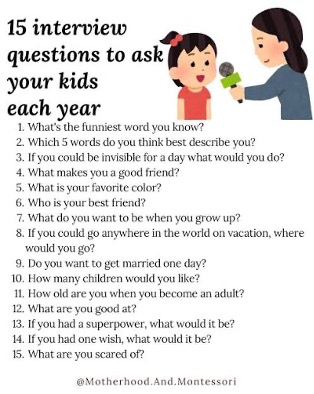
Here are fifteen more questions to pose. It might be fun to write down kids’ responses so you look over them with them when the kids are older.
Tips for Raising Readers and Writers
Egg horns, pronounced /acorns/, are commonly misheard words that are changed into other similar-sounding words that seem to make sense.
I would have sworn my mom was saying, “Up and Adam,” when I was younger. I don’t recall when I learned she was saying “Up and at ‘em.” Or . . . was she saying, “Up and Adam,” because she’d misheard the phrase and misused it?
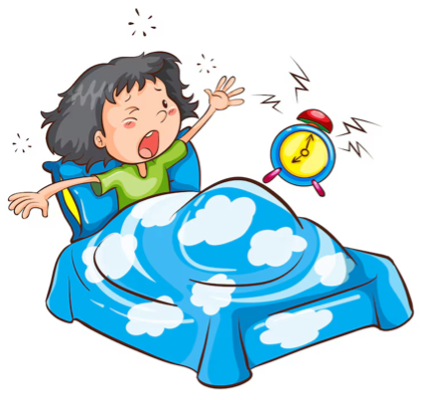
Do you have trouble waking your child for school? Barging in and saying, “Up and at ‘em!” isn’t likely to yield the best results.
Some tips I’ve found include:
- Let in light by opening curtains as a part of a gentle wake up routine.
- Turn off sound machines (and maybe turn on some soft, soothing music*).
- Use a gentle touch (on their backs, arms, or cheeks) and give a quiet hug or soft kiss on the forehead.
- Having the smell of pancakes or bacon or some other aromatic breakfast food probably wouldn’t hurt, but that may not be realistic for busy mornings.
- Whisper their name and offer a quiet greeting.
- Offer a buffer of 10-15 minutes so they can wake up closer to their own timing if they like.
- You may want to allow a transitional space to slowly awaken such as a couch.
- Try to wake the kids up at a consistent time every day to train their natural clocks.
TIP: If you have kids who wake up too early and with alacrity—don’t tell your friends. They may hold it against you.
Very young children may like “Morningtown Ride” by Raffi
Practical Grammar

Am I the only one who did not know this?!
We write the word either fiancé or fiancée depending upon the person’s gender: fiancé (one "e") refers to an engaged man, while fiancée (two "e"s) refers to an engaged woman. That’s because this word comes to us from French, where nouns have gender.
Wordology Workshop
- Both Greek and Latin contain the root gen meaning birth, race, or kind.
- There are subtle differences in how gen shows up in English words depending on if it comes to us from Greek or Latin; but knowing the shared root meaning is enough to help us understand words where we notice gen.
- Some common English words using gen include generation, gene, genesis, indigenous, pathogen, genocide, progeny, gender, and heterogeneous.
News from Book Bums

From time to time, we have folks who come into Book Bums for an assessment and they want their kids to receive tutoring, but they cannot afford to pay for the instruction their kids need. I hate that. I have offered support in a variety of forms for many, many families, but I cannot continue to serve everyone I’d like to serve without further risking the health of our business. I know it can look like we’re rolling in cash over here, but we’re truly not. Running a business is expensive. Every little thing we offer is an expense . . . from the Dum Dums suckers to the spaces we pay to meet in.
You all help us in so many ways, so I thought I’d come to you to ask about an idea. We have had a corporate sponsor who paid for tutoring for one child for 20 weeks (at a slightly reduced fee, so we were helping too) when we were in Old West Chester. We had a great experience with that. I also know of one woman who worked for a lawyer, and that lawyer paid for her son’s tutoring.
As you know, we do a lot of work with The Faith Alliance, and they help SO MUCH with serving kids who could not afford the instruction we offer. I’m grateful for every child we’ve had the privilege of serving with their generous funding and the support they provide with volunteer tutors. The Lakota School District has also provided instruction for kids, through Book Bums, at no cost to the families. But I have other children (two just this weekend) who really need our literacy support, but they cannot afford the fee of $83 per week. I can discount a bit, but I’m wondering if any of you have connections with business folks/companies who may want to support a child or two by providing funds for kids to receive the outstanding instruction we offer at Book Bums. The Clubhouse Sports Grille (serving in West Chester and Monroe) sponsors the Boys and Girls Club of West Chester/Liberty. I’m not sure what that looks like, but I am hoping to try something to expand our reach to serve more kids who need what we offer but their parents simply cannot afford to take on the financial burden. We sure would appreciate any help you might offer!
Tips for Teachers
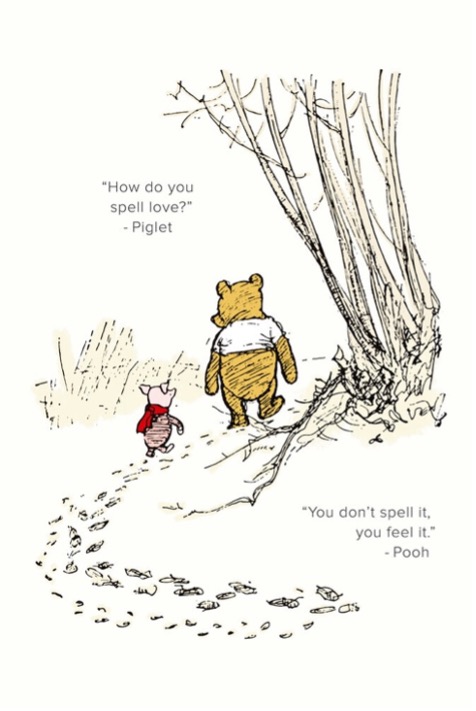
Skilled Spelling is not just the memorization of letter strings. When a child asks, “How do you spell . . .”, you can make the sounds and have the kids write the letters that correspond with those sounds OR you can have the child make the sounds and you write the letters that correspond with those sounds. Don’t say, “Love is spelled l-o-v-e.” That’s not helpful in the long run.
When children recognize each discrete sound in words, and they know the rules that govern our language, spelling starts to make sense to them in much the same way math makes sense.
So, kids should decode the words on their spelling lists, making the sounds out loud. As they’re writing the words, they should quietly make the sounds aloud as they stretch the words into parts (phonemes). As they do so, they’ll write the letters and letter combinations that can represent the sounds they make. Kids should double check that what they’ve written “looks right” and make changes (knowing what they know about how words work) as needed.
Dr. David Kilpatrick and Dr. Linnea Ehri share that research (Reitsma, 1983) suggests that typically developing kids in grades 2 and up require only 1-4 successful readings of a word for that word to become stored in their long-term memories—the words are known on sight. For younger kids, it’s more like 5-6 times. The process by which words become “sight words” is called orthographic mapping. Before kids have had sufficient experiences with words, the kids will not be able to recognize misspellings.
For very young kids who are just learning to spell their names, it’s most helpful not to have them memorize the letter names in order. Rather, they should stretch the out sounds in their names and write them, in order, moving from left to right across the page.
/j/-/oo/-/d/-/uh/
J U D A H
This really helps kids to get the letters written in the correct order. Sure, we’ll have to tell Judah that the long u can say /oo/ and that in English we often spell the sound /u/ with an a-h (like in hallelujah and loofah and howdah-a seat on an elephant as pictured, below).

Just for Fun
Great news! If your kids are good at math, Book Bums is the perfect place to bring kids who’ve not yet made sense of our code-based language.
If you know someone who would benefit from our newsletter or tutoring at Book Bums, please share this email with them! Thank you.
Copyright © 2024 Book Bums, All rights reserved
Our mailing address is:
7967 Cincinnati-Dayton Road Suite L
West Chester, OH 45069