

Hello Book Bums families!
Back-to-school season is almost upon is. If you've been out shopping lately you may think it's already here! This week in the newsletter we share some tips for getting ready, inspiration for teachers, and some valuable information about scheduling your Book Bums' tutoring sessions.
Read on and enjoy!
Bookbums.com is an Amazon Associate; We earn from qualifying purchases. This means that if you click on a link to Amazon.com and make a purchase, We may earn a small commission at no extra cost to you. We do recommend the products. Feel free to find them by other means.
Word of the Week
reciprocate (re-sip-ro-kayt) verb/action word - to give in return
After Natalie shared her snack on Tuesday, Megan reciprocated by bringing enough popcorn to share on Thursday.
Wordology Workshop
- Did you know that many verbs in English have been created through something called back-formation?
- This basically means that the noun form came first, and we took off some of the existing word parts to create a verb.
- Reciprocate is an example of this. Reciprocation came first, and we created the verb to go with the noun.
- Other examples include edit, which came from editor; burgle, which came from burglar; injure, which came from injury; and bartend, which came from bartender.
Literacy Calendar
- July 24 is the birthday of author Alexandre Dumas.
- This French novelist and playwright was born in Haiti to a shared heritage of his European father and his Afro-Caribbean mother.
- He is most famous for his epic novels The Three Musketeers and The Count of Monte Cristo, published in 1844 and 1846.
"One's work may be finished one day, but one's education never."
-Alexandre Dumas
From our Bookshelves
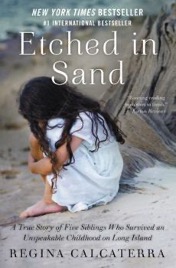
Etched in Sand by Regina Calcaterra was a difficult read, but it was so very good.
When I begin a book, I consider what I’ve heard others say about it. I glance at the cover and dig right in. As I was reading Etched in Sand, I’d forgotten that it was a true story. Though I recall noting a few clunky time stamping scenes that felt a bit deliberate, it didn’t read like a mere recollection. It read like a beautiful story of five children’s tragically broken realities—and oh how I’d hoped it would have a happy ending.
One wonderful piece of the story is that public educators, libraries, and kind community members all had a positive impact upon neglected and impoverished children’s lives.
A dear friend recommended this book to me. We agreed that when I finished, we’d meet for lunch to talk about it. I can’t wait to discuss this important, true story.
When you read it, think about who you’ll share it with . . .
Tips for Families
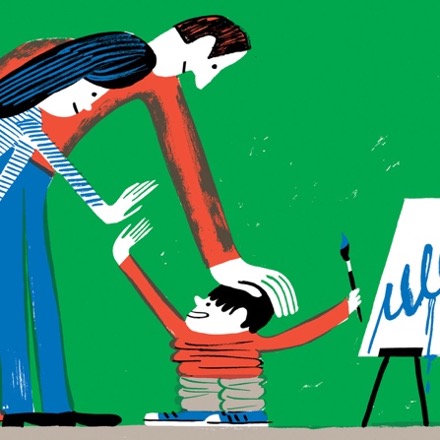
We all love the kids in our circles, and we’re so pleased and proud when they do well. It turns out, however, that the way we praise them matters.
Here are some tips for praising the kids you adore.
1. Praise your child’s effort over a perfect performance.
“Whoa. You worked hard on mastering that song and it sure shows. You played skillfully and you were so confident that the recital actually seemed fun for you--not stressful. It was such a pleasure to watch your performance.”
2. Be descriptive with your compliments.
“You made your bed, tidied up your stuffed animals, and even tucked your pajamas under the pillow. It looks like an image from a magazine in there! I bet you’ll feel really proud of your space when your friends come over this afternoon.”
3. Acknowledge what you’d like to see repeated.
“You were playing so nicely with baby Rosie. Did you see how her eyes lit up when you let her play with your toy? It felt good to share with her, didn’t it?”
4. Acknowledge how their choices reveal their character.
“I know you would have liked to have that dollar bill, but you made sure it got back to Kyle. Your honesty speaks volumes about the kind of friend you are. Lots of kids would be glad to have an honest friend like you."
5. Share the impact of their actions.
“When you threw your trash in the garbage can, you made the playground look better; and you could have even prevented the wildlife from becoming injured. That feels good, doesn’t it?”
Tips for Raising Readers and Writers
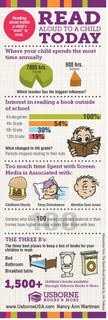
I have never been an Usborne books fan, but this infographic caught my eye. I believe the message is accurate; however I always caution parents that reading to kids is not the same as teaching kids to read. Reading aloud to children helps to ensure they love books, but 80% of children require explicit, systematic reading instruction to become skilled readers.
Too many families lament that they DID read to their kids—and wonder why their kids struggle to learn to read. In other words, parents are shouldering guilt for their kids’ reading difficulties when the fault does not belong to the parents.
One thing a parent can take away from this graphic is that they should not stop sharing books or parts of books or sharing about the books they’re reading with their kids. We laughed about it a lot when our kids were older, and my husband would say to them, “Come here. I want to read something to you.” (Insert eyeroll here.) He was doing it correctly though. He continued engaging with his kids around books. We can all do that—even beyond the early years.
Practical Grammar
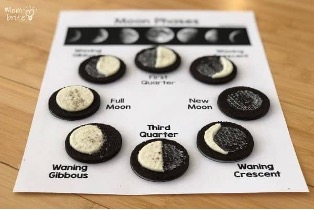
Have you ever explored the phases of the moon and used Oreos to create a representation of each phase? In Southwest Ohio, we’re now in the first quarter phase and heading toward a full moon.
A phase is a stage in a process. We’re nearing the full moon stage in our lunar cycle.
But what does the word faze mean?
Faze means to disturb or upset someone.
If you weren’t fazed by the boy’s whining, you weren’t annoyed by it.
But folks often incorrectly use the word phased in sentences when they mean fazed.
If you were phased out of a program, a final step was made in a process.
If you weren’t fazed by being phased out of a program, you weren’t upset for having to leave it.
News from Book Bums
We’re beginning to prepare for back-to-school. We’re rescheduling students for after-school business hours and moving away from daytime hours, so it’s time to begin working with your child’s teacher to find a time that works for everyone.
This is from Missouri Magazine, but I thought it was a great tip sheet as we prepare for heading back into the school year.
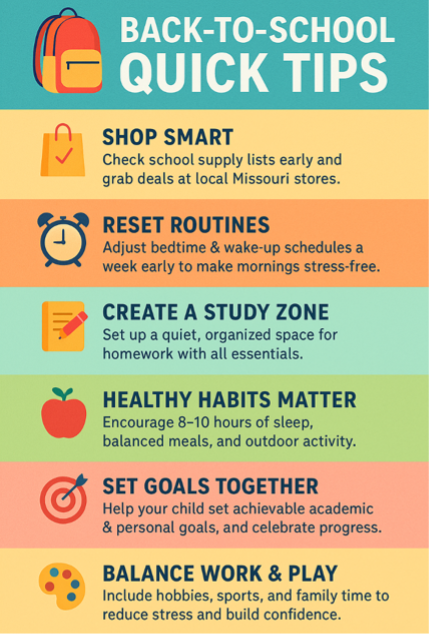
Tips for Teachers
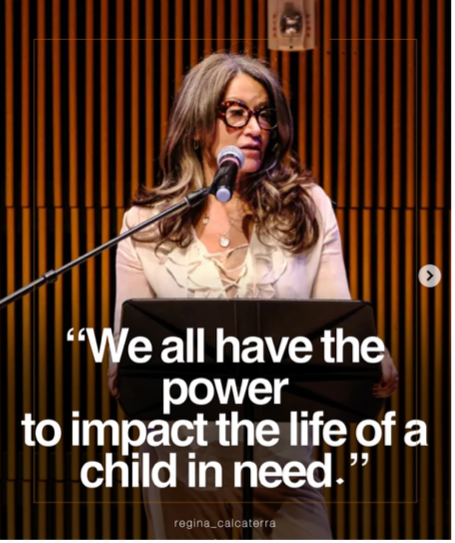
We all have the power to build a child’s self-esteem.
~Regina Calcaterra
I do not recall when I received the following poem, but I do know that I printed it and hung it in every one of my classrooms from that day until the day I retired. It’s a great reminder to educators of the power they hold and with which they may positively impact the life of a child.
Remember, teachers, to do each day well. I am praying for you.
Just for Fun
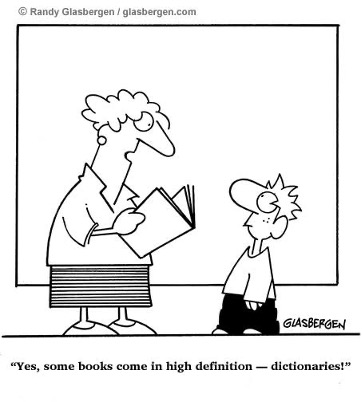
A dictionary would make a great back-to-school gift to place in your child’s homework space. If you approach a dictionary as an awesome tool, you can actually help your kids get excited about it too.
This is a highly recommended dictionary for kids grades 3-6 or so, and it costs under $5.
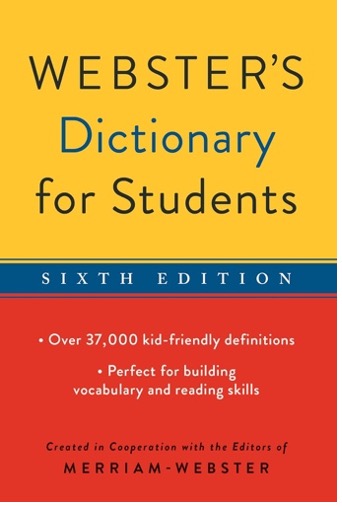
Here are a few things to do with your dictionary:
- Have your kids look up funny words in their new dictionaries like bumfuzzle, lollygag, flibbertigibbet, cattywampus, and brouhaha.
- Teach your kids to use the guidewords on the upper corners of each page in the dictionary. These words show the first and final words on each page, and they help us to quickly determine if the word we’re looking for is there.
- Ask your child to look up ichthyologist to learn what an ichthyologist studies.
- Invite your child to find an adjective (describing word) that begins with the letter t that describes him or her.
- Have your scholar determine on which page (number) the word cantankerous is found and then define it.
- Ask your child to determine what word comes right before and right after the word violet in your dictionary?
- Each week, you can ask your child to look up the word of the week from our newsletter.
Perhaps you’ll soon have a lexicographer on your hands.
If you know someone who would benefit from our newsletter or tutoring at Book Bums, please share this email with them! Thank you.
Copyright © 2024 Book Bums, All rights reserved
Our mailing address is:
7967 Cincinnati-Dayton Road Suite L
West Chester, OH 45069