
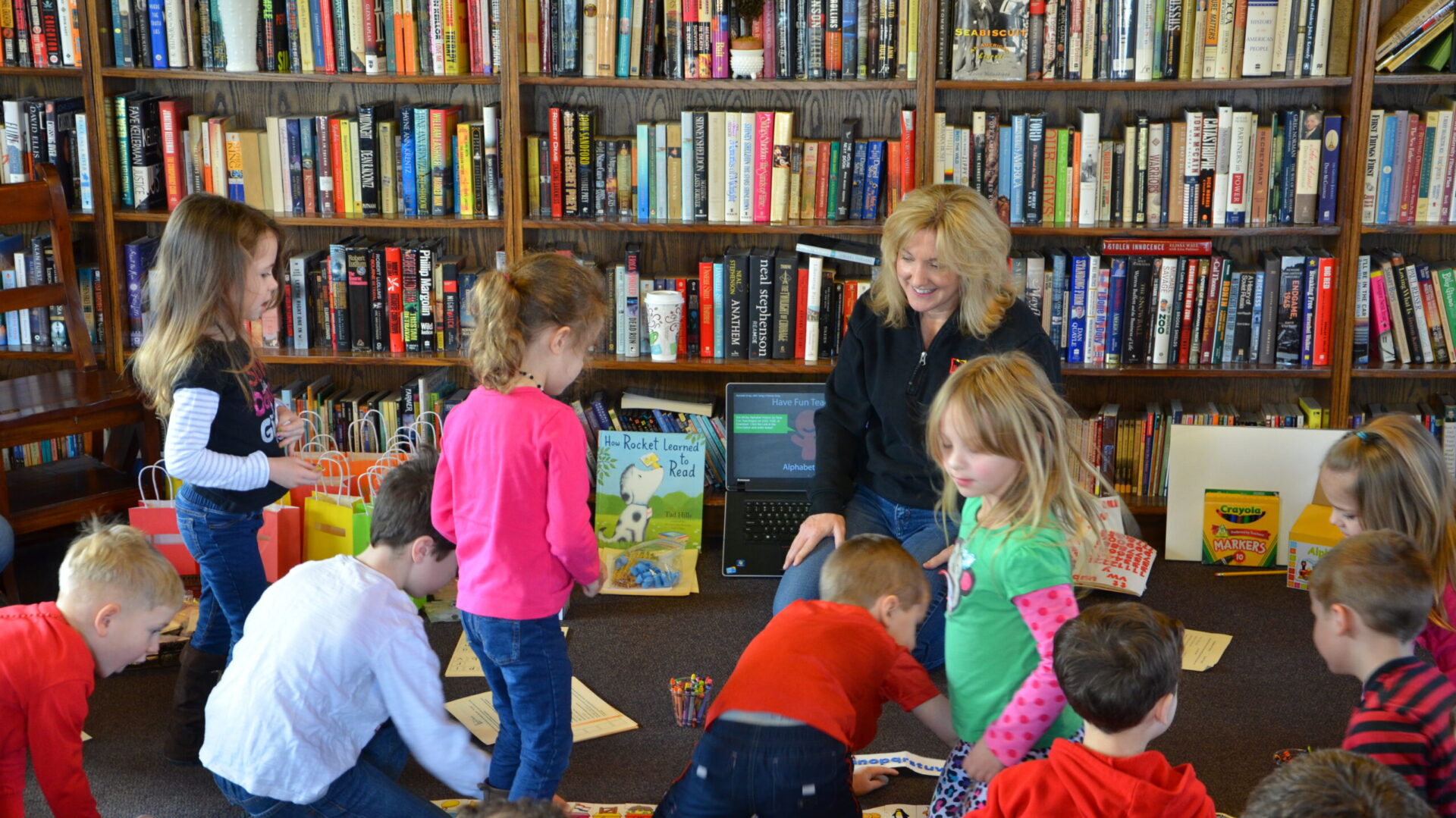

Hello Book Bums families!
Have you ever searched for just the right word to express what you mean? This week's newsletter aims to refresh your vocabulary with some specialized words to help you describe and communicate precisely. We also share a fun, summer book recommendation and ideas for treasuring the little things this summer.
Read on and enjoy!
Bookbums.com is an Amazon Associate; We earn from qualifying purchases. This means that if you click on a link to Amazon.com and make a purchase, We may earn a small commission at no extra cost to you. We do recommend the products. Feel free to find them by other means.
Word of the Week
hiatus (hy-ait-us) noun/person, place, or thing - a temporary break, an interruption
Summertime brings a hiatus from the classroom for most American students.
Literacy Calendar
- May 15 is the anniversary of Emily Dickinson's death in 1886.
- We have shared poems from this iconic American previously in the newsletter, and today we offer one more.
- If you would like to learn more, check out the Emily Dickinson Museum website.
I Dwell in Possibility
by Emily Dickinson
I dwell in Possibility –
A fairer House than Prose –
More numerous of Windows –
Superior – for Doors –
Of Chambers as the Cedars –
Impregnable of eye –
And for an everlasting Roof
The Gambrels of the Sky –
Of Visitors – the fairest –
For Occupation – This –
The spreading wide my narrow Hands
To gather Paradise –
From our Bookshelves

I really enjoyed reading Great Big Beautiful Life, by Emily Henry. Though I kept feeling like I’d read it or something very much like it before, I couldn’t quite put my finger on which book; and it was a nagging distraction.
I’ve done that before. Have you? Have you begun reading a book only to discover, about a third of the way through, that you’d already read it?
Eventually, I realized that this story (the first book I’ve read by Emily Henry) reminded me of The Seven Husbands of Evelyn Hugo—which I also thoroughly enjoyed.
Great Big Beautiful Life has a few steamy sections and leans more romance than a lot of the books I read; but it was a good balance, and I would recommend it for a light, mystery, getaway book.
One friend said she thought it was a bit long which might be another way of saying there were some lulls, but I didn’t regret the time I spent reading it.
Tips for Families

Nostalgia is that bittersweet, sentimental longing for the past that’s often triggered by something unexpected. A scent (freshly mown lawns), a song (“I believe in miracles . . . you sexy thing”), a matchbook . . . Wait. Do they even make those anymore?
Anyway, my kids used to use these Tupperware cups with the sippy lids. (I know. I know. Plastic. It’s turned out to be a real menace.) Anyway, when I’m in an antique mall and I find one of these in pristine condition, I have an inexplicable urge to buy it. I just need that tangible reminder of that little boy era—each boy with his favorite color.

This week’s tip for families is to take pictures of the mundane things your kids are doing from time to time.
You simply cannot believe the things you’ll hold to your heart one day and enjoy such a wholehearted longing for those seemingly insignificant days gone by.
Tuck some things in a box to remember, well, some of the treasured moments you might have taken for granted. The digital items, I have a feeling, won’t hold those memories as beautifully as an old cardboard box.
If you haven’t watched Remarkably Bright Creatures on Netflix, here’s your reminder to do so. And look for the box in the movie . . .
Wordology Workshop
- The Greek root algos means pain or distress.
- We see it in English as the suffix algia in many medical words like neuralgia or fibromyalgia where it points to physical pain.
- It also appears in the word nostalgia where it indicates a different kind of pain.
Tips for Raising Readers and Writers
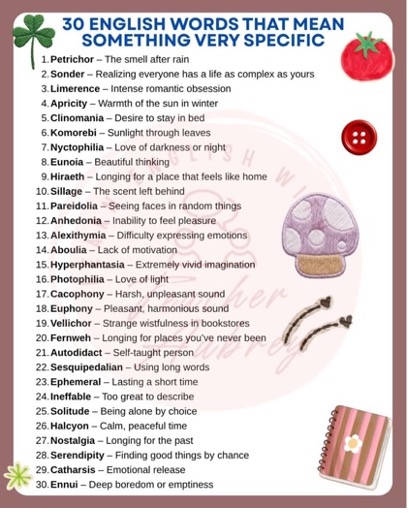
We’re always promoting the expansion of vocabulary at Book Bums. We LOVE highlighting off-the-beaten-path kinds of words.
I knew 13 of the 30 words in the graphic, above. How many do you know? Have you found a few you’d like to begin using?
How about vellichor?

Vellichor: the strange, wistful nostalgia experienced when walking through used bookstores—a feeling of being surrounded by thousands of old books and the silent histories of their previous owners.
And I’m really enjoying days filled with komorebi. Aren’t you?
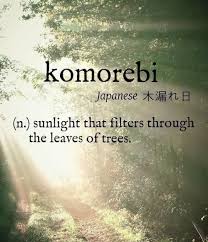
Komorebi: a Japanese term that describes the dappled, shimmering light created when sunlight filters through the leaves of trees.
I’ve known all along that have photophilia.
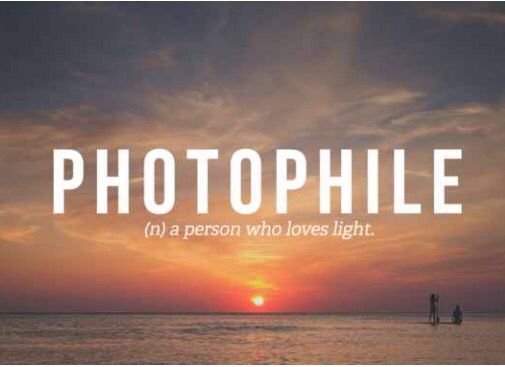
When I get to feeling a bit down, I just toss my hair up into one of those silk scrunchies, hop into the Jeep with the windows down and the top off, and the sun works as a healing balm for my soul. Now I have a name for myself that I quite like. Who me? I’m just your average photophilic gal.
Practical Grammar
Illusive & elusive
(both are adjectives or describing words)
illusive: deceptive, unreal, false impression
(impression, illusion)
elusive: difficult to find, catch, achieve, or comprehend
(escapes or evades)
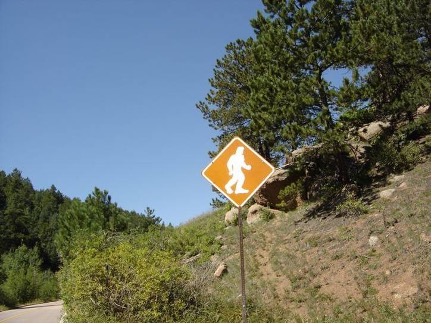
The elusive Sasquatch remained a blurry, illusive image in the woods, disappearing into the trees before the hikers could be sure if they saw a real beast or merely a trick of the light. (Was it komorebi?)
News from Book Bums
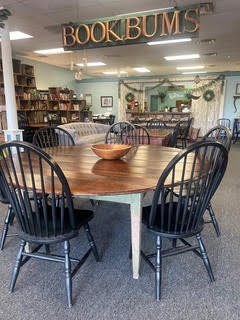
I love this table. I mean it’s the perfect book club table, isn't it? Except that sometimes it’s too small. And sometimes it’s too big.
And now it’s time for me to sell it.
We’re loading it up and taking it to the Springfield Antique Show this weekend—and hopefully we’ll find a few more smaller tables to take its place.
Wish us luck replacing this o’l beauty!
Tips for Teachers
I received an email asking what I do when a student isn’t quite holding all the lessons I’m teaching. You know, they get it during the lesson but recalling it and consistently applying it to spelling in future lessons can be challenging.
I shared that this is very common for kids with dyslexia and that the teacher’s role is to continually coach students to correct spelling.
We say things like, “Oh, wait. How do we spell the sound /ar/?” Or we can simply do the motion—close to the paper, if possible, so the student’s eyes aren’t moved (much) from what s/he’s writing.
When the student is writing the word crowd, we can simply pound a fist near the paper and say, “How do we spell /Ow!/ again?”
It’s not terribly important that students spell every word correctly with no help from you. It IS terribly important that when our students don’t recall how to spell a sound, we remind them of what they already know.
That repeated retrieval of all we’re teaching is the important piece. We need to continue strengthening those neural pathways through deliberate review.
Dyslexic kids need more repetitions than typical students. It doesn’t mean that they can’t or won’t get it. It’s just that it takes many more repetitions before the words are orthographically mapped into their memories and are known "on sight.”
We’ll keep reviewing all the things they’ve learned to date, and over time, they’ll need fewer prompts from us. For now, we’re the prompt machines. We want our students to get to the place where they almost hear our voices in their heads, “Wait. What do you need to tell that vowel to say its name, again?”
One key piece is that, as our students are spelling, they stretch out the sounds, aloud, so we can hear them. Ensure they’re stretching the sounds correctly (so you can hear each discrete sound in the word), and coach them so they spell the sounds as you’ve taught them.
Some kids “get it” so quickly. Others take more time. The important thing is that we continue to give them what they need to learn how words work.
Just for Fun
If you know someone who would benefit from our newsletter or tutoring at Book Bums, please share this email with them! Thank you.
Copyright © 2024 Book Bums, All rights reserved
Our mailing address is:
7967 Cincinnati-Dayton Road Suite L
West Chester, OH 45069