
Hello Book Bums families!
This week's newsletter is all about the word building. Dr. Christy shares the importance of building reading stamina for ourselves and our students. She also shares some colorful and musical inspirations for the new Book Bums' building in Monroe! We even dive into the Latin roots and discover how many English words are related to the idea of building.
Read on and enjoy!
Bookbums.com is an Amazon Associate; We earn from qualifying purchases. This means that if you click on a link to Amazon.com and make a purchase, We may earn a small commission at no extra cost to you. We do recommend the products. Feel free to find them by other means.
Word of the Week
diligent (dil-ih-jent) adjective/describing word - showing care and effort, conscientious
His diligent work through the semester resulted in steady improvement in his learning and grades.
Literacy Calendar
- April 2 is the birthday of Danish author Hans Christian Andersen.
- A writer of many things, including poetry and travelogues; he is remembered for his fairy tales.
- Andersen gave us "The Little Mermaid," "The Emperor's New Clothes," "The Ugly Duckling," and "The Princess and the Pea."
- As with most fairy tales, the original versions written by Andersen are darker than the modern versions you may know.
From our Bookshelves
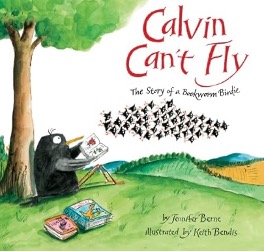
I needed a great book to launch a lesson with a group of young students. I wanted the book to be educational, encouraging and entertaining, so I reached for an old favorite . . . Calvin Can’t Fly by Jennifer Berne.
It’s a book about a starling who wasn’t interested in the same things most birds found entertaining. Calvin liked books. His favorite place was the library. And he just loved learning. The problem was that Calvin never learned to fly. When the weather turned, and it was time to head south, Calvin found himself in a pickle. Luckily, his family worked together to bring him along for the journey. He felt a bit like a burden; but along the way, Calvin turned out to be quite useful, and he saved his whole family.
If you like books with happy endings, you’re going to love Calvin Can’t Fly.
This one’s a crowd pleaser, and it’s got a lot of material for sweet conversations.
Tips for Families
Spring is the perfect time for adding stacks of non-fiction books around your house. Anything your kids are noticing as the days are lengthening and they’re spending more time outdoors is worthy of a mini book stack around your home. Did the kids see some geese building a nest? Grab some kids’ books about geese. Is there a family of robins building a nest in your flowerboxes? I know you know there are some great kids’ books about robins! Are worms out on the sidewalk after a big rain? Your library has lots of kids’ books about worms.
You can find a Beanie Baby, or some kind of snack, or even a song on YouTube to encourage engagement with the books you’ve gathered.
I’ve got ideas coming next week with books and activities to complement the Butler County, Ohio Donut Trail; but in the meantime, you can make some stacks or baskets that your kids simply cannot resist!
Tips for Raising Readers and Writers

Dr. Yanique Rolingson recently contributed a post for reading educators on a social media platform, and I agreed with her message. I’m sharing most of her post, below, so you might consider your own reading habits and those of the children in your life. Are you reading for long stretches of time at your house?
Reading stamina is quietly becoming one of the biggest challenges in classrooms today. Many students can read a short passage, answer a few questions, and move on. What is becoming harder is staying with a text long enough for thinking to deepen. Following an idea across pages, holding attention through complexity, and sitting with meaning without constant interruption now takes more effort for many students than it once did.
Part of that shift is connected to the kind of reading students do most often. Screens condition the mind for speed. Students swipe, scroll, tap, and move quickly from one thing to the next. That pattern makes it harder to slow down and stay anchored in one text. Books require something different. They require focus, patience, and the ability to remain present long enough for understanding to develop. When students spend more time consuming quick bits of information than engaging in sustained reading, their ability to concentrate on longer texts begins to weaken.
This is not an argument against technology. It is a reminder that deep reading still has to be protected. If students are never given consistent opportunities to read for extended periods of time, they will struggle to build the mental endurance strong comprehension requires. Reading is not only about decoding words on a page. It is also about training the mind to stay with ideas long enough to understand them.
At Book Bums, we’re working to move our students to the place where they can engage with a book for around 45 minutes. Does that seem extreme? When kids take nationally normed tests, they must have the stamina to endure for at least an hour to perform well. Some may argue that it’s not age appropriate. But how long can kids play video games without a break? How long is a typical Disney animated movie?
When kids are equipped to read well, reading for an hour or more in one stretch isn’t asking too much of them. It’s inviting them into something wonderful. But we must equip them to persist for longer stretches of time.
We had a time where tutors were doing the “I read a page. You read a page.” thing. I had to bring that to a stop. Our kids must learn to persist, on their own, for longer and longer stretches of time. You can promote this at home as well. Please don’t pull out the timers. Just read until the ends of chapters. Or finish the book in one sitting. We want—we need—our kids to learn to engage with texts for extended periods of time.
One tip I used in the classroom was to share with my scholars, “If you’re in a really great part of your book, and you just need to read a bit more before you can close the pages, ask, and I’ll invite you to finish up for a few minutes in the hallway. I’d love to honor that!” It wasn’t long until I had kids begging to please finish a chapter. And these were second graders. Building a culture that honors the need to keep reading—just a little longer— isn’t difficult to do. We simply have to make it a priority.
Wordology Workshop
- The Latin root struct means to build.
- You can probably think of many building-related words that use this root: construction, destructive, structure, restructure, indestructible, infrastructure, obstruction.
- Struct also appears in the word instruct and all its forms: instruction, instructor, etc.
- It's a great linguistic reminder that education is building something valuable!
Practical Grammar
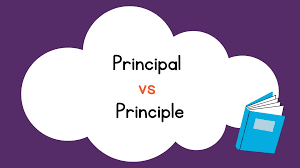
Every spring, I encourage parents who are thrilled with the teachers who taught their children this school year to email their teachers and share what they appreciated most . . . and— the icing on the cake—cc the building principal.
I had parents do this for me toward the end of my career, and it was such an honor to know that my principals learned that parents were grateful to have me as their child’s teacher. On principle, teachers don’t share things like this with those evaluating them, but when parents cc them, it sure is flattering.
Tip: Use the correct word. Is it principle or principal?
News from Book Bums
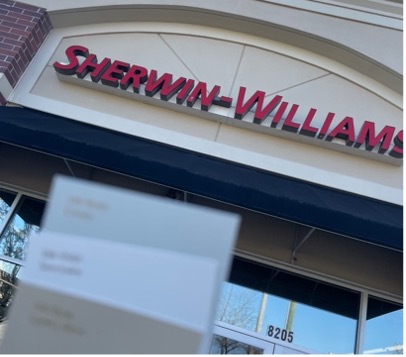
We chose the colors for our new Monroe Book Bums location!
Do you remember when I shared that my husband made the tables we’ll use for our new tutoring location out of old church pews? He did that because wood is so expensive, and the pews were only $15-$20 apiece; but I just love the idea that people prayed in those pews, watched loved ones marry in those pews, and saw lives changed for good while sitting upon that gorgeous, old oak.
Well, as I was choosing paint colors, I kept with the same ol’ church theme. I chose a tan-ish color called Lamb’s Wool, a creamy, off-white color called Sanctuary, and a light sage-y green called Create. In my mind, they’ll all work together to inspire such a sweet tutoring space.
It kind of reminds me of a song called “The Building” by Emily Ann Roberts. It’s about the church she was raised up in. It’s a sappy and sweet and it talks about the impact of an old church building on her life. Here’s a link you’re interested in listening to it.
Tips for Teachers
Though easy-access words (when kids know most letter sounds—including the short vowel sounds) like tip, bat, and cut are generally simple enough for kids to read and gain meaning, there’s plenty of room for instruction that will expand kids’ understandings about those words and how they work.
Since many Tier One words are homonyms, they offer a great opportunity to move from decoding into grammar—the rules that govern how words are arranged in sentences.
When we decode the word tip, we can stop there and say, “Yes. That’s tip. Good reading!” but we can also delve a bit deeper.
Offering the word tip used as a noun in one sentence and then using it again as a verb in another sentence can help kids to recognize the nuances of those words they can read.
Ask:
In the following sentences, let’s determine if the word tip is used as a noun (person, place, or thing) or a verb (action word)?
Using sentence strips to record the sentences on a chart would be helpful. Kids could also sort their own copies of the sentences on a t-chart or simply use a color code to indicate whether it’s used as a noun or verb.
Examples:
- When we go out for a nice dinner, we leave a tip for our waiter.
- I have a sunburn on the tip of my nose.
- When I tip the sippy cup, no water comes out.
- My grandma gave me a tip to help me clean my room more quickly.
- I like having a sharp pencil tip when I write.
- That man will tip his hat if a lady walks by.
It turns out that Tier One words aren’t so simple after all.
Just for Fun
You know I loved Lonesome Dove.
My husband and I watched a bit of the movie.
It’s good . . . but it’s kinda like this in comparison to the book.

If you know someone who would benefit from our newsletter or tutoring at Book Bums, please share this email with them! Thank you.
Copyright © 2024 Book Bums, All rights reserved
Our mailing address is:
7967 Cincinnati-Dayton Road Suite L
West Chester, OH 45069